

Cleaning a rug sounds simple until you realise not every rug wants the same treatment. What works on a synthetic flatweave can damage a jute rug. What seems harmless on a polypropylene rug can leave a wool rug looking worse than the original spill.
If you have ever stood there with paper towel in one hand and mild panic in the other, the first rule is simple: slow down, blot first and work out what the rug is made from before throwing cleaner at it.
This guide breaks down how to clean rugs at home without damaging the fibres, backing or texture. It covers everyday maintenance, spot cleaning, pet stains and the key differences between wool, jute and synthetic rugs. If you are browsing while you read, compare our in-store rugs and online-only rugs.
Quick Comparison: How Different Rugs Handle Cleaning
The safest cleaning method depends on the rug material. Some rugs are forgiving. Some are fussy. Some should barely see water at all.
| Rug Type | Best First Move | Watch Out For |
|---|---|---|
| Wool rugs | Blot spills quickly, use gentle wool-safe cleaning and avoid soaking | Too much moisture, harsh cleaners and rough scrubbing can distort the pile. |
| Jute rugs | Use the least moisture possible and dry the area quickly | Water marks, swelling, distortion and musty odours from over-wetting. |
| Synthetic rugs | Blot, spot clean with mild cleaner and vacuum regularly | Still avoid soaking the backing, even when the fibres are forgiving. |
| Low pile rugs | Vacuum consistently and spot clean quickly | Check whether the fibre is natural or synthetic before wet cleaning. |
| Loop pile rugs | Vacuum gently and avoid aggressive brushes | Loops can snag, especially in homes with cats or heavy brushing. |
Practical rule
Before you clean the stain, identify the fibre. The wrong cleaning method can turn one spill into a bigger mark, especially on jute, wool and delicate looped rugs.
The Golden Rule: Act Fast and Do Not Overdo It
Most rug cleaning mistakes happen because people either leave a stain too long or go too hard too quickly.
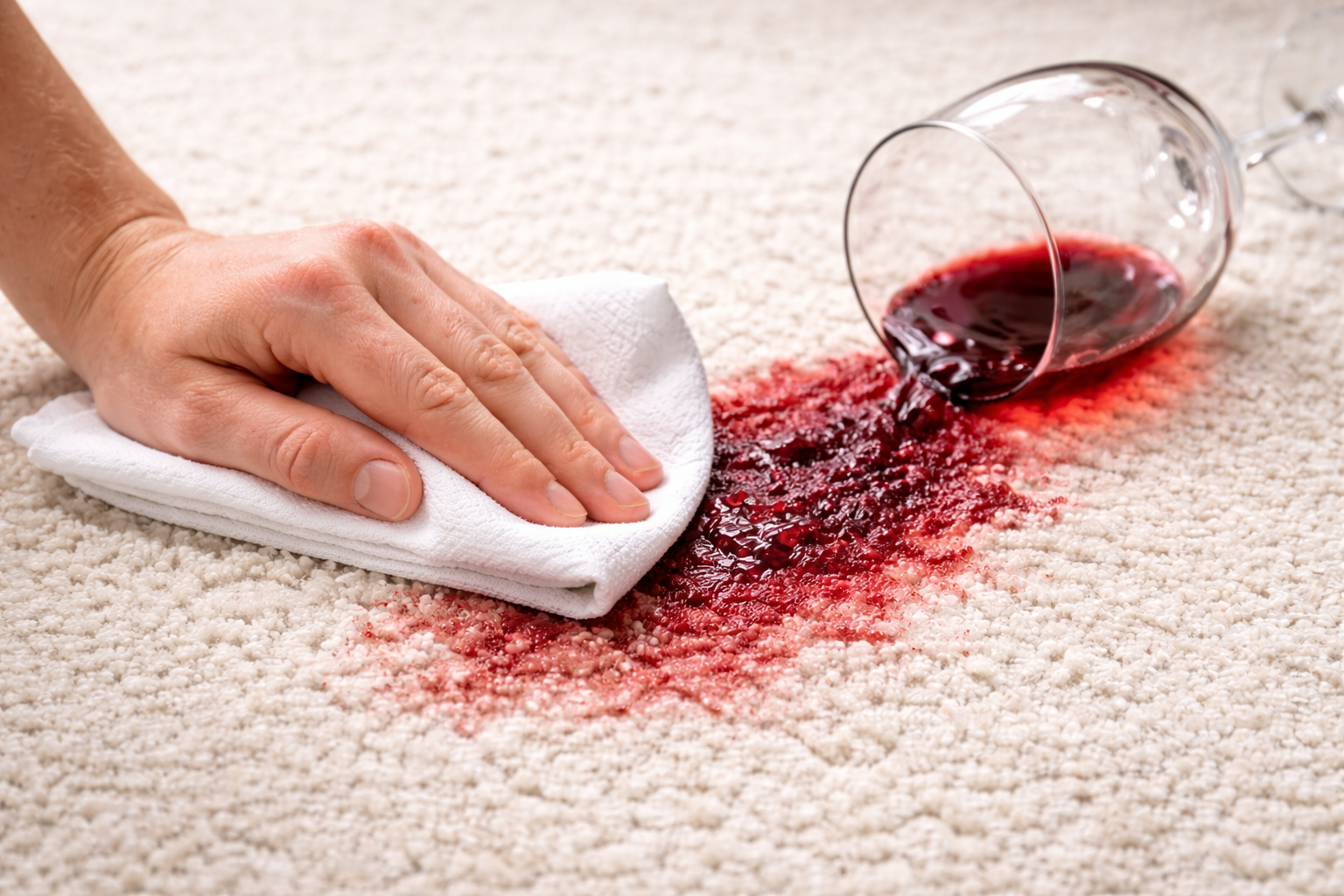
For everyday spills, the safest first step is usually to blot, not scrub. Scrubbing can push liquid deeper into the fibres, rough up the texture and spread the stain instead of lifting it.
Use a clean cloth or paper towel, press gently and work from the outside of the spill inward. That simple move helps stop the stain spreading.
- Blot instead of rubbing.
- Test any cleaner on a hidden section first.
- Avoid soaking the rug unless you know the material can handle it.
- Let the rug dry properly before putting it back into full use.
If you remember nothing else, remember this: more water and more scrubbing usually do not mean a better result.
Everyday Rug Cleaning Basics
Most rugs do not need dramatic cleaning. They need consistent care before dirt becomes embedded and stains become permanent.
Vacuuming
Vacuuming removes dust, grit, hair and debris before they settle deep into the pile.
- Vacuum high-traffic rugs more often.
- Use a gentler setting on delicate or natural fibre rugs.
- Avoid aggressive brush heads on loose weaves, jute or loop pile rugs.
Rotation
Rotating a rug every few months helps spread foot traffic and sunlight more evenly, which can reduce uneven wear and fading.
Underlay Matters Too
A good underlay helps reduce movement, protects the floor underneath and can extend the life of the rug by reducing friction on hard surfaces.
If your rug is on timber, tile or laminate, using a non-slip option like Miracle Grip can help keep it stable and reduce unnecessary wear.
How to Clean Wool Rugs
Wool rugs are soft, warm and durable, but they need more care than many synthetic rugs.
Wool fibres can naturally resist some dirt, but they can also hold moisture if over-wet cleaned. The safest approach is usually light, controlled spot cleaning rather than soaking.
Best Approach for Wool Rugs
- Vacuum gently and regularly.
- Blot spills immediately.
- Use a mild wool-safe cleaner if needed.
- Avoid saturating the fibres.
If you need to clean a stain, blot first, then use a small amount of wool-safe solution on a cloth. Work gently and avoid heavy scrubbing.
Do not attack a wool rug with harsh stain removers or aggressive brush tools. That can rough up the pile, distort the texture and make the spot stand out more.
How to Clean Jute Rugs
Jute rugs are where people most often get into trouble. They look relaxed and natural, but they do not love moisture.
Because jute is a plant fibre, too much water can lead to staining, swelling, distortion or that musty smell nobody wants in the house.
Best Approach for Jute Rugs
- Vacuum regularly using a gentle setting.
- Blot spills immediately.
- Use as little moisture as possible.
- Let the area dry quickly and thoroughly.
If you spill something on a jute rug, blot it straight away and keep wet cleaning to an absolute minimum. For many jute rugs, less is more.
Jute warning
Jute can show natural colour variation and small organic inconsistencies in the weave. That is normal. Dark water marks and tide lines from over-wetting are the problem you want to avoid.
How to Clean Synthetic Rugs
Synthetic rugs, especially polypropylene styles, are usually the easiest to live with when it comes to cleaning.
They are popular in family homes because they handle spills better, dry faster and are generally more forgiving than natural fibres.
Best Approach for Synthetic Rugs
- Vacuum regularly.
- Blot spills quickly.
- Use a mild cleaner or rug-safe spot remover.
- Avoid over-saturating the backing.
For homes with kids, pets, muddy shoes or general chaos, synthetic rugs are often the lowest-stress option. That is one of the reasons they are so popular in high-traffic areas and family living spaces.
If you are weighing up materials more broadly, our guide to natural vs synthetic rugs breaks down the differences.
How to Remove Pet Stains from Rugs
Even with practical rug materials, accidents happen. The trick is acting quickly before the stain and smell settle in.
Start by blotting the area with paper towel or a clean cloth to absorb as much moisture as possible. Avoid rubbing. That only pushes the mess deeper into the fibres.
Once you have blotted the area, use a mild cleaner or a pet-specific rug cleaner and test it first in a hidden spot. Synthetic rugs are usually the easiest to clean after pet accidents because the fibres are more stain resistant.
Natural fibres like wool and jute need a gentler hand. Jute especially does not handle wet cleaning well, so that is worth keeping in mind if pets are part of daily life.
Washable and easy-clean synthetic rugs are often the safest bet in busy homes. If that is your world, our guide to the best rugs for kids and pets is worth a read too.
What Not to Do When Cleaning a Rug
A lot of rug damage comes from good intentions. The urge to scrub harder, soak more or use a stronger cleaner is exactly where things can go sideways.
- Do not scrub hard at stains.
- Do not assume every rug can be wet cleaned.
- Do not use harsh chemicals without spot testing.
- Do not leave a damp rug sitting for hours without airflow.
- Do not use aggressive vacuum heads on delicate weaves or loop pile rugs.
If you have a looped rug and pets, especially cats, be careful not to catch or stress the loops during cleaning. Claws and harsh brushing can do more damage than the original dirt.
Emergency kit tip
Keep a clean white cloth, paper towel and a bottle of rug-safe spot cleaner under the sink. Being able to blot a spill within 30 seconds can be the difference between a stain and a memory.
When to Call a Professional Cleaner
Home cleaning works well for regular maintenance and fresh spills, but some rugs are better handled professionally.
If the stain is old, the smell has set in, or the rug is a valuable wool or delicate natural fibre piece, professional cleaning can be the safer option.
It is also worth considering if the entire rug needs a deeper clean rather than one small spot treatment.
More Rug Buying Guides
If you are still narrowing down size, material, texture, cleaning needs or style, these rug guides will help you make the next decision without guessing.
- Rug Size Guide: How to Measure and Place a Rug in Every Room
- Natural vs Synthetic Rugs: When to Choose Jute, Wool or Polypropylene
- The Hallway Transformation: 5 Ways a Runner Can Elevate Your Entrance
- Best Rugs for Kids and Pets: Stain-Resistant, Low-Shed and Washable Options
- Rug Texture Guide: Flatweave, Shag, Cut Pile and Loop Pile
- Rug Styles Explained: Modern, Traditional, Transitional, Shag, Jute and Outdoor Rugs
Frequently Asked Questions
Can I steam clean a rug at home?
It depends on the material. Some synthetic rugs can handle deeper cleaning better than jute or delicate wool styles. Always check the rug type first and avoid assuming every rug is steam-clean safe.
What is the easiest rug material to clean?
Synthetic rugs such as polypropylene are usually the easiest to clean because they resist stains better and are more forgiving than natural fibres.
Can jute rugs get wet?
Light moisture during careful spot cleaning may be manageable, but jute rugs do not respond well to heavy wet cleaning. Too much water can leave marks, distort the fibres or create odour issues.
How often should I vacuum a rug?
That depends on the room and the traffic, but regular vacuuming helps stop grit and dust from settling into the fibres. Busy family areas usually need more frequent attention.
What should I do if my pet has an accident on the rug?
Blot immediately, avoid rubbing and treat the area with a mild or pet-specific cleaner after testing it in a hidden spot first. Quick action makes a huge difference.
Choose a Rug That Is Easier to Live With
The easiest rug to own is the one that suits the way your home actually runs. Wool, jute and synthetic rugs can all look great, but they do not all handle spills, pets and cleaning the same way.
If you are choosing a rug for a busy home, bring photos and room measurements into our Richmond showroom. We can help you compare materials, pile heights, underlay options and cleaning expectations before you order.
Browse rugs Or visit our Richmond showroom at 365 Swan St, Richmond VIC 3121.

Family owned since 1956.