

Buying a rug online is the easy part. Choosing the right size is where most people get stuck.
A rug that is slightly too small can make a room feel awkward and disconnected. The right rug size does the opposite. It pulls the furniture together, anchors the room and makes the whole space feel more intentional without shouting about it.
This rug size guide covers the sizing rules that work in real homes, from open-plan living rooms and dining areas through to bedrooms, apartments and narrow Melbourne hallways. If you are browsing while you measure, compare our in-store rugs and online-only rugs.
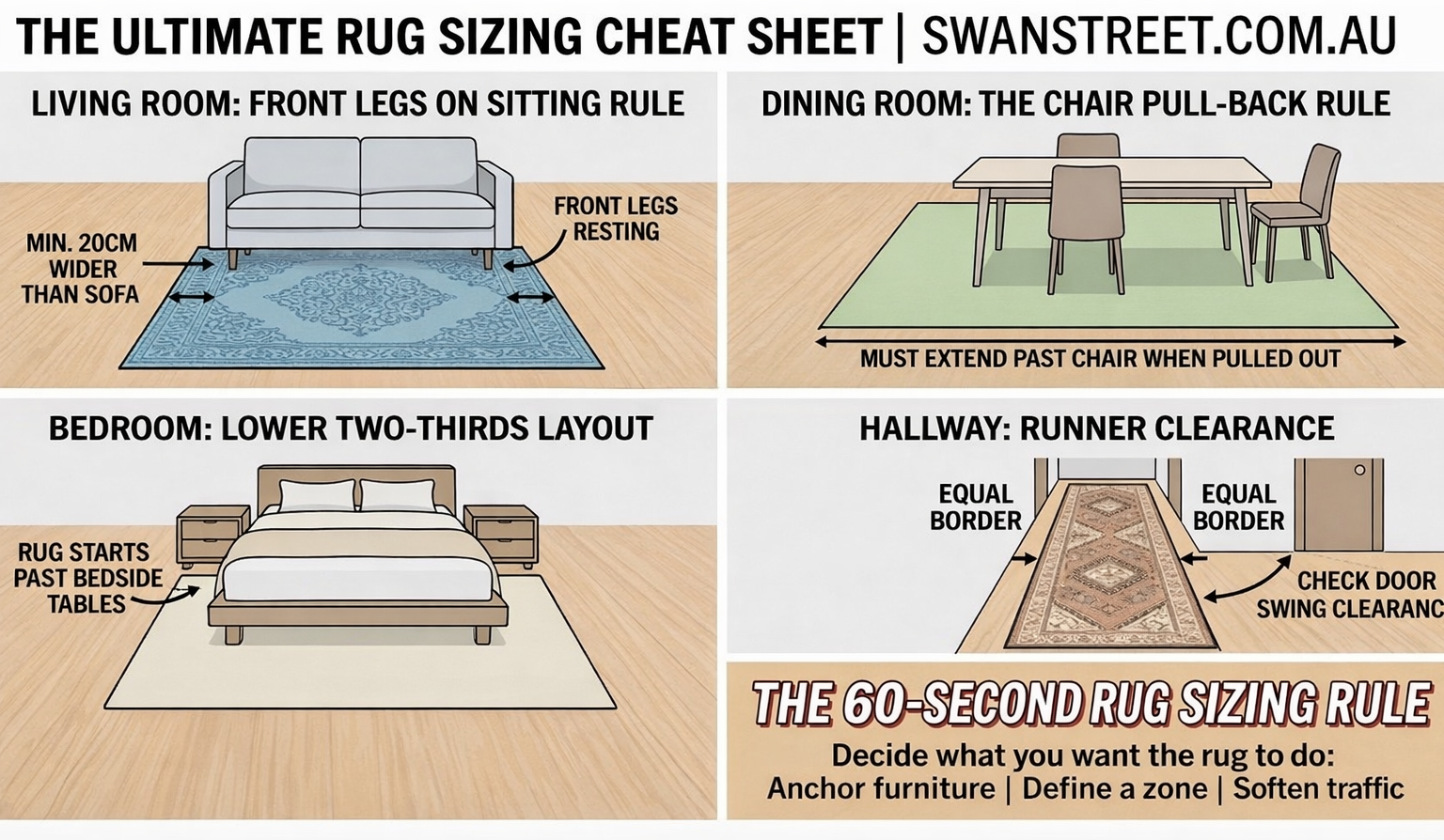 Use this rug sizing cheat sheet as the quick visual starting point, then confirm the final size against your actual furniture and room measurements.
The 60-Second Rug Sizing Rule
If you remember nothing else from this guide, remember this: rugs should anchor furniture, not float in the middle of the room.
If a rug feels slightly big when you measure, it is often the right size. If it feels safe, small or conservative, there is a decent chance it will look too small once the furniture goes back in place.
Most rug placement falls into three simple layouts:
- Front legs on: the front legs of sofas or chairs sit on the rug.
- All legs on: the full seating area sits on the rug.
- Floating: the rug sits under the coffee table only, which works best in very small rooms.
The first two layouts create structure. The third can work, but it is also where rugs most often end up looking like a postage stamp.
Sizing rule
When you are stuck between two sizes, the larger rug is usually the safer choice. A bigger rug can tuck under furniture. A too-small rug cannot grow.
How to Measure Before Buying a Rug
The easiest way to avoid rug sizing mistakes is to mark the rug footprint before you buy it.
The Tape Outline Trick
- Measure the rug size you are considering.
- Mark the corners on the floor using painter's tape.
- Walk around the room for a day and see how it feels.
This simple step shows you whether the rug will connect the furniture properly or sit too small in the space.
Another easy trick is to place a bedsheet or blanket roughly where the rug will sit. Take a quick photo from the doorway. If the proportions look balanced in the photo, you are usually on the right track.
Living Room Rug Sizes and Placement
The living room is where rug size tends to matter most. A well-sized rug visually ties the sofa, chairs and coffee table together into one comfortable zone.
Rug-to-sofa rule: aim for the rug to be at least 20cm wider than the sofa on each side. This helps stop the room looking pinched and makes the seating area feel properly anchored.
Front Legs On
This is the most common layout in Australian living rooms.
- The front legs of sofas and chairs sit on the rug.
- The rug extends past the coffee table.
- The back legs can stay on the floor.
This gives the room structure without needing an oversized rug.
All Legs On
If the room allows it, placing all furniture legs on the rug creates a more generous, hotel-style look.
- Works well with larger rooms and sectionals.
- Suits open-plan living areas.
- Makes the rug feel like a true foundation piece.
Floating Rug
A small rug under just the coffee table can work in compact rooms, but it is often overused.
If the rug does not reach the sofa or chairs at all, the furniture can feel disconnected from the space.
| Living Room Layout | Best For | Placement Rule |
|---|---|---|
| Front legs on | Most standard living rooms | Front legs of sofas and chairs sit on the rug. |
| All legs on | Larger rooms and open-plan spaces | Entire seating zone sits on the rug. |
| Floating | Very small rooms only | Rug sits under the coffee table, but should still feel intentional. |
What Rug Size Do Most Living Rooms Use?
Every room is different, but most living rooms end up around one of these sizes:
- 200 x 300cm rugs for many average living rooms.
- 240 x 330cm rugs for larger sofas, sectionals or open-plan spaces.
If you are unsure, start by measuring your sofa width and make sure the rug extends past the sofa edges on both sides.
Dining Room Rug Sizes
Dining rugs follow one simple rule: the rug needs to be large enough for chairs when they are pulled out.
The Chair Pull-Back Rule
When someone sits down and pulls their chair out, the chair legs should still remain on the rug.
If the rug is too small, the chair constantly catches on the edge. That gets annoying very quickly, especially in everyday dining spaces.
As a guide, allow at least 60cm to 70cm of rug beyond the edge of the table on all sides.
Match the Rug Shape to the Table
- Round table: round rug
- Rectangle table: rectangle rug
- Square table: square rug
The rug does not need to be dramatic. It just needs to let the dining setting work without the chairs fighting the rug edge every night.
Bedroom Rug Placement
Bedroom rugs are about comfort and balance. They soften the room visually and make those first steps out of bed feel warmer.
Full Rug Under the Bed
This is the most polished option, where the rug sits under the entire bed and bedside tables.
- Creates the most complete look.
- Works best with larger rugs.
- Adds a soft border around the whole bed setting.
Lower Two-Thirds Placement
This is a practical layout where the rug begins slightly under the bed and extends beyond the foot.
- Good balance of coverage and practicality.
- Works well with queen and king beds.
- Keeps bedside tables on the floor.
Runner Rugs Beside the Bed
In smaller bedrooms, two runners beside the bed can work beautifully.
This approach is also useful in apartments where there may not be enough room for one large rug under the bed.
Hallway Rugs and Runners
A hallway runner is one of the easiest ways to soften an entrance and make a narrow space feel more welcoming.
Good runner placement usually means:
- leaving equal floor space on both sides of the runner
- avoiding wall-to-wall coverage
- leaving some breathing room at each end of the hallway
- using underlay on timber, tile or laminate floors
If you are looking for options made for these narrower spaces, browse our hall runners.
Melbourne hallway tip
Many Victorian cottages around Richmond, Abbotsford and Collingwood have lower-swinging heritage doors. If your door sits low, choose a flatweave or low-pile runner so the door does not catch on the rug.
Common Rug Sizing Mistakes
Most rug placement issues come down to a few repeat mistakes.
- Choosing a rug that is too small for the sofa width.
- Using a dining rug that does not allow chairs to pull out properly.
- Choosing a hallway runner that is too narrow.
- Putting a high pile rug where doors swing over it.
- Skipping non-slip underlay on smooth floors.
When in doubt, slightly larger is usually the safer choice.
Quick Rug Sizing Checklist
| Check | Question to Ask | Why It Matters |
|---|---|---|
| Room size | Have you measured the room and main furniture footprint? | The rug needs to work with the furniture, not just the empty floor. |
| Furniture legs | Will the rug sit under front legs or all legs? | This decides whether the room feels connected or floating. |
| Sofa width | Does the rug extend past the sofa edges? | A narrow rug can make the seating area feel pinched. |
| Dining chairs | Can chairs pull out while staying on the rug? | This prevents chair legs catching on the rug edge. |
| Door clearance | Will doors swing cleanly over the rug? | Low doors can catch on thick rugs and runners. |
| Floor surface | Is the rug on timber, tile or laminate? | Smooth floors usually need non-slip underlay. |
If you need a non-slip layer underneath, browse our rug underlays.
More Rug Buying Guides
If you are still narrowing down size, material, texture, cleaning needs or style, these rug guides will help you make the next decision without guessing.
- Natural vs Synthetic Rugs: When to Choose Jute, Wool or Polypropylene
- The Hallway Transformation: 5 Ways a Runner Can Elevate Your Entrance
- Best Rugs for Kids and Pets: Stain-Resistant, Low-Shed and Washable Options
- How to Clean Rugs at Home Without Damaging Them
- Rug Texture Guide: Flatweave, Shag, Cut Pile and Loop Pile
- Rug Styles Explained: Modern, Traditional, Transitional, Shag, Jute and Outdoor Rugs
Frequently Asked Questions About Rug Sizing
Should a rug be wider than my sofa?
Yes. Ideally, your rug should be at least 20cm to 30cm wider than your sofa on each side. If the rug is the same width as the sofa, the seating area can look pinched and the room can feel smaller.
Is it okay for a rug to touch the walls?
Generally, no. Aim to leave visible floor between the rug edge and the wall. This creates a border that makes the room feel more spacious and stops the rug looking like poorly fitted carpet.
Can I put an area rug over wall-to-wall carpet?
Yes, and it can be a great way to define a space or cover older carpet. The key is texture. If your carpet is low-pile, you can use many rug styles. If your carpet is plush, a firmer rug like jute or a tight weave can help reduce rippling and movement.
What do I do if my rug is between two sizes?
In most cases, choose the larger size. You can tuck more of a larger rug under a sofa or bed, but you cannot make a small rug grow. A larger rug usually looks more intentional and better balanced.
Can I put a round rug in a square living room?
Absolutely. A round rug can soften the boxy feeling of a square room and is especially useful for reading nooks, small play areas or zones within a larger room.
Do I really need a rug underlay?
If your rug is on timber, tile or laminate, yes. Underlay helps reduce sliding, protects the floor from scratches and can extend the life of the rug by absorbing some of the impact from foot traffic.
Prefer to See Rug Sizes in Person?
Sometimes you just need to see the scale in real life. If you are in Melbourne, visit our Richmond showroom on Swan Street to compare rug sizes, materials and textures before choosing.
Once the sizing is sorted, the fun part begins: choosing the colour, texture and material that suits your room. Bring photos and measurements in with you and we can help narrow it down.
Browse rugs Or visit our Richmond showroom at 365 Swan St, Richmond VIC 3121.
Family owned since 1956.