

Office furniture sounds simple until you are the one trying to make it all work in a real room. A desk that is too deep can eat half a spare bedroom. A chair that looks fine for ten minutes can feel very different by the middle of the day. Storage that seemed optional at the start can end up being the thing that stops the whole space from turning into clutter.
The best office setup usually starts with the room and the way it will actually be used, not with whatever desk happens to catch your eye first. A home office, a school workspace and a professional workplace can all need very different things, even though they sit under the same broad category.
This guide walks through the office furniture decisions that matter most: desks, chairs, storage, layout and shared workspace planning. If you are ready to compare options while you read, start with our Office Furniture range.
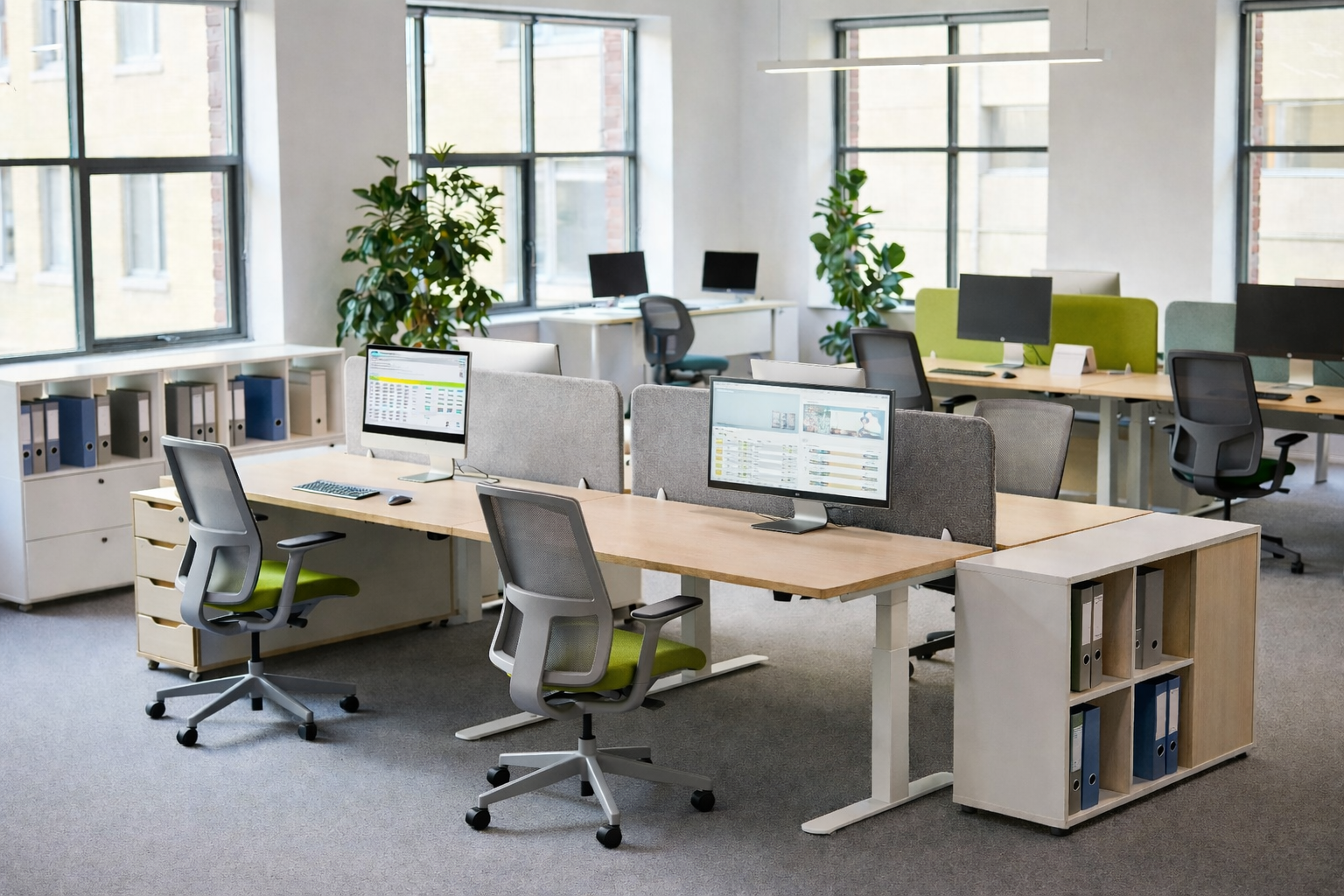
Start with the Space, Not the Furniture
Before getting pulled into finishes, drawers or chair styles, look at the footprint you are actually working with. A compact spare room, student study nook, consulting room and shared office floor all need different furniture proportions.
The smartest setup is usually the one that leaves enough room to move around comfortably, open drawers properly and still keep the space feeling usable. A desk may technically fit against a wall, but that does not mean the chair, drawers and person using it will fit comfortably too.
Desk depth is a big one here. Plenty of people assume they need a huge desk when their daily setup is a laptop, notebook, lamp and maybe a second screen. In a tighter room, a more compact desk can free up more floor space than expected. On the other hand, if the desk is handling paperwork, equipment, dual screens or shared use, going too small can get annoying quickly.
Pro tip
Measure more than wall width. Check desk depth, chair clearance, drawer swing and walking space. A room can look like it fits a desk on paper, then feel cramped the second a chair and pedestal go in.
Choose the Right Desk for the Way You Work
Not every desk is trying to do the same job. A student desk might suit homework, study sessions and lighter computer use. A standard office desk can be a better fit for day-to-day admin, home office work or general computer use.
A workstation starts to make more sense when more surface area is needed or the setup is more commercial. Reception desks do a completely different job again, where presentation and front-of-house function matter just as much as the workspace itself.
- Student desks: best for study nooks, homework zones and lighter computer use.
- Office desks: practical for everyday admin, home office work and general computer setups.
- Workstations: useful when the setup needs more structure, space or a more commercial feel.
- Reception desks: suited to front-of-house areas where presentation and function need to work together.
Sit-stand desks are worth considering if posture flexibility matters. For some people they are a genuine upgrade because they let you change position through the day. For others, a fixed desk is still the better buy if the priority is simplicity, budget or a more permanent setup.
If you are deciding between desk styles, read our Sit-Stand Desk vs Fixed Desk guide.
Do Not Treat Seating as an Afterthought
A lot of office setups get planned around the desk, then whatever chair is cheapest gets thrown in at the end. That is usually backwards. If you are sitting there every day, the chair is one of the biggest quality-of-life decisions in the whole setup.
A desk chair is built for the person actually using the workspace for longer periods. A visitor chair is for shorter sits, waiting areas, consulting rooms, across-desk conversations or meeting overflow. Classroom seating has its own priorities again, usually leaning more into durability, stackability or easy movement.
Think honestly about time in seat. If the chair is for quick check-ins, reception waiting or occasional guest use, visitor seating can make perfect sense. If it is for everyday work, prioritise support, comfort and adjustability much earlier in the decision.
Comfort check
If the chair is used for all-day work, do not treat it like spare seating. A proper desk chair usually matters more than an oversized desk.
For a deeper comparison, read Visitor Chair vs Desk Chair.
Storage Is What Stops the Room from Feeling Chaotic
Good office furniture is not just about where you sit and work. It is also about where everything else goes once the day starts properly. Files, stationery, chargers, bags, samples, teaching materials, paperwork and spare tech all need somewhere to live.
This is where office storage choices start to matter. Filing cabinets are the heavy lifters when proper document storage and longer-term organisation are needed. Mobile pedestals are a great option when everyday storage needs to stay close by, especially under a desk.
Bookcases and shelving work well when open storage or display access is useful. Stationery cabinets and lockers come into their own when the space is shared, higher traffic or needs more secure separation.
The best storage setup usually depends on whether the goal is daily convenience or long-term organisation. A small home office might only need one compact pedestal and a shelf. A busy workplace may need filing, shared storage and lockable personal space all working together.
If storage is the main issue, jump into our guides on Filing Cabinet vs Mobile Pedestal and Office Storage Ideas.
Layout Matters More in Shared and Professional Spaces
Once the space moves beyond a single desk in a room, layout becomes much more important. A workplace, reception area, clinic, consulting room or school admin zone needs furniture that works together, not just furniture that fits individually.
Reception desks help shape the front of the space. Meeting tables define where collaboration happens. Partitions can create separation, privacy and visual calm in busier rooms. Whiteboards and notice surfaces can also play a useful role where planning, teaching, scheduling or quick communication is part of the day-to-day setup.
This is the point where it helps to stop thinking product by product and start thinking in zones. Front-of-house, main work area, storage, meeting space and quieter corners all need to make sense together.
For the layout-focused version, read Reception Desks, Meeting Tables and Partitions.
A Quick Guide by Use Case
| Space Type | What Usually Matters Most | Typical Furniture Priorities |
|---|---|---|
| Home office | Footprint, comfort, tidy storage and flexible use | Office desk or compact workstation, supportive desk chair, mobile pedestal or shelving |
| Student or study space | Simple layout, durability and practical size | Student desk, straightforward seating, shelving or storage nearby |
| Professional workplace | Efficiency, comfort, storage and consistency across the room | Office desks or workstations, ergonomic seating, filing cabinets, meeting tables |
| Reception or consulting area | Presentation, flow, guest seating and front-of-house function | Reception desk, visitor chairs, storage, meeting or waiting area furniture |
Buy for the Room You Have Now, Not the Fantasy Setup
The best office furniture setup is usually not the biggest or most expensive one. It is the one that suits the room, the workload and the people actually using it.
That might mean a compact desk and one really good chair in a spare room. It might mean storage-first planning in a paperwork-heavy office. It might mean a more complete fit-out with reception, meeting and partition zones from the start.
Get those basics right and the room tends to work better straight away, then keep working better once the day-to-day mess of real life kicks in.
When you are ready to browse, start with our Office Furniture range, then narrow it down by what the room actually needs, whether that is desks, visitor chairs, filing cabinets or partitions.
More from Our Office Furniture Guide Series
If you are planning an office fit-out or tightening up a home workspace, these guides cover desks, chairs, storage and layout ideas across the full Office Furniture range.
- Small Space Desk Ideas: Student Desks and Office Desks for Compact Rooms
- Sit-Stand Desk vs Fixed Desk: Is It Worth It for Your Setup?
- Visitor Chair vs Desk Chair: What Suits Your Office Better?
- Filing Cabinet vs Mobile Pedestal: Which Office Storage Works Better?
- Office Storage Ideas: Shelves, Cupboards, Cabinets, Hutches and Buffets Explained
- Reception Desks, Meeting Tables and Partitions: Practical Office Layout Ideas
Frequently Asked Questions
What office furniture should I buy first?
Start with the pieces that affect daily use most: the desk, the main chair and at least one practical storage solution. Once those are right, it is much easier to work out whether extra shelving, guest seating, partitions or meeting furniture are also needed.
What is the difference between an office desk and a workstation?
An office desk is usually a simpler standalone working surface. A workstation often suits larger setups, shared layouts or more commercial spaces where extra surface area or a more structured arrangement is needed.
Are sit-stand desks worth it?
They can be, especially if changing posture through the day appeals to you. For some setups, though, a fixed desk is still the better value choice if the priority is simplicity, stability and keeping the spend down.
Do I need a filing cabinet or a mobile pedestal?
A filing cabinet usually makes more sense for heavier document storage and more permanent organisation. A mobile pedestal is great for everyday-use storage close to the desk, especially in smaller rooms where under-desk space matters.
What is a visitor chair best used for?
Visitor chairs are usually better for shorter sits, waiting areas, across-desk conversations, reception spaces and meeting overflow. If the chair is for all-day work, a proper desk chair is usually the better starting point.
How do I choose office furniture for a small room?
Start with the footprint. Check desk depth, chair clearance, drawer swing and walking space before buying. Compact desks, mobile pedestals and lighter visual furniture usually work better in smaller rooms than oversized pieces.
Choose Office Furniture That Fits the Room and the Work
The right office furniture setup starts with the real room, the real workload and the people using it. Once the desk, chair, storage and movement space are sorted, the whole workspace becomes easier to live with.
If you are planning a home office, school workspace, reception area or workplace fit-out, bring your measurements, photos and rough layout into our Richmond showroom. We can help you compare desks, chairs, storage and layout options before you order.
Browse office furniture Or visit our Richmond showroom at 365 Swan St, Richmond VIC 3121.
Family owned since 1956.