Chairs get lumped together far too often in office fit-outs. Someone sees “office chair” and assumes one style can do every job. In real life, that is rarely how it works. If you are weighing up a visitor chair vs desk chair, the real question is not which one is better overall. It is what the chair actually needs to do.
A chair for someone sitting at a desk for hours has a very different job to a chair for a guest, client or quick meeting. One is about longer-term comfort and support. The other is often about practicality, presentation and keeping the space easy to use.
If you want to browse while you read, start with our desk chairs and visitor chairs.
What Is the Difference Between a Visitor Chair and a Desk Chair?
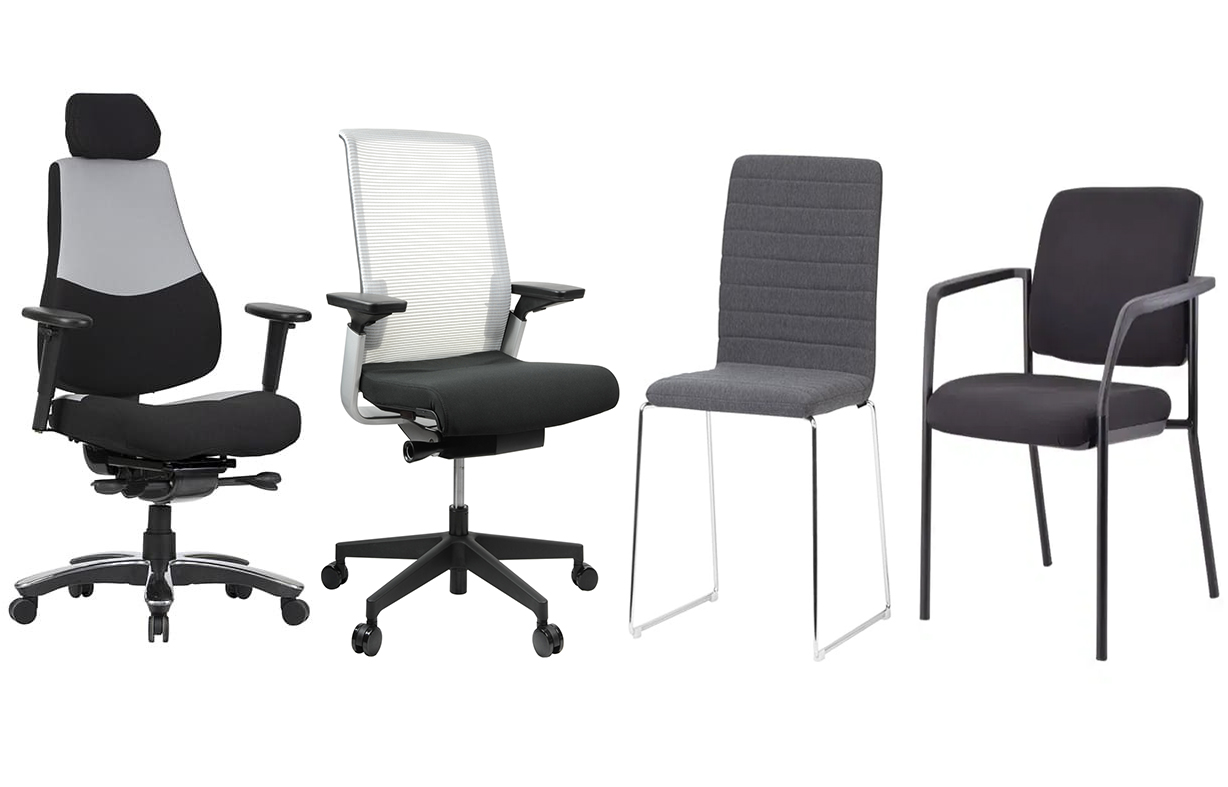
A desk chair is designed for the person actually working at the desk. That usually means more support, more adjustability and better comfort over longer periods.
A visitor chair is usually for shorter stays. Think clients, guests, waiting areas, meetings or extra seating on the other side of a desk. They are often simpler in shape, easier to move around and less bulky than a full task chair.
So while both are technically office chairs, they are not interchangeable in every situation.
Why Desk Chairs Suit Longer Daily Use
If someone is sitting at a desk for most of the day, a proper desk chair usually makes more sense. Longer sitting time puts more pressure on comfort, posture and adjustability, so the chair needs to suit both the person using it and the workstation itself.
- Seat height adjustment: helps line the user up properly with the desk.
- Back support: matters much more once the chair is used for hours rather than minutes.
- Armrests and movement: useful when the user is working across keyboard, mouse and desk tasks.
- Swivel base and castors: make it easier to move with the desk rather than dragging the chair around.
Not every desk chair needs every feature under the sun, but if the chair is doing serious daily work, it usually needs more support than a basic visitor chair can offer.
Where Visitor Chairs Make More Sense
Visitor chairs usually make the most sense when the person sitting there is not staying long, or when the chair needs to be easy to place, easy to clean and easy to move around.
- Reception areas: simpler, tidier seating works better visually and practically.
- Waiting rooms: you usually want a sturdy, straightforward chair that stays put.
- Across from a desk: visitor chairs often suit consult spaces and interviews better than a second task chair.
- Meeting rooms and flexible spaces: easier to line up, move and store when needed.
Most visitor chairs use a four-leg or sled base. That makes them safer for high-traffic areas and stops the chair rolling away when someone sits down.
They often have a cleaner, more straightforward look too, which suits front-of-house spaces well.
Visitor Chair vs Desk Chair at a Glance
| Type | Best for | Main strengths | What to watch |
|---|---|---|---|
| Desk chair | Daily desk work, home office, workstations | Comfort, adjustability, movement, support | Takes up more room and can feel overbuilt for guest seating |
| Visitor chair | Reception, waiting, meetings, guest seating | Cleaner look, smaller footprint, sturdy simple design | Usually not ideal for full workdays or long sitting sessions |
How to Choose Based on Real Use
This is usually the quickest way to work out what actually makes sense.
Choose a desk chair if:
- the chair will be used daily
- someone will sit there for long stretches
- the chair needs to move with the desk setup
- comfort and adjustability matter
Choose a visitor chair if:
- the chair is for short stays
- it sits opposite a desk
- it is for clients, guests or occasional use
- you want a cleaner, less bulky look
Most of the time, the right answer becomes obvious once you stop thinking about chair category names and start thinking about real use.
How Space and Layout Change the Answer
Desk chairs usually take up more room. Between the base, wheels, arms and movement around the desk, they need more breathing space.
Visitor chairs are often easier in tighter rooms because they can sit neatly in place without needing the same range of movement. That matters in compact offices, spare-room setups and front desks where floor space disappears quickly.
If the office setup itself is still coming together, it is also worth reading our guide on small space desk ideas.
Final Verdict: Which One Suits Your Office Better?
If the chair is for someone doing daily work at a desk, a desk chair usually wins. That is what it is built for.
If the chair is for guests, clients, waiting areas or short meetings, a visitor chair often makes more sense. It is simpler, tidier and better suited to that type of use.
And in plenty of real office layouts, the best answer is not one or the other. It is using each chair where it makes the most sense. Match the chair to the job, not just the room.
Frequently Asked Questions
Can a visitor chair be used as a desk chair?
It can for very light or occasional use, but it is usually not the best option for full workdays. If someone is sitting at the desk for hours, a proper desk chair will generally be more comfortable and practical.
What is the difference between a visitor chair and an office chair?
A visitor chair is usually designed for shorter-term seating such as guests, clients or meetings. A desk chair is designed for the person working at the desk and usually offers more support and adjustability.
Are visitor chairs good for reception areas?
Yes. Visitor chairs are often a very good fit for reception and waiting spaces because they are usually simpler, neater and less bulky than full task chairs.
Do I need a desk chair for working from home?
If you are working from home regularly or sitting for long periods, a desk chair is usually the better choice. It is generally better suited to longer daily use than a visitor chair.
Should visitor chairs and desk chairs match?
Not necessarily. It can look good if they work together visually, but the main thing is choosing each chair for its purpose. A matching set matters less than getting the function right.
More from our Office Furniture guide series
If you are planning an office fit-out or tightening up a home workspace, these guides cover desks, chairs, storage and layout ideas across the full Office Furniture range:
- Office Furniture Buying Guide for Home Office, School or Workplace
- Small Space Desk Ideas: Student Desks and Office Desks for Compact Rooms
- Sit-Stand Desk vs Fixed Desk: Is It Worth It for Your Setup?
- Filing Cabinet vs Mobile Pedestal: Which Office Storage Works Better?
- Office Storage Ideas: Shelves, Cupboards, Cabinets, Hutches and Buffets Explained
- Reception Desks, Meeting Tables and Partitions: Practical Office Layout Ideas
Need help choosing office seating?
If you are weighing up visitor chairs, desk chairs or a full office setup, come and see us in Richmond or get in touch. It is much easier to get the right seating mix when you think through who is actually using each chair and for how long.
Visit our Richmond showroom No appointment needed.