

Trying to fit a desk into a small room sounds easy until the wrong one takes over the whole space. A desk might look compact in a product photo, but once it is sitting in a bedroom, spare room, study nook or apartment corner, every extra bit of depth starts to matter.
That is why small space desk ideas are usually less about squeezing in the biggest desk possible and more about choosing the right footprint for how you actually use it. If the desk is mainly for a laptop, notebook, lamp and the odd bit of paperwork, you probably do not need a giant workbench swallowing half the room.
For a lot of homes around Melbourne, that is the reality. A study nook might really be part of a living area. A spare room might also be a guest room. A student desk might need to fit between a bed and a wardrobe. When you are ready to compare options, browse our office desks range.
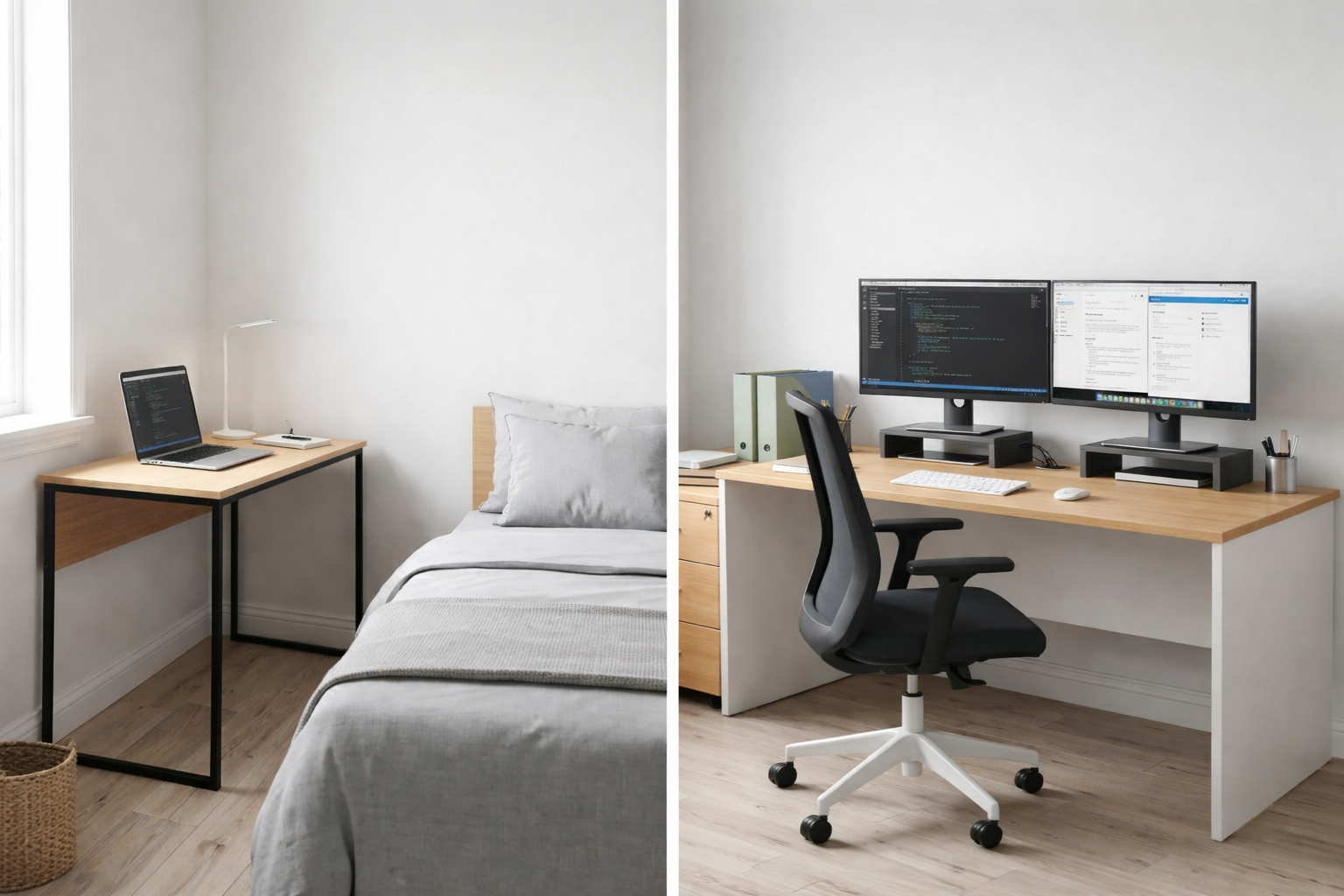
Start with Desk Depth, Not Just Width
Most people look at desk width first. Fair enough. It is the obvious number. But in small rooms, desk depth matters more than people think.
A desk that sticks too far into the room can affect everything around it. It can narrow the walkway, crowd the side of the bed, make an office chair harder to push back and make the whole room feel tighter than it needs to.
That is why a shallower desk can sometimes be the smarter choice, even if it gives up a little surface area. If your setup is simple, that trade-off is often worth it.
| Desk Setup | What Usually Matters | Small-Room Watch Point |
|---|---|---|
| Laptop only | Compact top, simple chair clearance and enough room for a notebook | Do not overbuy depth you will not use. |
| Laptop plus one monitor | Enough depth for screen distance, keyboard and mouse | Check the monitor does not push you too close to the edge. |
| Study desk | Writing room, lamp space and book space | Keep the footprint controlled around beds and wardrobes. |
| Daily work from home | Comfort, leg room, storage and cable access | Do not go so small that daily use feels cramped. |
A Bulky Desk Can Swallow a Room Fast
There is a big difference between a desk that technically fits and a desk that actually works in the room.
Some desks bring a lot of visual and physical bulk with them. Thick tops, deep drawers, chunky side panels and full-width storage can make a compact room feel boxed in very quickly. That can be fine in a big study or dedicated office. In a bedroom or apartment corner, it can be too much.
A smaller desk can make the room feel more usable overall. You keep more open floor space, the layout breathes better and the room still feels like a room instead of turning into one giant workstation.
Pro tip
In compact rooms, leave enough space to sit down, push the chair back and walk past comfortably. A desk can look neat on paper but still feel awkward once the chair is in play.
Student Desks and Office Desks Are Not Always the Same Thing
Student desks and office desks can overlap, but they are not always solving the same problem.
A student desk often suits lighter use: laptop study, writing, online classes, basic storage and maybe a small lamp. The priority is usually a simple surface that fits well without dominating the room.
An office desk for work from home can need a bit more from it. That might mean space for a monitor, keyboard, mouse, paperwork, better cable management and longer hours sitting there each day.
So while both can work in compact rooms, the right choice depends on what the desk is actually being asked to do. Someone doing occasional bills and emails has very different needs to someone working there five days a week.
Think About Leg Room Before You Get Seduced by Drawers
Drawers sound great in theory, especially when space is tight. Extra storage is always tempting. But in smaller desks, built-in drawers can eat into leg room fast.
If the underside of the desk gets too boxed in, the desk can feel cramped even when the top surface looks fine. That matters more if you will be sitting there for long stretches.
Before choosing a desk with storage, think about what you would rather prioritise:
- more knee and leg room
- a cleaner, lighter footprint
- extra drawers built into the desk
- separate storage that can move if the room changes
Sometimes the better move is a simpler desk paired with nearby storage, rather than forcing all the storage into the desk itself. If that is the way you are leaning, compare mobile pedestals or read our guide on Filing Cabinet vs Mobile Pedestal.
Walking Space Matters Just as Much as Desktop Space
People often focus so hard on the working surface that they forget the space around the desk matters too.
In a compact room, you need to think about:
- how far the desk projects into the room
- whether you can move the chair back properly
- whether doors, wardrobes or drawers can still open
- how easy it is to walk past without clipping the corner every day
This is especially important in bedrooms and dual-purpose spaces. A desk might be one part of the room, but it cannot make the rest of the room annoying to use.
Match the Desk to Your Routine
Not all small desks are doing the same job. To find the right fit, be honest about how many hours a day you will actually sit there.
For Student Study
A compact desk with enough room for a laptop, books and writing space is usually plenty. In these cases, keeping the footprint controlled matters more than overbuilding the setup.
For Daily Work from Home
If the desk is in daily use, comfort starts to matter more. That means enough depth for your screen setup, proper leg room and enough surface area so you are not working in a constant state of clutter.
For Occasional Admin
If it is mainly for paying bills or checking emails once a week, a lighter, smaller desk makes the most sense. There is no point giving away half a room to a desk that rarely gets used.
For Full-Time Daily Use
If this will be your main workstation every day, be careful about going too small just for the sake of it. Compact is good. Uncomfortable is not. The sweet spot is a desk that suits the room without making daily use feel compromised.
One Monitor Changes the Equation
For many compact-room setups, the question is not whether a desk can hold everything imaginable. It is whether it can comfortably handle one practical working setup.
If you use a laptop only, your options open right up. If you use a laptop plus one monitor, you still have plenty of flexibility. Once you start planning for multiple monitors, speakers, docking stations and piles of accessories, the desk size can start growing quickly.
That is why it helps to be honest about what will actually live on the desk every day. A lot of people buy for an imagined ultra-productive setup and end up with a desk that is far too large for the room they have.
If you need a desk that works harder for long daily use, it is also worth comparing sit-stand desks, then reading our Sit-Stand Desk vs Fixed Desk guide.
The Small Room Desk Checklist
Before you buy, run through a few practical checks. This is usually the difference between a desk that merely fits and one that actually works well in the room.
| Check | Question to Ask | Why It Matters |
|---|---|---|
| Depth | Is there enough room for your monitor, keyboard and writing space? | Too much depth eats the room. Too little depth can feel cramped. |
| Width | Does it fit properly between walls, beds, wardrobes or doorways? | A desk should not make the rest of the room harder to use. |
| Leg room | Can you sit comfortably and tuck the chair in? | Built-in drawers can reduce usable space under the desk. |
| Visual bulk | Does the desk feel open and manageable? | Heavy-looking furniture can make small rooms feel smaller. |
| Traffic flow | Can you still walk past comfortably once the chair is there? | Chair clearance is part of the real desk footprint. |
The Right Small Desk Should Make the Room Easier, Not Tighter
In compact spaces, cleaner shapes usually win. A straightforward desk with a sensible top size and less built-in bulk is often easier to place, easier to live with and easier on the eye.
That does not mean every small desk has to be tiny or bare. It just means the desk should earn its footprint. If the room is already doing multiple jobs, keeping the desk visually lighter can help the whole setup feel calmer and less cramped.
The goal is not to fit the largest desk possible. The goal is to choose the desk that gives you enough workspace without making the room feel like it belongs to the desk.
More from Our Office Furniture Guide Series
If you are planning an office fit-out or tightening up a home workspace, these guides cover desks, chairs, storage and layout ideas across the full Office Furniture range.
- Office Furniture Buying Guide for Home Office, School or Workplace
- Sit-Stand Desk vs Fixed Desk: Is It Worth It for Your Setup?
- Visitor Chair vs Desk Chair: What Suits Your Office Better?
- Filing Cabinet vs Mobile Pedestal: Which Office Storage Works Better?
- Office Storage Ideas: Shelves, Cupboards, Cabinets, Hutches and Buffets Explained
- Reception Desks, Meeting Tables and Partitions: Practical Office Layout Ideas
Frequently Asked Questions
What is the best desk for a small bedroom?
The best desk for a small bedroom is usually one with a practical top size, manageable depth and minimal bulk. In tighter rooms, a desk that leaves walking space and does not crowd the bed often works better than one with lots of built-in storage.
Are student desks good for working from home?
They can be, if your work setup is fairly light. If you mainly use a laptop and do not need heaps of equipment on the desk, a student desk can suit work from home just fine. If you are using a monitor and sitting there all day, an office desk may be the better fit.
How much desk space do I really need?
It depends on what lives on the desk every day. If it is just a laptop, notebook and lamp, you can often go smaller than you think. If you need a monitor, keyboard, paperwork and full-day comfort, you will want a bit more room to work properly.
Is a desk with drawers better for a small room?
Not always. Drawers can be handy, but they also add storage bulk and can reduce leg room. In some cases, a simpler desk with separate storage nearby feels better in the room overall.
Should I get a sit-stand desk for a compact room?
It can be worth it if flexibility matters and the desk is used often. The key is still making sure the overall size suits the room. Adjustable height is useful, but it does not cancel out a desk footprint that is too bulky for the space.
Choose a Desk That Fits the Room Properly
A small room can handle a desk beautifully when the footprint, depth, leg room and chair clearance are right. The best small desk is not always the smallest one. It is the one that gives you enough workspace without making the rest of the room harder to use.
If you are setting up a student space, bedroom desk, apartment study nook or compact home office, bring your measurements, photos and rough layout into our Richmond showroom. We can help you compare desk sizes, chair clearance, storage and sit-stand options before you order.
Browse office desks Or visit our Richmond showroom at 365 Swan St, Richmond VIC 3121.
Family owned since 1956.