

Choosing furniture for a hospitality venue is nothing like furnishing a home. In a dining room at home, a chair might get used once a day. In a busy Melbourne cafe or Friday-night pub, that same chair can be dragged, bumped, sat in and wiped down dozens of times before close.
The most successful venues do not just buy what looks good in a catalogue. They buy furniture that works for the shift. A chair might look incredible in a photo, but if it is a nightmare to clean or too heavy for staff to move during a floor reset, it becomes a liability, not an asset.
This guide is built to help you choose restaurant, cafe and bar furniture around real service conditions: venue tempo, seating comfort, table logic, outdoor durability, layout flow and commercial reset reality. To get a head start, browse our core commercial ranges: chairs, bar stools and tables.
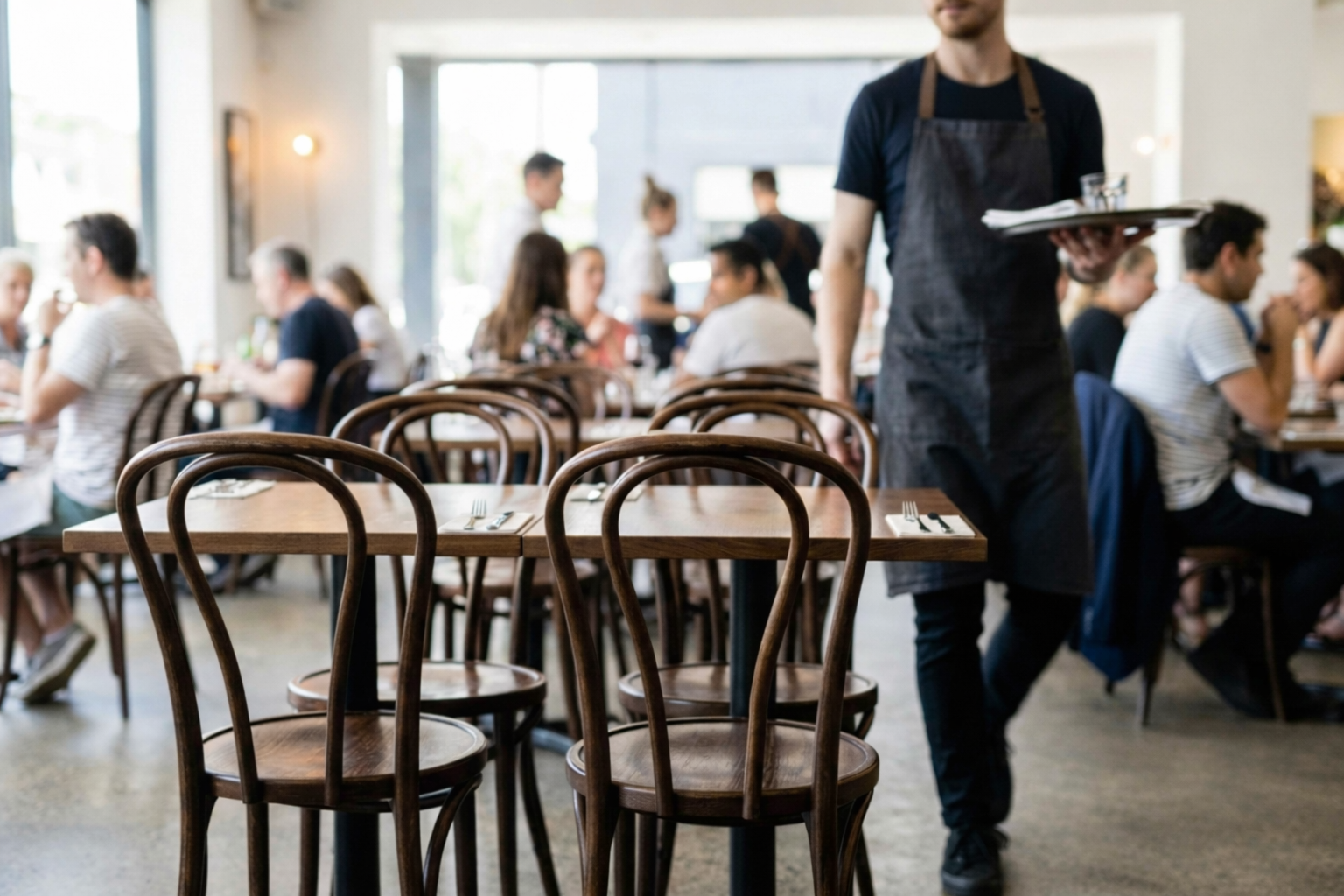
Start with Your Service Tempo
Before you look at timber grains, powder-coat finishes or chair silhouettes, define how your room actually moves. A fast-turn breakfast spot has a completely different rhythm to a late-night wine bar, a full-service bistro or a sprawling beer garden.
Your furniture needs to match that tempo. Buy too heavy for a fast reset and your staff will hate it. Buy too light for a rowdy pub and it can feel unstable. Buy too comfortable for a high-turnover coffee stop and the seats may not turn over the way the business model needs them to.
| Venue Type | The Priority | The Seating Play | The Table Strategy |
|---|---|---|---|
| Quick-Turn Cafe | Speed, cleaning and reset | Lightweight, stackable, easy-clean chairs | Flexible 2-top tables that can move quickly |
| Late-Night Bar | Durability, flow and crowd movement | Commercial bar stools with stable frames | Compact tops, solid bases and clear standing zones |
| Bistro / Restaurant | Dwell time, comfort and atmosphere | More supportive chairs, bentwood or padded styles | Comfortable 4-tops, banquettes or booths where suitable |
| Pub / Beer Garden | Weather, volume and movement | UV-stable, heavy-duty or stackable furniture | Outdoor-ready tops, anchored bases or long benches |
Pro tip
Do not buy furniture for the empty room. Buy it for the busiest version of the room, when staff are moving, guests are shifting chairs and the floor needs to reset fast.
Seating: More Than Just a Place to Sit
In hospitality, seating choices affect the way the venue trades. If chairs are too comfortable in a high-turnover cafe, people may linger too long over a small order. If they are too uncomfortable in a bistro, you can lose the second drink, dessert or longer stay that makes the table worthwhile.
For Restaurants
Focus on honest comfort. Pay attention to lumbar support, seat width and how the chair feels after more than a few minutes. If guests are staying for a full meal, they should not be shifting in their seats before mains arrive.
For Cafes
Weight and cleaning matter. If staff dread moving the furniture for the nightly floor wash, the fit-out will annoy people every single day. For quick-turn cafes, easy-clean surfaces and stackable or lightweight chairs can be a genuine operational advantage.
For Bars
Bar seating needs the right height before the right look. A stool that is 50 mm off can make the whole bar feel uncomfortable. Use our Bar Stool Height Guide before locking in a bulk stool order.
For chair-specific advice, read How to Choose Cafe Chairs for Busy Venues.
Tables: The Logic of the Floor
Tables are the anchors of the layout. They control how staff move through the room, how easily you can seat different group sizes and how quickly the floor can adapt during service.
- 600 mm or 700 mm square tables are workhorses. They can stand alone for couples or be pushed together quickly for groups.
- Round tables can soften the room. They are useful where conversation and flow matter, but they do not always push together as neatly.
- Rectangular tops suit larger dining and banquette zones. They can be efficient when the room shape supports them.
- The base matters as much as the top. A wobbly table is one of the fastest ways to make a venue feel cheap.
Pair your table tops with the right commercial table bases so the table feels planted, stable and suitable for the surface size.
For the deeper pairing guide, read How to Choose Table Tops and Table Bases.
Fit check
A table is not just a top. The base spread, weight, height and floor contact all decide whether it feels stable during service.
Outdoor Zones: The Indoor Interchangeability Trap
In Melbourne, outdoor means a lot of things: sun-drenched footpaths, damp mornings, sudden rain and heat bouncing off pavement. You cannot simply put an indoor chair outside and expect it to survive.
UV can make indoor plastics brittle. Moisture can cause standard timber to swell, warp or mark. Steel that is not suited to the environment can rust. Upholstery that looks beautiful inside can become a maintenance headache outside.
Choose materials built for the elements, such as UV-stabilised polypropylene, powder-coated aluminium and suitable outdoor timbers or compact laminate table tops. If your venue has a mix of indoor and outdoor zones, read Indoor vs Outdoor Cafe Furniture.
Layout Beats Style Every Single Shift
A venue that looks beautiful but is hard to work in is a failing venue. Your layout needs to account for service arteries, which are the paths staff take with trays, plates and glassware. If someone has to turn sideways to get past a chair, the furniture is slowing the room down.
For pubs, rooftops, courtyards and flexible dining rooms where the floor plan shifts through the week, layout flexibility is your best friend. A good floor plan should let you reset, clean, combine tables and move staff through the room without drama.
For a full planning breakdown, read the Cafe, Bar & Restaurant Layout Guide.
The commercial durability test
Real durability is not just the frame not breaking. It is the finish not chipping, the seat not sagging, the feet not scraping the floor and the table not wobbling after months of long trading days.
Why a Showroom Visit Is the Best ROI
You can do a lot of research online, but hospitality furniture is physical. You need to feel the weight of a chair, the sit of a stool and the stability of a table base in person. A spec sheet cannot tell you how awkward a chair is to stack or whether a stool footrest lands in the right spot.
Our Richmond showroom is useful for venue owners because you can pull chairs up to different table heights, compare stool heights, test stackability and sense-check your layout before committing to a larger order.
If you are planning a venue fit-out, bring rough measurements, photos and a simple floor plan. That gives us enough context to help narrow the options.
The Commercial Furniture Series
If you are planning a full venue fit-out or upgrading sections over time, these guides break down each category in practical terms. From layout and flow through to selecting the right tables, chairs, stools and finishes, this series is designed to help you make confident decisions without overcomplicating the process.
- Cafe, Bar & Restaurant Layout Guide
- Best Furniture for Small Cafes: Maximise Space Without Killing Flow
- How to Choose Cafe Chairs for Busy Venues
- Bar Stool Height Guide
- How to Choose Table Tops and Table Bases
- Indoor vs Outdoor Cafe Furniture
Frequently Asked Questions
What is the most durable material for cafe chairs?
For high-traffic quick-turn venues, polypropylene and powder-coated metal are strong options because they are easy to clean and handle heavy use well. For a warmer restaurant feel, commercial-grade timber such as beech or ash can work beautifully when used in the right environment.
How many chairs should I buy for my space?
A practical starting point is around 1.5 to 2 square metres per person in a dining layout, including the table, chair and shared walkway space. Exact spacing depends on service style, venue size and how quickly staff need to move through the room.
Can I mix and match different table sizes?
Yes. A mix of 2-tops, 4-tops, larger tables and bar-height communal tables can create useful zones and help you seat a wider variety of group sizes without wasting space.
Can I use indoor cafe furniture outside?
Usually no. Outdoor furniture needs to handle UV exposure, moisture and temperature changes. Indoor chairs and tables can fade, warp, rust or become brittle when used outside.
What table sizes work best for cafes and restaurants?
600 mm and 700 mm square tables are useful workhorses because they can seat two people or be pushed together for larger groups. Larger round, square or rectangular tops can be used for dining zones, communal seating and function-style layouts.
Why should I test commercial furniture in a showroom?
Commercial furniture is physical. Testing it in person lets you feel chair weight, stool height, seat comfort, table stability, stackability and how pieces work together before committing to a larger venue order.
Choose Commercial Furniture That Works Through the Shift
The right hospitality furniture is the furniture that survives the shift, suits the service tempo and still makes the venue feel inviting. Start with how the room works, then choose the chairs, stools, tables and bases that support that rhythm.
If you are planning a cafe, bar or restaurant fit-out, bring your measurements, photos and rough floor plan into our Richmond showroom. We can help you compare seating, table heights, bases and outdoor options before you order in quantity.
Browse cafe, bar and restaurant furniture Or visit our Richmond showroom at 365 Swan St, Richmond VIC 3121.