

Furniture layout is where a venue either works effortlessly or becomes a constant battle for staff and guests. You can have expensive chairs and sharp finishes, but if the floor plan is wrong, service bottlenecks, staff frustration and awkward guest flow will show up every shift.
The goal is not just to fit the maximum number of bodies in a room. It is to create a floor that functions when every seat is full, plates are moving and the noise level is up. This guide is about the reality of a busy cafe, bar or restaurant service, not just a tidy floor plan on paper.
If you are still choosing furniture as well as planning the layout, start with our Restaurant, Cafe & Bar Furniture Buying Guide.
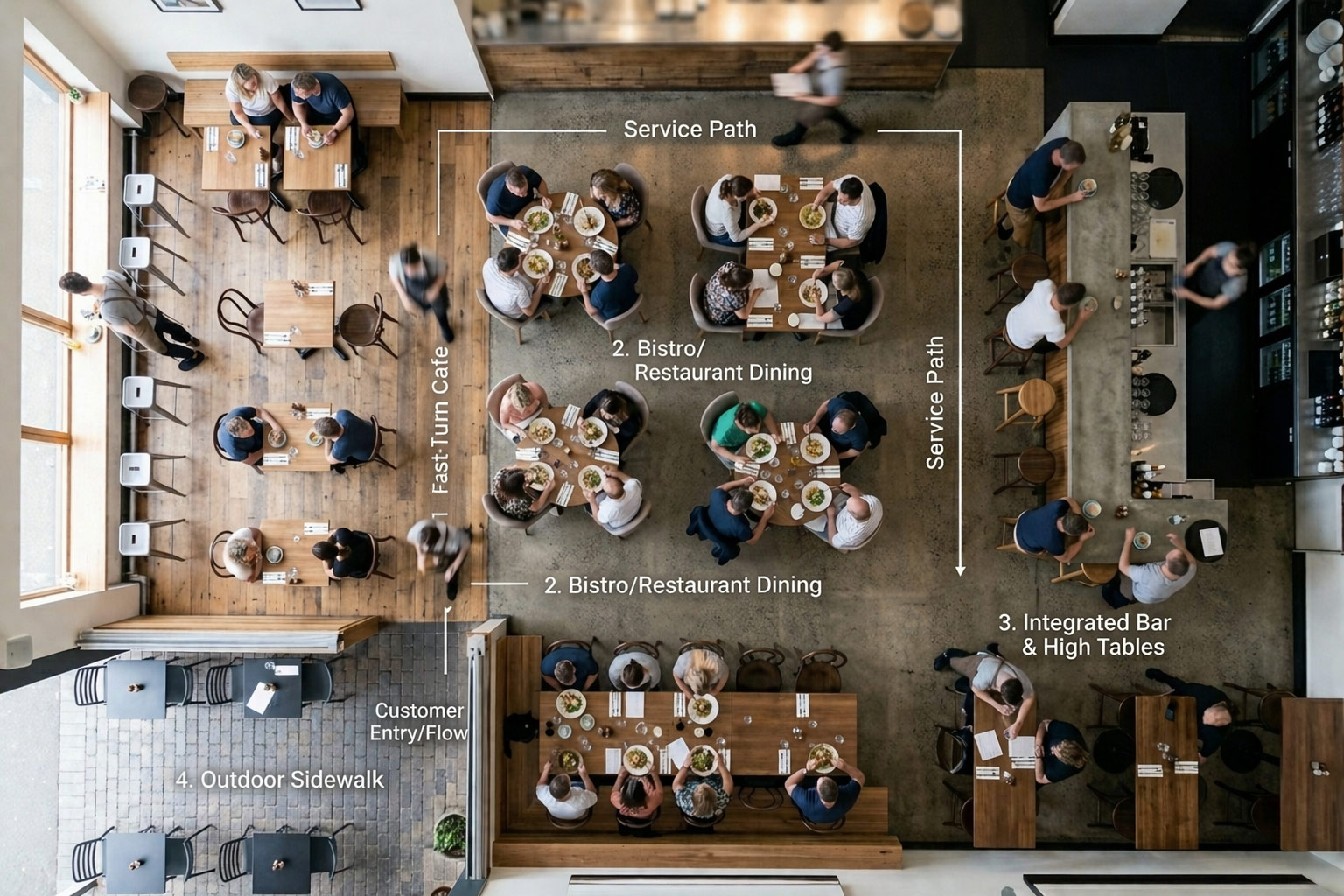
The Pro-Space Blueprint: Real-World Measurements
In hospitality, every centimetre counts. If walkways are too narrow, staff are constantly apologising as they squeeze past guests. If tables are too close, diners feel like they are part of the conversation next door.
| Layout Element | Sweet Spot Measurement | Why It Matters for Service |
|---|---|---|
| Main Service Arteries | 900 mm to 1200 mm | Allows staff to pass with trays and reduces bottlenecks during peak service. |
| Secondary Walkways | 450 mm to 600 mm | Gives enough room for guests to tuck in and still allow controlled passage. |
| Table-to-Table Gap | 300 mm to 450 mm | Helps with elbow room, acoustic privacy and comfort between tables. |
| Chair Push-Back | About 450 mm from table edge | Accounts for the real space a person occupies once seated. |
Treat these as practical planning ranges, not a magic formula. A fast-turn cafe, a wine bar and a family restaurant all use space differently. The point is to plan for bodies, chairs, trays and movement, not just table outlines.
Start with Movement, Not Furniture
The biggest layout mistake is placing the hero tables first and trying to squeeze the aisles around them. Instead, map the service arteries first. These are the invisible highways staff use between the kitchen, bar, POS, bathrooms and tables.
If these paths are not straight and clear, service speed drops, breakage risk rises and the room starts to feel stressful. Once the movement paths are clear, you can work out where the tables actually belong.
Those awkward corners, columns or leftover pockets are not always a problem. Use them for smaller two-tops, date-night corners, waiting perches or compact bar stool zones that do not need much footprint.
The sideways test
If a staff member has to turn their shoulders sideways to get a tray past a seated guest, the layout is working against the venue. Losing one table can be smarter than squeezing in extra seats that slow the whole floor.
Table Spacing: The Balance of Vibe vs Volume
Table spacing controls the energy of the room. A high-volume cafe can often handle tighter spacing because the pace is fast and buzzing. A bistro or restaurant with longer dwell time needs more personal space because guests are sitting longer and spending more time in conversation.
Remember that the footprint of a table is not just the table top. It is the top plus the chair push-back zone on all sides. When planning, draw the chairs out, not tucked in. That is the room your guests and staff actually use.
Table Spacing Reality Check
| Venue Mood | Spacing Direction | What It Creates |
|---|---|---|
| Fast cafe | Tighter but still workable | Energy, turnover and efficient use of small floors. |
| Bistro / restaurant | More breathing room | Comfort, conversation and longer dwell time. |
| Bar / pub | Clear standing and seated zones | Better flow where people move, queue and gather. |
Flexibility Beats Perfect Symmetry
A venue with only fixed four-top tables loses flexibility. You will inevitably have a night where you need three two-tops, then a walk-in group of six, then a family that needs more room. If your tables cannot modularise, you end up with dead seats while other groups wait.
- Use square tables where flexibility matters. 600 mm or 700 mm square tables are hospitality workhorses. They can stand alone, split apart or push together quickly.
- Use central pedestal bases where possible. When two tables push together, guests can sit near the join without fighting table legs.
- Keep a mix of table sizes. A smart layout gives you options instead of locking every group into the same setup.
Pair flexible tops with suitable table bases so the layout can change without creating wobbly joins or awkward leg clashes.
Practical move
Perfect symmetry looks good on a plan, but flexible tables often make more money in real service. The room needs to adapt to the groups that actually walk in.
Manage the Congestion Zones
The entrance, POS station, bar queue, takeaway pickup point and path to the bathrooms are danger zones. These are the places where guests pause, staff pass through and groups bunch up without meaning to.
In a pub or bar, these areas often need extra clearance because people may be standing with drinks while staff are still moving through the room. If people waiting at the bar are bumping into the back of a seated diner's chair, the zone is too compressed.
Zoning can solve a lot of this. Higher bar stools, leaner tables and casual perch areas near the bar can create a standing/casual zone, while lower dining tables sit deeper in the room where the mood is more settled.
Test the Layout with a Dry Run
Before you bolt anything down or commit to a full furniture run, do a physical walkthrough. Mark out the table footprints with masking tape on the floor. Pull chairs back to their real seated position. Get staff to walk the paths with a tray.
If it feels tight in an empty room, it will be worse in a full one. A dry run exposes problems that a neat drawing can hide: chair backs clipping walkways, table corners blocking turns, and queues forming in places you did not expect.
If you are unsure how a specific chair, stool or table size will feel in a real space, visit our Richmond showroom. We can help you mock up a small section of your layout so you can feel the clearances before ordering.
Get the Layout Right and Everything Else Works Better
A well-planned floor makes the whole venue easier to run. Staff move faster, customers feel more comfortable, and the room feels calmer even when it is busy.
It is not about squeezing in the most seats. It is about making every seat work properly. If you are working through layout and furniture together, it is worth stepping back and looking at the full picture before locking anything in.
The Commercial Furniture Series
If you are planning a full venue fit-out or upgrading sections over time, these guides break down each category in practical terms. From layout and flow through to selecting the right tables, chairs, stools and finishes, this series is designed to help you make confident decisions without overcomplicating the process.
- Restaurant, Cafe & Bar Furniture Buying Guide
- Best Furniture for Small Cafes: Maximise Space Without Killing Flow
- How to Choose Cafe Chairs for Busy Venues
- Bar Stool Height Guide
- How to Choose Table Tops and Table Bases
- Indoor vs Outdoor Cafe Furniture
Frequently Asked Questions
How much space should I leave for a chair to pull out?
Allow around 450 mm from the table edge for the chair and seated guest. If staff or other guests need to pass behind that chair, add extra walkway clearance behind it.
How wide should a main service walkway be in a cafe or restaurant?
A main service walkway is best planned around 900 mm to 1200 mm where possible, especially if staff need to pass each other with trays. Smaller secondary walkways may work around 450 mm to 600 mm depending on the venue and traffic flow.
What is better: communal tables or smaller individual tables?
Smaller individual tables, especially 600 mm or 700 mm square two-tops, usually offer more flexibility because they can stand alone or be pushed together. Communal tables can create atmosphere, but they are less flexible for mixed group sizes.
How do I handle pillars or awkward corners?
Do not force standard tables into awkward leftover spaces. Use those areas for smaller perch zones, two-top spots, bar stool areas or bench seating where the footprint makes more sense.
Why should I mark out the layout before ordering furniture?
Marking out the layout with tape helps you test table footprints, chair push-back and staff movement before ordering. If it feels tight in an empty room, it will usually feel worse during a busy service.
Plan a Layout That Works During Service
The best venue layouts are built around movement first. Once service paths, table spacing and congestion zones are clear, choosing the furniture becomes far easier.
If you are planning a cafe, bar or restaurant fit-out, bring your measurements, photos and rough floor plan into our Richmond showroom. We can help you compare table sizes, chair footprints, stool heights and layout options before you order in quantity.
Browse cafe, bar and restaurant furniture Or visit our Richmond showroom at 365 Swan St, Richmond VIC 3121.