

Bar stools are one of the easiest places to get a hospitality fit-out wrong. A stool can look perfect in a product photo and still feel awkward the second a guest tries to sit on it.
Too low, and they are hunching over their drink like they are at a primary school desk. Too high, and their knees are jammed under the counter. In a busy cafe, bar or restaurant, that is not just a style miss. It is a seat that guests avoid because it does not feel right.
The secret is simple: treat stool height as a measurement job first and a style job second. Whether you are running a fast-turn Richmond cafe or a late-night Melbourne pub, the stool has to suit the actual surface height, not just the mood board. If you are mapping out a full venue, this guide works alongside our Restaurant, Cafe & Bar Furniture Buying Guide. You can also compare options in our bar stools range.
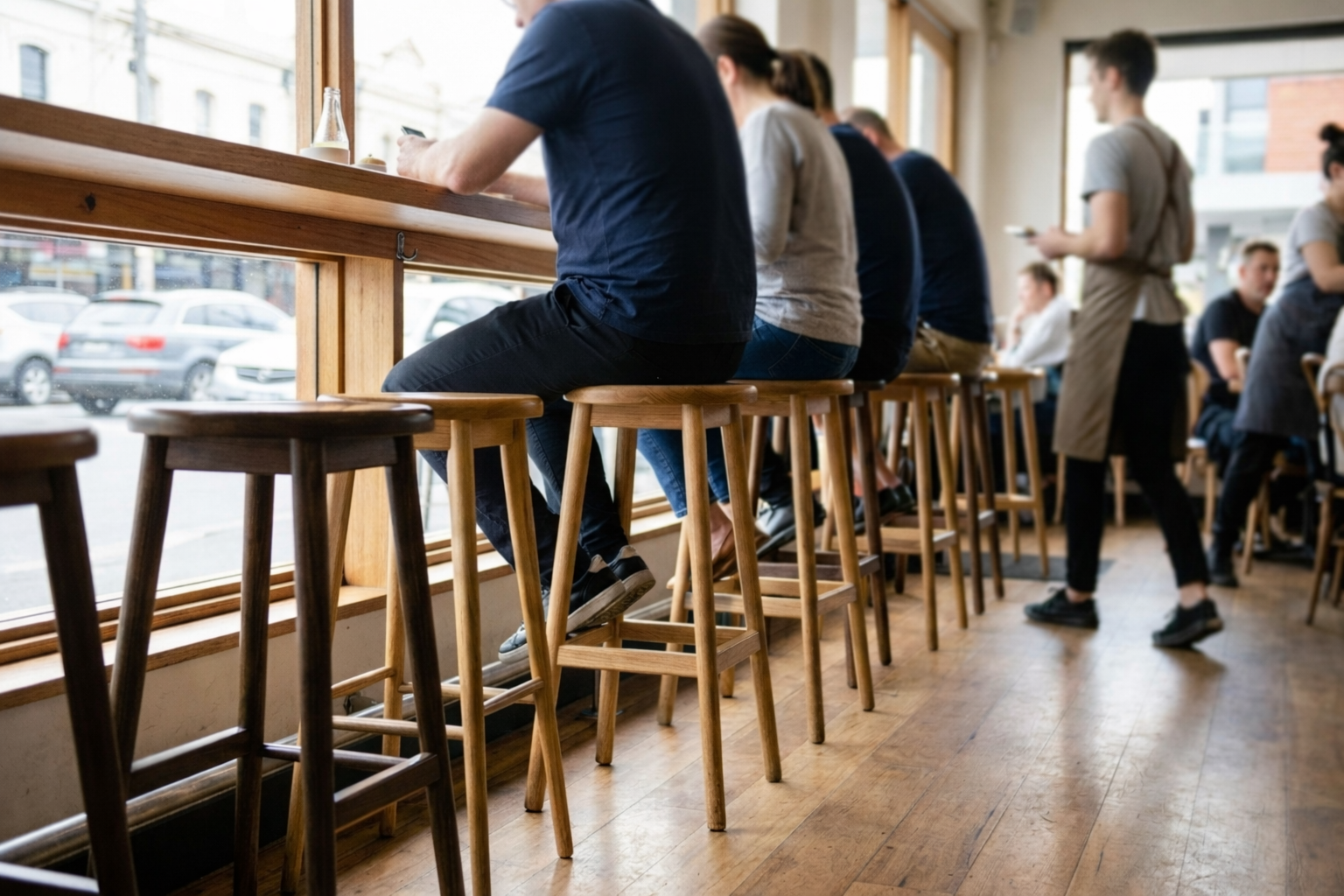
Start with the Surface, Not the Stool
The fastest way to buy the wrong stool is to guess. In hospitality fit-outs, stools generally fall into two main height groups: counter height and bar height. Using the wrong one is the difference between a comfortable guest and a seat that feels off from the first minute.
The golden rule is the clearance zone. You want around 250 mm to 300 mm between the top of the stool seat and the underside of the bench, bar or table. That gives most guests enough room to sit naturally without their knees fighting the furniture.
Pro tip
Measure the surface people actually sit under, not just the product name. A "bar table" can still be the wrong match if its underside clearance is lower than expected.
Counter Height vs Bar Height Stools
Counter height and bar height are close enough to confuse people, but different enough to ruin the fit. The surface height decides which one you need.
| Surface Height | Ideal Seat Height | Common Application | Fit Reality |
|---|---|---|---|
| 850 mm to 950 mm | 600 mm to 670 mm | Kitchen-style counters, lower communal tables, window benches | Usually counter-height stool territory |
| 1000 mm to 1100 mm | 720 mm to 780 mm | Traditional bars, pub leaners, high dining tables, bar-height islands | Usually bar-height stool territory |
The table gives you the working range, but the final check is still the underside. Thick tops, support frames, rails and aprons can all steal legroom even when the top surface height looks right.
.png)
The Apron Trap: Measure to the Underside
This is where a lot of DIY fit-outs fail. You might measure your counter at 900 mm and think you are safe, but if that counter has a 100 mm apron, timber rail or support frame underneath, you have just lost a chunk of legroom.
Always measure from the floor to the lowest point under the table, bar or bench. That is where the knees actually go. If you only measure to the top surface, you can end up buying a stool that technically matches the height but feels cramped in real use.
In a bistro, cafe or wine bar where guests might be sitting for 45 minutes or more, that extra clearance is the difference between someone settling in comfortably and someone shifting around until they leave.
Fit check
Do not trust the top height alone. Measure floor to underside, then subtract the stool seat height. That remaining number is the guest's knee clearance.
Comfort Is About More Than Just Seat Height
When a guest is sitting on a high stool, their feet are not resting naturally on the floor. That changes how the body settles into the seat, which makes the footrest and seat profile more important than they look on paper.
Footrest Position
If the footrest is too low, the guest's legs can dangle and the stool feels tiring. If it is too high, their knees push up and the posture feels cramped. A well-placed footrest lets the guest settle into the stool rather than perch on top of it.
Seat Profile and Cushion Give
A flat timber or metal seat is easy to measure. A scooped seat or upholstered stool behaves differently once someone actually sits on it. If the seat has padding, allow for around 10 mm to 20 mm of give depending on the construction.
The Dwell Time Test
The longer you want guests to stay, the more chair-like the stool should feel. A backless metal stool can be great for quick turnover, front-window coffee perches or casual drink spots. For bar-side dining, wine bars or long dinner seating, back support and a wider seat base matter much more.
Practical move
Match the stool comfort to the dwell time. Quick coffee perch? Backless can work. Long meal or wine bar seating? Give people a backrest and a seat they can actually settle into.
Operational Reality: Resetting the Room
In a busy Melbourne pub, bar or cafe, stools move. They get dragged, regrouped, tucked under counters, stacked outside, pulled into conversations and shoved aside when the room needs to reset.
Weight vs Stability
A heavier stool can feel more stable and premium, but your staff will notice if they have to move dozens of them at close. A lighter stool is easier to reset, but it still needs enough structure to feel secure under commercial use.
Stackability
If you have an outdoor area, a flexible floor plan or a cleaning routine that requires clearing space quickly, stackable stools can be a major win. Being able to clear a walkway or pack down a zone in minutes is not glamorous, but it matters every week.
Floor Protection and Noise
Hospitality stools get dragged more than residential stools. Check the feet, glides and floor contact points, especially on hard floors where scraping, wobble and noise become obvious fast.
| Venue Need | Best Stool Direction | Why It Helps |
|---|---|---|
| Quick coffee window | Backless, easy tuck-in stool | Keeps the area flexible and fast-turning |
| Wine bar or long sitting | Backrest, wider seat, better footrest | Supports longer dwell time and comfort |
| Outdoor area | Stackable or easy-move stools | Makes pack-down, cleaning and weather response easier |
| Busy pub reset | Stable but not punishingly heavy | Balances guest feel with staff handling |
Test the Sit in Richmond
You can do the maths, check the table and compare the specs, but nothing beats the sit test. Seeing a stool paired with a commercial table or bar-height surface in person tells you things a product page cannot: how easy it is to climb onto, how heavy the frame feels, where the footrest hits your leg and whether the seat still feels good after a few minutes.
If you are in Melbourne, come into our Richmond showroom and test the difference between counter-height and bar-height seating in person. For venue fit-outs, photos, measurements and a rough floor plan can help narrow down the right direction before you order in quantity.
Browse our bar stools or compare them alongside cafe and restaurant tables.
The Commercial Furniture Series
If you are planning a full venue fit-out or upgrading sections over time, these guides break down each category in practical terms. From layout and flow through to selecting the right tables, chairs, stools and finishes, this series is designed to help you make confident decisions without overcomplicating the process.
- Restaurant, Cafe & Bar Furniture Buying Guide
- Cafe, Bar & Restaurant Layout Guide
- Best Furniture for Small Cafes: Maximise Space Without Killing Flow
- How to Choose Cafe Chairs for Busy Venues
- How to Choose Table Tops and Table Bases
- Indoor vs Outdoor Cafe Furniture
Frequently Asked Questions
What is the most common stool height?
In Australian hospitality, counter-height stools around 600 mm to 670 mm suit lower counters and cafe-style benches, while bar-height stools around 720 mm to 780 mm suit pubs, bars and high dining surfaces.
How many stools can I fit along my bar?
Allow roughly 600 mm of width per person. This gives guests enough elbow room to sit, eat and drink without bumping into the person next to them.
Do I need a stool with a backrest?
If guests are staying for a full meal or longer drinks, a backrest is usually worth it. If the area is narrow, fast-turning or needs stools tucked fully under the counter, backless may be more practical.
What is the difference between counter height and bar height stools?
Counter-height stools usually suit surfaces around 850 mm to 950 mm high. Bar-height stools usually suit surfaces around 1000 mm to 1100 mm high. The final check is the underside clearance, not just the top height.
How much leg clearance do I need for bar stools?
Aim for around 250 mm to 300 mm between the top of the stool seat and the lowest point under the bar, counter or table.
Are stackable stools better for hospitality venues?
They can be, especially for outdoor areas, flexible layouts or venues that need quick cleaning resets. Stackability is not always necessary, but it can make daily operations much easier.
Choose the Right Bar Stools Before You Order
The best bar stool choice starts with measurement: surface height, underside clearance, spacing, footrest position and how long you want guests to stay. Once those are clear, style becomes much easier to choose.
If you are planning a cafe, bar or restaurant fit-out, bring your counter heights, table heights and rough venue layout into our Richmond showroom. We can help you compare stool heights, comfort levels and commercial practicality before you order in quantity.
Browse bar stools Or visit our Richmond showroom at 365 Swan St, Richmond VIC 3121.