

Indoor and outdoor cafe furniture are not interchangeable once a venue starts trading properly. A chair that behaves perfectly in a climate-controlled dining room can become a maintenance problem on a footpath, courtyard or rooftop within months.
Outdoor furniture has to handle harsher conditions: UV, moisture, temperature shifts, uneven surfaces, dragged legs, fast weather changes and constant resets. In Melbourne especially, one week can give you harsh sun, rain, damp mornings and furniture being moved around by both staff and customers.
This guide breaks down what actually changes between indoor and outdoor cafe furniture, including materials, table bases, drainage, cleaning, stability and layout planning. If you are working through a full venue fit-out, start with our Restaurant, Cafe & Bar Furniture Buying Guide.
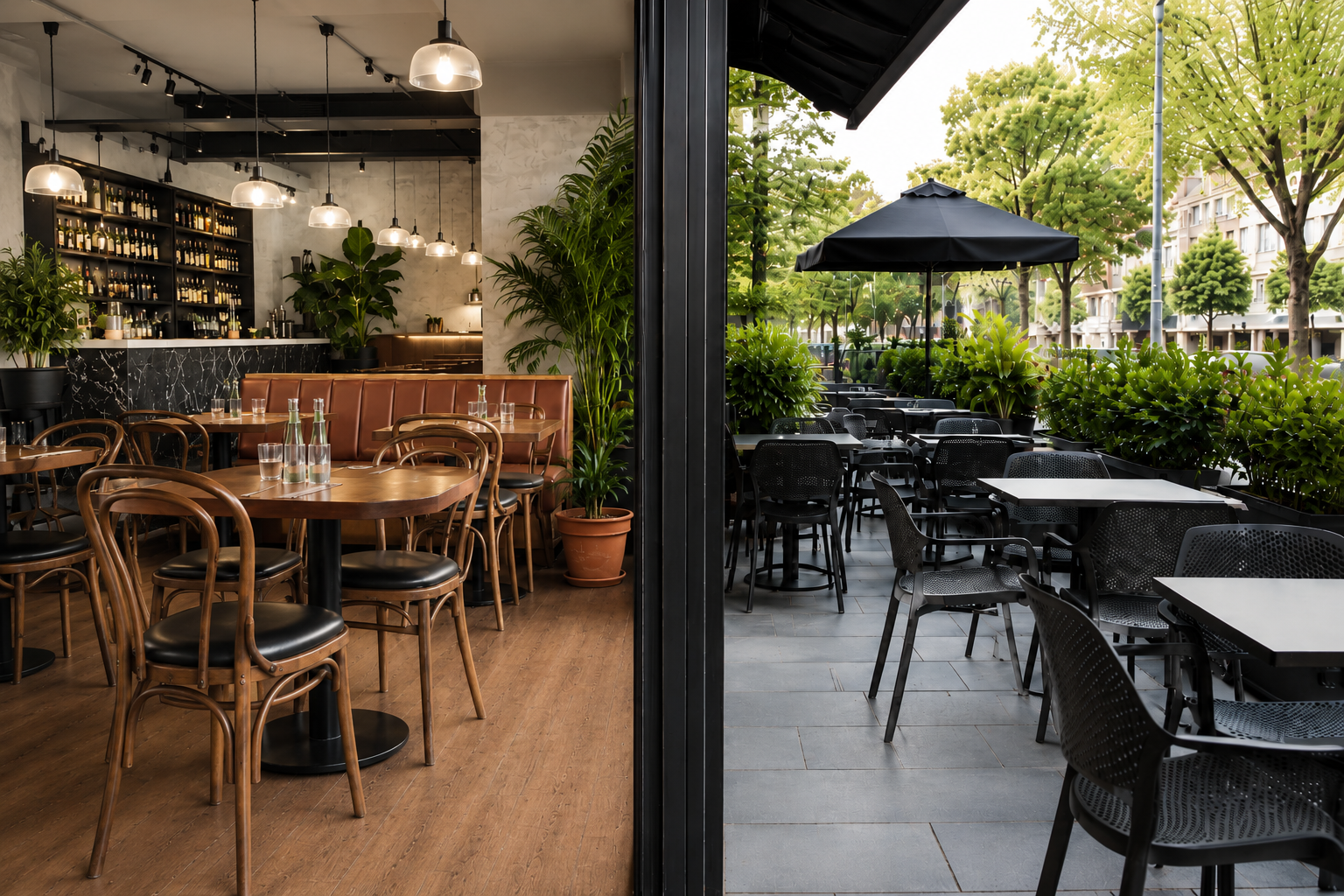
At a Glance: What Changes Outside
The environment decides the material. Indoors, furniture has a stable floor, controlled light and a predictable cleaning routine. Outdoors, everything is less controlled. Sun hits harder, surfaces are less even, moisture appears without warning and furniture gets moved more often.
| Feature | Indoor Seating and Tables | Outdoor Commercial Furniture |
|---|---|---|
| UV resistance | Minimal protection. Materials can fade, yellow or become brittle. | UV-stabilised materials help reduce fading, cracking and brittleness. |
| Moisture | Standard timber, fabrics and indoor metals may swell, stain or rust. | Non-porous, treated or weather-suitable materials handle exposure better. |
| Maintenance | Standard wiping and indoor cleaning routines. | Needs regular wipe-down, wash-down friendly design and suitable hardware. |
| Floor surface | Level indoor flooring such as tiles, timber or polished concrete. | Uneven pavers, footpaths, decking, concrete and outdoor slopes. |
| Daily handling | Moved mainly for cleaning and layout changes. | Dragged, stacked, repositioned, brought in during storms and reset more often. |
Common mistake
Using indoor furniture outside to save cost usually leads to faster wear, more maintenance and earlier replacement. Cheap once can become expensive twice.
Material Choice Is the First Line of Defence
In Australia, the sun often does more damage than the rain. Indoor plastic chairs usually do not have the UV stability needed to survive repeated summer exposure. Over time they can fade, embrittle and crack. Standard indoor steel can also rust at weld points when exposed to rain, damp mornings or repeated moisture.
UV-Stabilised Polypropylene
UV-stabilised polypropylene is a strong option for high-traffic outdoor hospitality because it can be easy to clean, easy to move and practical for stackable seating. The key is the UV rating and commercial suitability, not just the word "plastic".
Aluminium and Outdoor-Suitable Metals
Aluminium is naturally useful outdoors because it is light and rust-resistant. Powder-coated outdoor-rated metal can also work well when the coating and hardware are suitable for the environment.
Outdoor-Rated Timber
Treated timber or outdoor-rated hardwood can bring warmth to a courtyard, beer garden or outdoor dining area, but it needs the right maintenance expectations. Timber left outside permanently will always need more care than indoor timber.
For the bigger furniture planning picture, pair this with our guide on how to choose cafe chairs for busy venues.
Stability on Uneven Outdoor Surfaces
Indoor floors are usually level. Outdoor surfaces often are not. Melbourne footpaths, bluestone pavers, decking and exposed concrete can all create wobble if the base is not chosen properly.
This is where outdoor table bases matter. A good outdoor setup should account for:
- adjustable glides or feet to help level the table
- suitable base weight so the table feels stable
- enough base spread for the table top size
- outdoor-rated materials that suit exposure and moisture
For detailed table pairing advice, read How to Choose Table Tops and Table Bases.
Fit check
If the outdoor floor is uneven, the table base is doing more work than the table top. Adjustable feet can be the difference between a usable outdoor table and a wobbling complaint magnet.
Drainage, Drying and Fast Reset
Outdoor seating has to recover quickly after weather changes. A chair that traps water in the seat might technically be outdoor furniture, but it slows service down if staff have to tip, dry and wipe every piece before customers can sit.
Good outdoor seating design often includes drainage holes, slatted construction, open backs or surfaces that dry quickly after a wipe-down. This matters for morning trade after overnight dew, fast resets after rain and venues that need to open outdoor zones as soon as weather clears.
Reset tip
Stackable outdoor chairs make it much easier to clear areas quickly, wash down zones, bring furniture inside during extreme weather and reset the floor without dragging every chair one by one.
Outdoor Layouts Behave Differently
Outdoor areas are more fluid than indoor rooms. Customers move furniture, staff drag pieces around obstacles, tables shift on uneven surfaces and weather can force quick changes.
That is why outdoor layouts benefit from simple, flexible setups rather than tightly packed arrangements that only work when nothing moves. A loose outdoor plan with stackable chairs, stable bases and clear circulation will usually perform better than a perfect-looking plan that collapses the first time a group drags two tables together.
If you are still building the overall floor plan, read the Cafe, Bar & Restaurant Layout Guide.
Outdoor Layout Reality Check
| Outdoor Challenge | Furniture Direction | Why It Helps |
|---|---|---|
| Sudden rain or damp mornings | Drainage-friendly chairs and wipeable tops | Faster reset and less staff time spent drying seats. |
| Uneven footpath or decking | Adjustable table bases | Helps reduce wobble and guest complaints. |
| Flexible groups | Moveable tables and stackable seating | Lets the area adapt without turning into chaos. |
| Strong sun exposure | UV-stabilised materials | Helps reduce fading, brittleness and early replacement. |
See the Difference in Person
Materials like aluminium, polypropylene, powder-coated metal and outdoor-rated timber behave differently in the hand. Seeing them side by side helps you understand the weight, finish, cleaning feel and how suitable each option is for your venue.
If you are fitting out a venue in Melbourne, our Richmond showroom lets you compare indoor and outdoor furniture options in person. Bring photos of your indoor and outdoor areas, plus measurements if you have them, and we can help narrow down what makes sense before you order in quantity.
Browse our outdoor cafe furniture, cafe chairs and commercial tables.
The Commercial Furniture Series
If you are planning a full venue fit-out or upgrading sections over time, these guides break down each category in practical terms. From layout and flow through to selecting the right tables, chairs, stools and finishes, this series is designed to help you make confident decisions without overcomplicating the process.
- Restaurant, Cafe & Bar Furniture Buying Guide
- Cafe, Bar & Restaurant Layout Guide
- Best Furniture for Small Cafes: Maximise Space Without Killing Flow
- How to Choose Cafe Chairs for Busy Venues
- Bar Stool Height Guide
- How to Choose Table Tops and Table Bases
Frequently Asked Questions
Can indoor cafe furniture be used outside if I bring it in daily?
Usually no. Even limited exposure to UV, moisture and outdoor surface wear can shorten the life of indoor furniture. Bringing it in at night helps with storage, but it does not make indoor furniture outdoor-rated.
What material is best for exposed outdoor venues?
UV-stabilised polypropylene, aluminium, suitable powder-coated metals and outdoor-rated timber are common choices. The best option depends on exposure, venue style, weight requirements and how often staff need to move the furniture.
How do I stop outdoor cafe tables wobbling?
Use outdoor-suitable bases with adjustable glides or feet, then choose the correct base size and weight for the table top. Outdoor surfaces are often uneven, so base choice matters more outside than many people expect.
Is outdoor furniture harder to maintain?
Not if it is chosen properly. Outdoor-rated furniture is designed for wipe-downs, exposure and movement. The maintenance problem usually starts when indoor furniture is used outdoors and begins failing early.
Are stackable outdoor chairs worth it?
Yes, especially for cafes, bars and restaurants with outdoor trading areas. Stackable chairs make pack-down, cleaning, storage and bad-weather response much easier.
Can I match indoor and outdoor furniture styles?
Yes. You can keep the overall venue look consistent while using different materials indoors and outdoors. The goal is visual continuity without forcing indoor-only materials into outdoor conditions.
Choose Outdoor Furniture That Survives Service
The right outdoor cafe furniture is not just a design choice. It is a maintenance, safety, reset and replacement-cycle decision. Choose materials and bases that match the exposure, not just the look.
If you are planning indoor and outdoor hospitality zones, bring photos, measurements and a rough floor plan into our Richmond showroom. We can help you compare materials, table bases, chair weights and outdoor suitability before you order in quantity.
Browse outdoor cafe furniture Or visit our Richmond showroom at 365 Swan St, Richmond VIC 3121.
Family owned since 1956.