
Sit-Stand Desk vs Fixed Desk: Is It Worth It for Your Setup?

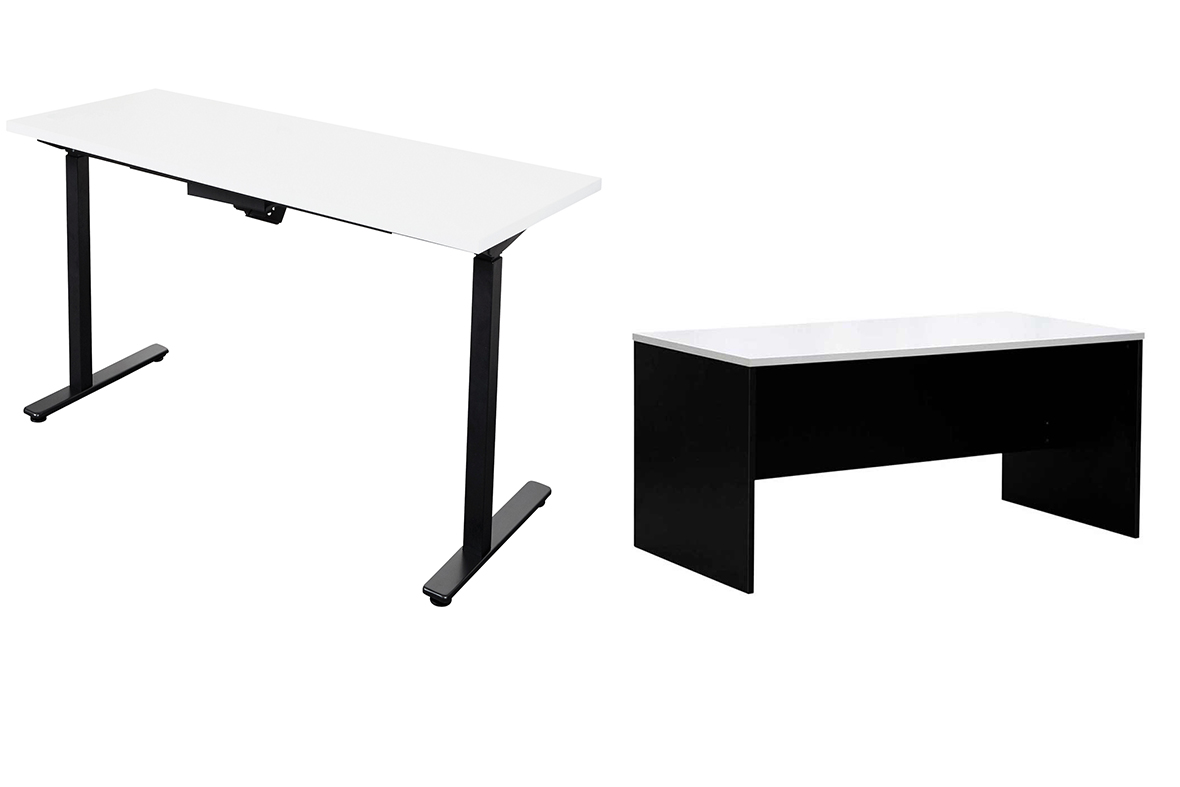
Some desk decisions are simple. This one usually is not.
If you are setting up a home office, upgrading a study area or reworking a proper office fit-out, there is a good chance you have looked at both options and wondered whether a sit-stand desk vs fixed desk decision is actually worth thinking hard about, or whether one is just a more expensive version of the other.
The honest answer is that both can be the right call. A sit-stand desk can absolutely be worth it for the right setup. But it is not automatically the better choice for every room, every budget or every type of work.
Sometimes a fixed desk is exactly what you need. Simpler, solid and practical. Other times, the ability to change height through the day makes a real difference, especially if the desk is used heavily.
When you are ready to browse, you can see our sit-stand desks and the broader office desks range.
What is the real difference?
At the most basic level, a fixed desk stays at one height and a sit-stand desk gives you the option to move between sitting and standing.
That sounds obvious, but the real difference is not just the frame. It is how the desk fits into your routine.
A fixed desk is usually about simplicity. You set it up once and get on with it.
A sit-stand desk adds flexibility. You can change position, break up long stretches of sitting and adjust the height to suit different users or different parts of the day.
So the better question is not which one is objectively better. It is which one suits the way the desk will actually be used.
When a sit-stand desk is worth it
A sit-stand desk usually makes the most sense when the desk is in regular, serious use.
If you are working from home most days, spending long hours at the desk or sharing the desk with someone else, the adjustability can be genuinely useful rather than just a nice feature on paper.
It can also help if your workday tends to drag on in one position. Being able to raise the desk, even for short stretches, can make the setup feel less static.
A sit-stand desk is often worth it when:
- the desk is used most days of the week
- you spend long hours there
- more than one person uses the desk
- you want more flexibility through the day
- the desk needs to work harder as part of a serious home office setup
In that kind of setup, the extra spend can be easier to justify because you are getting more daily use out of it.
What about the health side?
This is one of the main reasons people look at sit-stand desks in the first place.
The benefit is usually not that standing all day is magically better than sitting all day. It is that a sit-stand desk makes it easier to change posture through the day instead of locking yourself into one position for hours on end.
For people working from home or doing long admin days, that can help the setup feel less stiff and less static. Even short standing stretches between seated work can be useful if it helps you move around more naturally.
That said, a sit-stand desk is not a miracle cure. If the chair is poor, the monitor height is wrong and the desk never actually gets adjusted, the health benefits are mostly theoretical.
The most practical way to think about it is this:
- Fixed desk: can still be perfectly comfortable if the setup is right and you take regular breaks.
- Sit-stand desk: gives you another way to break up the day and avoid being stuck in one position.
So yes, there can be a health upside, but it comes from movement and variation, not just buying the desk itself.
The real value of a sit-stand desk is usually not standing for hours. It is being able to change position regularly without disrupting your work setup.
When a fixed desk makes more sense
A fixed desk is often the smarter buy when the setup is simpler, lighter or more occasional.
If the desk is mainly for admin, study, paying bills, laptop use or a spare-room workspace that only gets used here and there, a good fixed desk can do the job perfectly well without adding cost or complexity.
That is especially true if you already know you are unlikely to change desk height much in real life. Plenty of people like the idea of a sit-stand desk but end up leaving it in one position most of the time.
A fixed desk often makes more sense when:
- the desk is used occasionally rather than daily
- the setup is mostly laptop-based
- budget matters more than adjustability
- you want something straightforward and low-fuss
- you are fitting out multiple desks and need practical consistency
There is nothing second-best about that. In plenty of rooms, a fixed desk is the more sensible choice.
It depends how many hours you actually sit there
This is usually the biggest deciding factor.
If the desk gets used once or twice a week, it is harder to argue that height adjustment is essential. If you are there five days a week for long stretches, the value equation changes pretty quickly.
That is why this decision works best when you are honest about the routine, not the ideal version of the routine.
Ask yourself:
- Will this be a daily workstation or an occasional desk?
- Am I setting up for proper work from home or just general life admin?
- Will I realistically use the standing function, or just like the idea of it?
That usually tells you more than product specs do.
Small room or shared room? Flexibility helps, but size still matters
In smaller homes, apartments and spare-room setups around Melbourne, one desk often has to do a lot of jobs. It might be the work desk by day, general household surface by night, and part of a guest room the rest of the time.
In that kind of room, a sit-stand desk can be appealing because it gives you more flexibility. But it still has to suit the room physically.
If the desk is too deep, too bulky or too wide, height adjustment will not save it.
That is why footprint still matters. In tighter spaces, the best desk is still the one that leaves the room usable. If space is the bigger issue, it is worth reading our guide on small space desk ideas.
Budget matters, and that is fine
There is no point pretending price is not part of the decision.
A sit-stand desk usually costs more, and whether that extra spend is worth it comes down to use. If the desk is central to your day, you may feel the benefit. If it is a secondary setup, a fixed desk might free up budget for a better chair, extra storage or other parts of the room that matter more.
That is worth remembering because the desk is only one part of the workspace. In some setups, the better overall result comes from choosing a practical fixed desk and spending the difference elsewhere.
It is also worth thinking about the adjustment type itself:
- Electric: better if you want to change height regularly and do it quickly.
- Manual/crank: a good middle ground if you want flexibility without paying as much or worrying about power access.
So, is a sit-stand desk worth it?
Yes, for the right setup it can be.
If the desk is used heavily, forms part of a serious work-from-home routine or needs to suit more than one person, a sit-stand desk can absolutely be worth the extra spend.
If the desk is lighter-use, occasional or budget-led, a fixed desk may be the smarter and more practical option.
That is really the answer. Not hype, not guilt, just fit-for-purpose thinking.
The best desk is the one that suits the room, the routine and the way you will actually use it next month, not the one that sounds best in theory.
FAQs
Is a sit-stand desk better for your back than a fixed desk?
It can be, but only if you actually use the standing function to change posture through the day. A sit-stand desk paired with a poor chair can still be uncomfortable. The best result usually comes from a mix of movement, sensible desk setup and a supportive chair.
Are sit-stand desks worth it for working from home?
They often are if you are working from home most days and spending serious time at the desk. If the setup is more occasional, a fixed desk may make more sense.
Do I really need a sit-stand desk?
Not everyone does. If you are unlikely to change desk height much and the desk is mostly for light use, a fixed desk can do the job perfectly well.
Are fixed desks better for small rooms?
Not always, but they can be a very practical option. The bigger factor is usually the desk footprint. In small rooms, width, depth and overall bulk matter more than whether the desk moves up and down.
Should I spend more on a sit-stand desk or put the budget elsewhere?
If the desk is your main daily workstation, the extra spend can be worth it. If not, you may get a better overall setup by choosing a solid fixed desk and putting the difference towards a chair, storage or other essentials.
More from our Office Furniture guide series
If you are planning an office fit-out or tightening up a home workspace, these guides cover desks, chairs, storage and layout ideas across the full Office Furniture range:
- Office Furniture Buying Guide for Home Office, School or Workplace
- Small Space Desk Ideas: Student Desks and Office Desks for Compact Rooms
- Visitor Chair vs Desk Chair: What Suits Your Office Better?
- Filing Cabinet vs Mobile Pedestal: Which Office Storage Works Better?
- Office Storage Ideas: Shelves, Cupboards, Cabinets, Hutches and Buffets Explained
- Reception Desks, Meeting Tables and Partitions: Practical Office Layout Ideas