

Carpet underlay guide · Written by the team at Swan Street Sales, Richmond
The best carpet underlay is not automatically the thickest, softest or most expensive option. It needs to suit the carpet, the room, the traffic and the way you want the finished floor to feel.
Underlay is easy to overlook because it disappears as soon as the carpet is installed. You will not see it again, but you will feel the result every time you walk across the room.
A soft bedroom, a busy hallway, a staircase and a commercial space can all need something different beneath the carpet. Thickness matters, but so do density, construction and the use the underlay has been designed for.
If you are still choosing the carpet itself, start with our complete guide to choosing carpet in Melbourne. This guide focuses on the layer underneath: what it does, why thicker is not always better and how to compare the main underlay options available through Swan Street Sales.
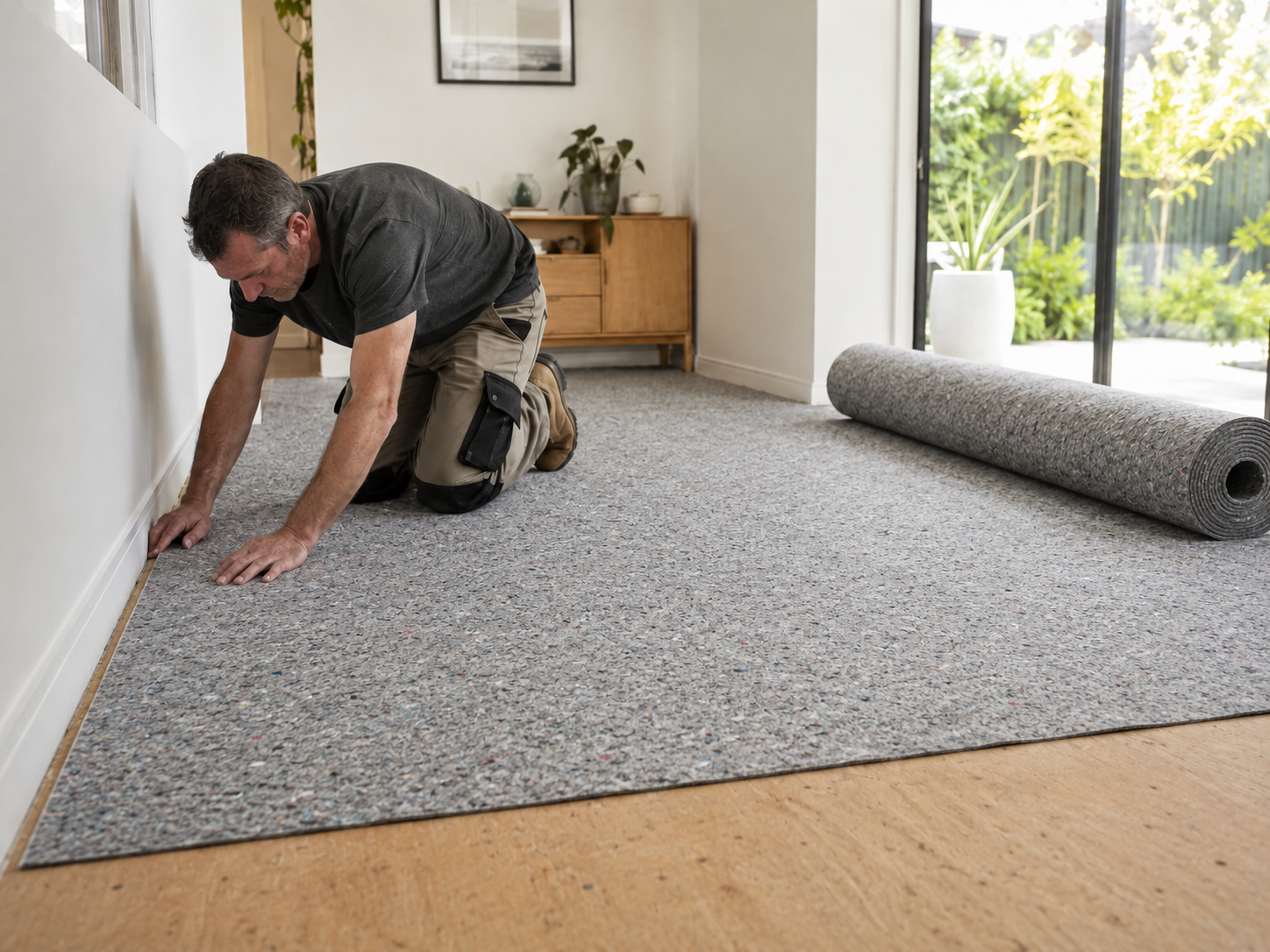
The Short Answer
The best carpet underlay is the one that works with the carpet and suits where it is being installed. A thicker underlay may feel more cushioned, while a thinner, denser product may provide firmer support for demanding traffic.
Simple rule: Do not choose underlay by thickness alone. Look at the material, density, intended use, room and finished feel as well.
For a quiet bedroom, comfort may sit high on the list. For stairs, hallways, offices or other hard-working areas, support and suitability can matter more than maximum softness.
What Does Carpet Underlay Actually Do?
Carpet underlay sits between the carpet and the subfloor. Cushioning is the most obvious benefit, but it also affects how supported and settled the carpet feels once the room is finished.
- Changes the underfoot feel: The same carpet can feel softer or firmer depending on the underlay beneath it.
- Supports the carpet: Underlay gives the carpet a more supportive base beneath normal foot traffic.
- Helps with noise: It can soften footfall and contribute to lower sound transmission through the floor.
- Adds thermal resistance: It places another layer between the room and the subfloor, which can improve underfoot comfort.
- Forms part of the finished installation: Carpet and underlay need to work together rather than being treated as unrelated purchases.
Underlay is still only one part of the floor. It cannot make an unsuitable carpet suitable, repair a poor subfloor or guarantee that an apartment will meet a particular acoustic requirement.
John, Swan Street Sales carpet department
"People get caught up on the thickness. A thick underlay can feel great, but you still have to ask what it is made from, how firm it is and where it is going."
Is Thicker Carpet Underlay Always Better?
No. Thickness affects cushioning, but it does not tell you everything about the product.
Density affects how firm and supportive a foam underlay feels. Material and construction matter too. A recycled textile underlay behaves differently from foam, even when the thickness looks similar on paper.
This is why a 10mm residential comfort underlay and a 7mm high-density commercial underlay should not be treated as better and worse versions of the same thing. They have been made around different priorities.
Three Underlay Directions from Swan Street Sales
Our main carpet underlays are not a simple good, better and best ladder. Each one has a different construction and reason for being considered.
| Underlay | Construction | Thickness | Main Direction |
|---|---|---|---|
| Dunlop Springtred Ultimate | High-density foam | 10mm | Softer residential comfort. |
| Airstep Stepsmart | High-density foam | 7mm | Firmer support for demanding traffic. |
| Airstep Cushion Pad | Wool and recycled textile blend | 9mm | Dense construction for high-traffic use. |
Dunlop Springtred Ultimate
Dunlop Springtred Ultimate is the comfort-led option in this group. Its 10mm foam construction suits residential rooms where a softer, more cushioned feel is high on the list, particularly bedrooms and living areas.
That does not make it the automatic choice for every area. A staircase, busy passageway or commercial project may place more importance on firmer support and the intended use rating.
Airstep Stepsmart
Airstep Stepsmart is a useful example of why thickness alone can be misleading. It is 7mm thick, but made as a dense foam underlay for more demanding traffic.
Someone comparing only the 7mm and 10mm figures could assume the thicker product is stronger or more suitable. In reality, the two products are aimed at different priorities.
Airstep Cushion Pad
Airstep Cushion Pad takes a different approach again. It is a 9mm heavy-commercial underlay made from a blend of wool and recycled clothing fibres rather than foam.
Its dense textile construction makes it relevant for high-traffic projects and customers comparing recycled content, acoustic performance and thermal resistance. It should still be selected because it suits the job, not simply because it carries a commercial rating.
Important: These are different underlay directions, not a universal ranking. The right option depends on the carpet, room, installation and the finished feel you want.
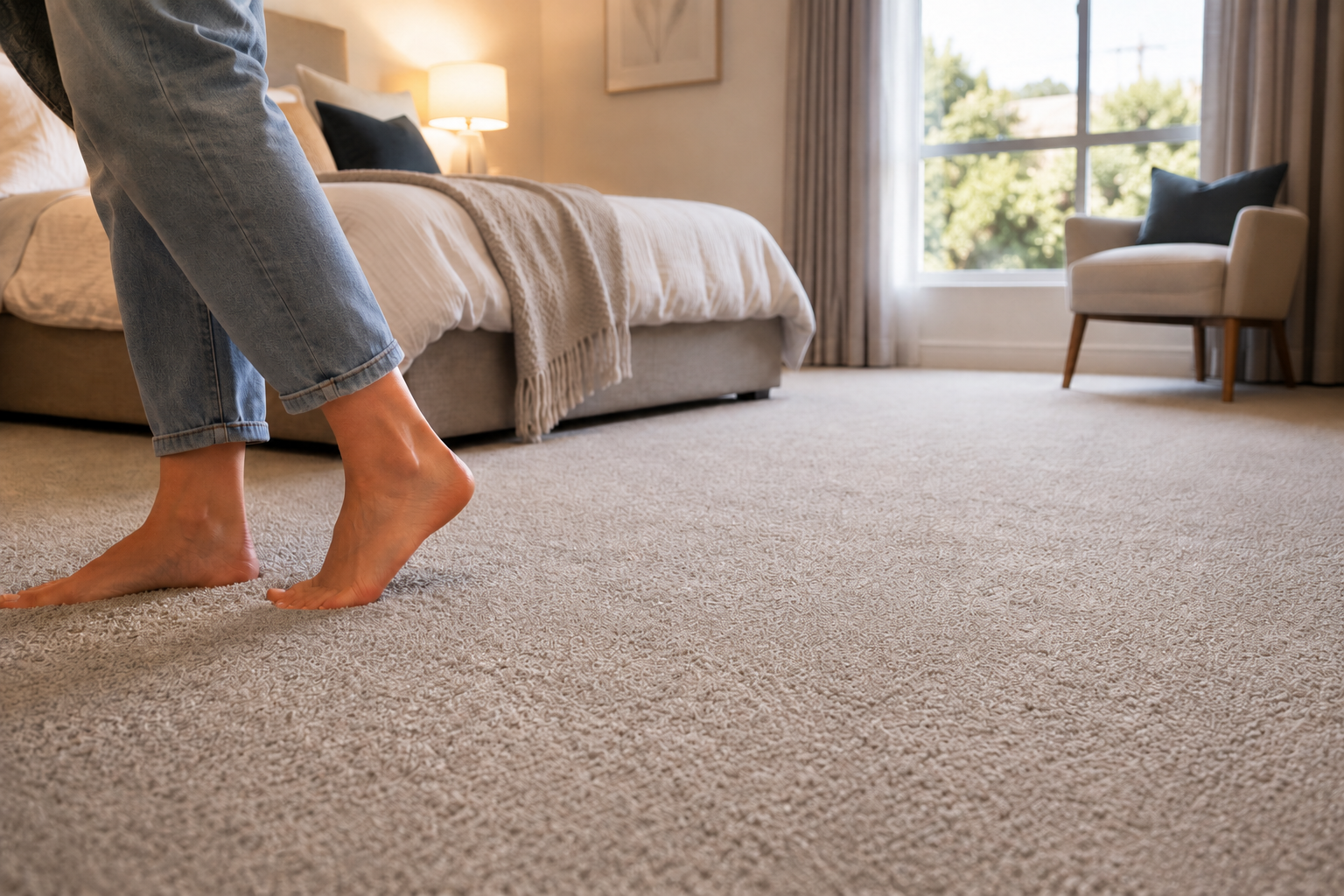 The finished feel of carpet depends on both the carpet itself and the underlay beneath it. Different rooms may call for a different balance of softness and support.
Choosing Carpet Underlay by Room
Different parts of a home place different demands on the carpet and underlay. The room is usually a better starting point than asking for the thickest option.
Bedrooms and Quieter Living Areas
Bedrooms are usually where people notice underlay comfort most. Bare feet, cold mornings and lighter traffic mean there is often more room to prioritise softness. Our bedroom carpet guide goes further into how comfort, pile style and room use work together.
Stairs and Busy Hallways
Stairs and hallways deal with repeated traffic, and stairs place concentrated pressure around each tread and edge. The softest underlay is not automatically the best direction. See our guide to carpet for stairs and hallways in Melbourne for the wider decision.
Apartments and Upstairs Rooms
Underlay can help soften footfall and make upstairs rooms feel quieter. However, an acoustic figure on a product sheet does not automatically mean the full carpet system meets every building or owners corporation requirement. Check what applies before ordering.
Commercial and High-Traffic Areas
For offices, hospitality spaces, corridors and mixed-use projects, traffic classification and installation requirements become more important. This is where dense products such as Stepsmart and Cushion Pad may enter the conversation.
Can You Reuse Existing Carpet Underlay?
Sometimes old underlay looks reasonable until the carpet is lifted. It may then show compressed traffic lanes, uneven areas, damaged joins or the effects of old spills and everyday use.
Reusing it can save money only when its condition and compatibility with the new carpet have been checked properly. The carpet manufacturer or installation requirements may also call for new underlay.
When comparing quotes, check whether each one includes new underlay, reuse of the existing underlay, uplift and removal. Otherwise, two similar prices may not include the same job.
Does More Expensive Underlay Mean Better?
Not automatically. A more expensive underlay may offer a softer feel, denser construction, recycled content or stronger published acoustic and thermal performance. Those features only represent value when they suit the carpet and room.
The better question is not, "Which one costs the most?" It is, "Which one makes sense under this carpet in this part of the home?"
Common Carpet Underlay Mistakes
- Choosing only by thicknessA thickness figure does not explain density, construction, firmness or intended use.
- Assuming the softest option suits every roomBedrooms, stairs, hallways and commercial spaces can place different demands on the floor.
- Comparing quotes with different underlaysSimilar carpet quotes may not include the same product or the same removal work.
- Reusing old underlay without checking itCompression, damage and compatibility are difficult to judge before the old carpet is lifted.
- Assuming an acoustic figure guarantees complianceApartment requirements may apply to the tested flooring system and building, not the underlay alone.
What to Check in a Carpet Quote
You do not need to become an underlay expert before getting a quote. You just need enough information to understand what is included and why it has been recommended.
Ask these questions:
- Which underlay is included?
- What is it made from and how thick is it?
- Why does it suit the carpet and room?
- Is old carpet and underlay removal included?
- Are stairs, commercial use or apartment requirements involved?
When comparing two quotes, make sure you are comparing the same carpet, underlay and installation work. A cheaper quote is not necessarily cheaper if part of the job has simply been left out.
Visit Swan Street Sales for Carpet and Underlay
At Swan Street Sales in Richmond, you can compare carpet and underlay together rather than judging the carpet sample by itself. We can talk through the room, traffic, feel and whether the job involves bedrooms, stairs, apartments or commercial areas.
Free Melbourne Metro carpet quotes are available. The best starting point is to visit the showroom or contact us first so we can help you choose or narrow down the carpet range. If you are interested in a specific range, we can arrange a Melbourne Metro measure with the relevant carpet sample folder or book.
View Carpet Range Browse Carpet Underlay Contact Swan Street Sales
Or call us on (03) 9428-1746.
Frequently Asked Questions
What thickness of carpet underlay is best?
There is no single best thickness. A 10mm comfort underlay may suit a bedroom, while a thinner high-density underlay may be a better direction for demanding traffic. Material, density and room use matter alongside thickness.
Is thicker carpet underlay always softer?
Thicker underlay can feel more cushioned, but density and construction also affect the finished feel. Two underlays with different thicknesses may be designed for completely different uses.
Can new carpet go over old underlay?
Sometimes, but the old underlay should be inspected after the carpet is lifted. Compressed, uneven, damaged or incompatible underlay can take away from the feel and support of the new carpet.
Does carpet underlay help reduce noise?
Underlay can help soften footfall and contribute to reduced sound transmission. In apartments or buildings with specific requirements, check the required flooring system because the underlay alone may not determine compliance.
More Carpet Guides from Swan Street Sales
Still narrowing down the carpet itself? These guides cover the other parts of the decision:
- How to Choose Carpet in Melbourne - Start with the room, then work through fibre, pile, colour, underlay, budget and installation.
- Wool vs Solution Dyed Nylon Carpet - Compare two common carpet fibre directions.
- Best Carpet for Bedrooms in Melbourne - Softness, comfort and pile style for bedrooms.
- Best Carpet for Stairs and Hallways in Melbourne - Durability, stair suitability and repeated traffic.
- Best Carpet for Kids, Pets and Busy Homes in Melbourne - Spills, claws, hair and real household use.