

12 min read · Written by the team at Swan Street Sales, Richmond
Most people start with carpet colour because it is the first thing they notice. But it should not be the first thing they decide. The right carpet starts with the room, how much traffic it gets, whether you have kids or pets, how much natural light comes in, and what the carpet needs to handle every day.
This guide follows the same conversation we would have with you in our Richmond showroom.
First we work out where the carpet is going. Then we talk through fibre, pile style, colour, underlay, budget, measure, quote and installation. Once those pieces are clear, choosing carpet becomes a lot less overwhelming.
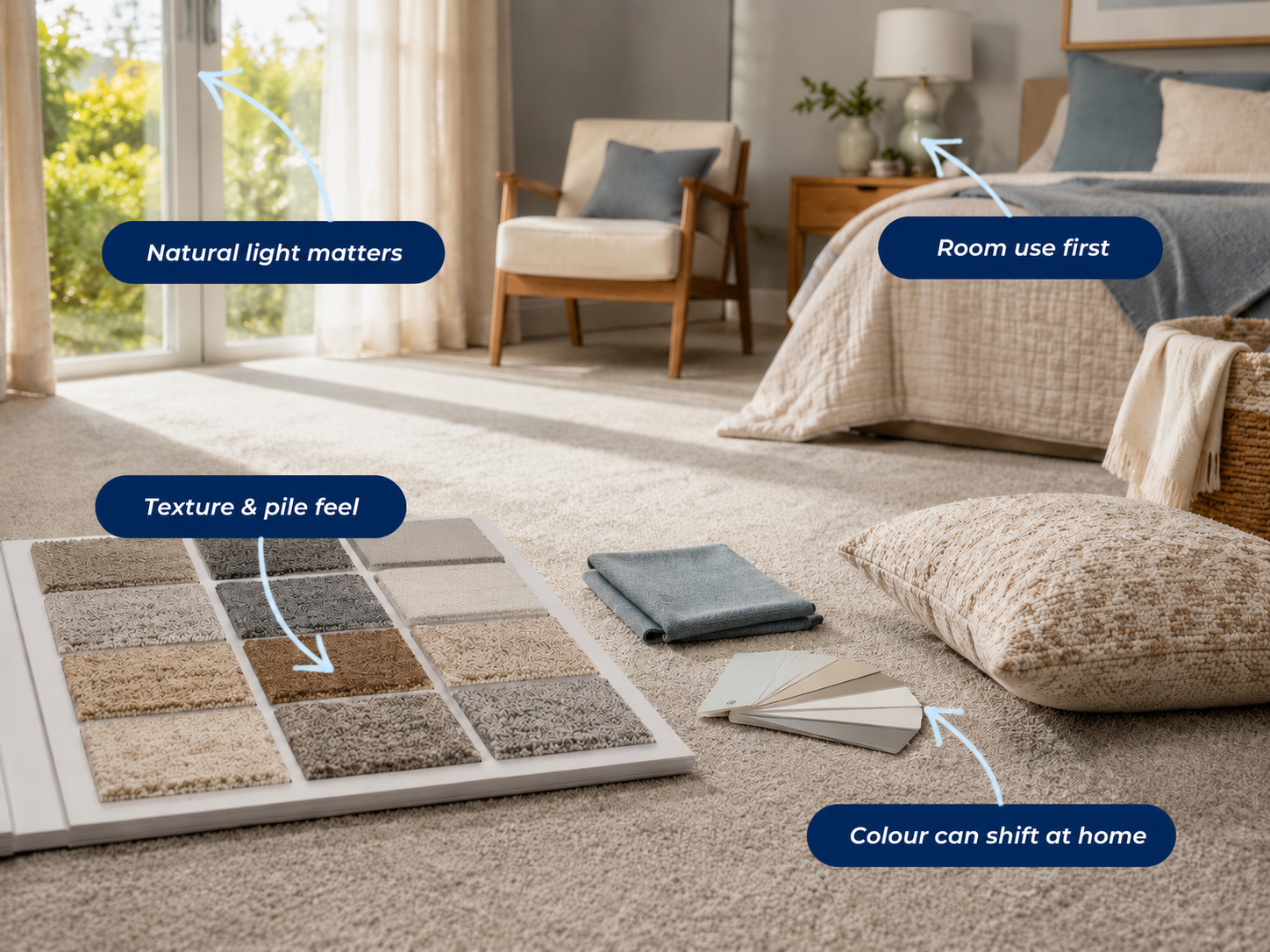
Carpet is also one of the hardest flooring products to judge properly from a screen. Colour can shift between showroom light and home light. Texture and softness need to be felt. A small sample can look different once it is installed across a full room. That is why the best carpet choice usually comes from good advice, real samples, and seeing how everything works together before you commit.
The Short Answer: How to Choose the Right Carpet
If you are choosing carpet for the first time, start with the room. Not the colour, not the softest sample on the rack, and not the cheapest price per square metre. Those things matter, but they make more sense once you know what the carpet actually needs to do.
A bedroom carpet can be soft and luxurious because it usually has an easier life. A hallway, staircase or family room needs to be judged differently. Those areas deal with more foot traffic, more marks, more wear, and often more cleaning. That is where fibre, pile style, underlay and colour choice become much more important.
As a simple starting point, work through these questions before choosing:
- What room is the carpet going in? Bedrooms, stairs, hallways, apartments, rentals and family rooms all ask different things from carpet.
- How much traffic will it get? A quiet bedroom and a busy hallway should not always be treated the same way.
- Do you have kids or pets? Spills, claws, hair, accidents and general mess can change what fibre, colour and pile style will work best.
- How much natural light is in the room? Light can make carpet look warmer, cooler, lighter or darker than it appears in the showroom.
- What is your budget? Make sure you are thinking about carpet, underlay, installation and any removal or preparation, not just the carpet price by itself.
- Are you choosing for comfort, durability, easy cleaning or value? The best choice is usually the one that balances those priorities for the actual room.
Once those answers are clear, the rest becomes easier. You can compare wool and nylon properly, understand whether plush, twist or loop pile makes sense, choose a colour with more confidence, and avoid spending money on a carpet that looks good in a sample but is wrong for the way the room is used.
Why Choose Carpet in the First Place?
Carpet is not the answer for every room, but there are places where it still makes more sense than hard flooring. Bedrooms are the obvious one. A carpeted bedroom feels warmer, softer and quieter, especially through Melbourne winters when tiles, timber or hybrid flooring can feel a bit cold underfoot.
It also changes the way a room sounds and feels. Carpet softens footfall, takes the edge off echo, and can make a space feel more settled. That matters in bedrooms, upstairs rooms, apartments, family rooms and homes where people want comfort rather than a hard, bright surface everywhere.
Swan Street Sales tip
"Carpet makes the most sense in rooms where warmth, quietness and comfort underfoot matter more than a hard-wearing surface. Bedrooms, upstairs rooms, apartments and family spaces are usually where carpet earns its place."
The main reasons people still choose carpet are:
- Warmth underfoot: Carpet can make bedrooms and living areas feel more comfortable, particularly in cooler months. Because it adds a softer insulating layer to the floor, it can also help the room feel warmer without relying only on heating.
- Softness and comfort: Carpet is easier on bare feet, better for sitting on the floor, and more forgiving in rooms where kids play.
- Quieter spaces: Carpet helps reduce footstep noise and echo, which can be useful in apartments, upstairs rooms and busy homes.
- A more relaxed feel: Some rooms simply feel better with a softer floor, especially bedrooms, retreats and family spaces.
- Plenty of choice: Carpet gives you a wide range of colours, textures, fibres and pile styles, from practical family options to softer premium styles.
The important thing is choosing carpet where it makes sense, then choosing the right type for that room. A soft bedroom carpet and a hardwearing hallway carpet are both good choices, but they are not usually the same choice.
Start with the Room, Not the Colour
This is the point we would usually slow down in-store. Colour matters, of course, but the room matters more. A carpet that works beautifully in a quiet bedroom may be completely wrong for stairs, a hallway or a family room that gets hammered every day.
Before choosing a colour, think about what the room actually needs from the carpet. Is it there for softness? Warmth? Noise reduction? Durability? Easy cleaning? Budget? The answer changes depending on where the carpet is going.
Carpet by Room: What to Think About First
| Room / Situation | Visual Cue | What Matters Most | Carpet Direction | Watch Out For |
|---|---|---|---|---|
| Bedrooms | 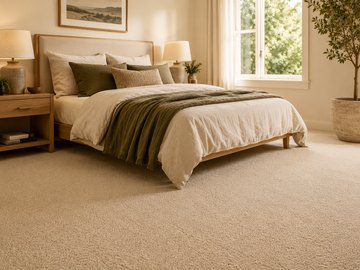 |
Softness, warmth and comfort underfoot. | Plush, twist, wool, soft synthetic or a comfortable carpet with a good underlay. | Do not choose only by softness if the room still needs to handle daily wear, pets or kids. |
| Hallways | 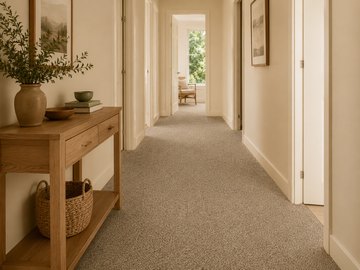 |
Wear, tracking, marks and repeated foot traffic. | Dense twist, loop pile or hardwearing synthetic carpet in a forgiving colour or texture. | Smooth plush can show footprints, vacuum marks and traffic lanes more easily. |
| Stairs | 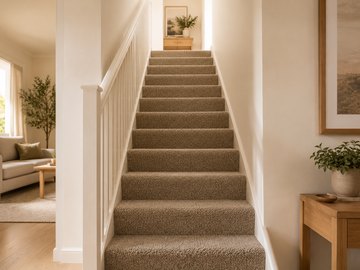 |
Durability, safety, edge wear and appearance retention. | Choose carpet that is suitable for stairs, paired with quality underlay and proper installation. | Not every carpet is stair-suitable. Stairs put more pressure on carpet than flat rooms. |
| Family Rooms | 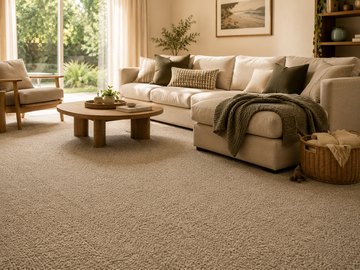 |
Comfort, spills, traffic, everyday mess and easy cleaning. | Solution dyed nylon, durable synthetic fibres, textured colours and practical pile styles. | Very pale carpet can look great on day one but may be harder to live with in a busy family space. |
| Kids Rooms | 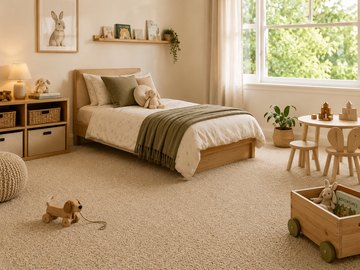 |
Softness, stain resistance, comfort and forgiving colour. | Soft but practical carpet, ideally something easy to clean and not too precious. | Think about spills, craft mess, shoes, toys and how the room will be used as kids get older. |
| Pet Homes | 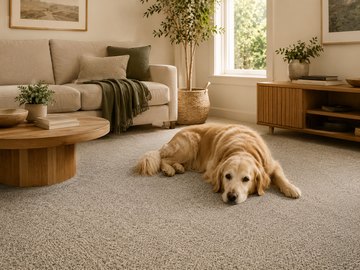 |
Hair, claws, accidents, odour control and cleaning. | Durable, stain-resistant carpet with a colour and texture that helps hide everyday pet mess. | Pet hair colour matters. A dark carpet with a light-haired pet can be just as annoying as cream carpet with muddy paws. |
| Apartments | 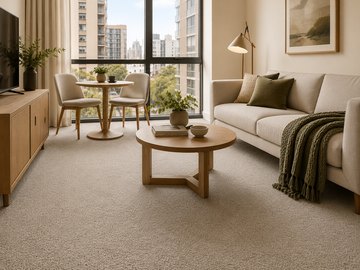 |
Noise, warmth, comfort and building requirements. | Carpet with suitable underlay can help soften sound and make compact rooms feel more comfortable. | Underlay matters here. In apartments, the carpet choice is only part of the comfort and noise story. |
| Rentals | 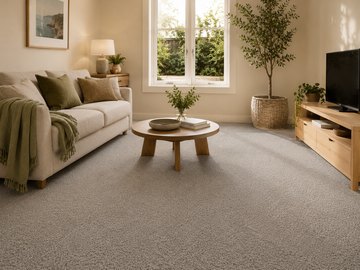 |
Value, durability, neutral colour and broad appeal. | Practical synthetic carpet in a neutral shade that looks clean and suits most furniture styles. | The cheapest carpet is not always the best value if it needs replacing sooner than expected. |
This is why two customers can stand in front of the same sample and get different advice. One might be carpeting a quiet bedroom. The other might be doing stairs, a hallway and a rental property. Same carpet, completely different job.
Once you know what the room needs to survive, fibre, pile style, colour and budget become much easier to narrow down.
Wool, Nylon and Other Carpet Fibres Explained
Once you know where the carpet is going, fibre is usually the next big decision. This is where people often ask whether wool is better than nylon, or whether solution dyed nylon is the safer choice for kids, pets and busy rooms.
The honest answer is that there is no single best carpet fibre for every home. Wool can feel beautiful and natural. Nylon can be extremely practical. Solution dyed nylon is popular because it is made for modern family living. Other synthetic fibres can also make sense when budget, rental value or lighter use is the main priority.
The key is matching the fibre to the room, not choosing one because it sounds more premium on paper.
Carpet Fibre Comparison
| Carpet Fibre | Best Suited To | Feel and Appearance | Main Strengths | Watch Out For |
|---|---|---|---|---|
| Wool | Bedrooms, formal living rooms, quieter homes and people wanting a natural premium carpet. | Soft, warm, natural and often more textured or luxurious underfoot. | Comfort, warmth, natural feel, good appearance and a more premium look. | Usually costs more. It also needs sensible care, especially in homes with heavy spills, pets or very busy family traffic. |
| Wool Blend | Bedrooms, living rooms and homes wanting some of the feel of wool with added practicality. | Often warm and comfortable, with a slightly more practical construction depending on the blend. | A good middle ground for people who like wool but want something a little more forgiving. | Blends vary. Always check the actual fibre mix, warranty and room suitability rather than assuming all wool blends behave the same. |
| Nylon | Family rooms, stairs, hallways, bedrooms and homes that need good durability. | Can range from soft and smooth to textured and practical, depending on the carpet style. | Strong wear performance, good resilience and a wide range of colours and styles. | Not all nylon carpets are equal. Construction, density, pile style and rating still matter. |
| Solution Dyed Nylon | Kids rooms, pet homes, family rooms, rentals, stairs and high-traffic areas. | Usually practical, modern and available in many neutral colours and textured finishes. | Excellent everyday practicality, good stain resistance, colour consistency and easy-care performance. | It may not have the same natural feel as wool, so compare samples in person if softness and texture are important. |
| Polyester | Bedrooms, lower-traffic rooms and budget-conscious projects where softness matters. | Often soft and comfortable, with a smooth feel and good colour options. | Good softness for the price, often suitable for rooms that do not get hammered every day. | Can be less resilient in heavy traffic areas, so it may not be the first choice for stairs or busy hallways. |
| Polypropylene | Budget rooms, rentals, some loop piles and areas where value is the main driver. | Can look neat and practical, often in simple neutral or textured styles. | Affordable, stain resistant in many everyday situations and useful for value-focused projects. | Generally not as resilient as nylon. In heavy traffic areas it may flatten or show wear sooner. |
For many Melbourne homes, the choice often comes down to wool versus solution dyed nylon. Wool is usually chosen for its natural warmth, comfort and premium feel. Solution dyed nylon is often chosen when practicality, easy cleaning and family durability are higher priorities.
That does not mean one is automatically better than the other. A wool carpet in the right bedroom can be beautiful. A solution dyed nylon carpet in a busy hallway or family room can be the smarter long-term choice. The right fibre is the one that suits the room, the household and the way the carpet will actually be lived on.
Carpet Pile Styles Explained
After fibre, pile style is the next thing that changes how a carpet feels, performs and looks in a room. This is where two carpets made from similar fibres can behave very differently once they are installed.
Pile style refers to the way the carpet yarn is made and finished. Some carpets are soft and smooth. Some are twisted and textured. Some are looped. Some are patterned. Each style has its own strengths, and each one has situations where it makes more sense.
This is also where showroom advice helps, because a carpet can look beautiful on a small sample but behave differently across a full room, hallway or staircase.
Carpet Pile Style Comparison
| Pile Style | What It Looks and Feels Like | Best Suited To | Main Strengths | Watch Out For |
|---|---|---|---|---|
| Plush / Velvet | Smooth, soft and more formal, with a clean surface and a luxurious feel underfoot. | Bedrooms, formal rooms and quieter spaces where softness and appearance matter most. | Very comfortable, elegant and soft. A good choice when you want the room to feel calm and refined. | Can show footprints, vacuum marks, shading and tracking more easily, especially in busy areas. |
| Twist Pile | Textured cut pile with yarns twisted together, giving a more casual and practical surface. | Bedrooms, family rooms, hallways and many general home areas. | A strong all-rounder. It can hide everyday marks better than a smooth plush and often handles regular use well. | Quality still varies. Check density, fibre, rating and room suitability rather than assuming every twist carpet is the same. |
| Loop Pile | Yarns are looped rather than cut, creating a textured, often more structured look. | Living areas, hallways, stairs and rooms where texture and durability are important. | Can be hardwearing, practical and good at hiding some tracking and everyday marks. | May not suit every pet home, especially if claws can catch on loops. Always check suitability for stairs and pets. |
| Textured Loop | Loop pile with varied height, tone or texture, giving the carpet more visual movement. | Busy rooms, hallways, apartments and homes wanting a practical but designed look. | Good for hiding small marks, traffic patterns and minor colour variation. Often a practical visual choice. | Texture can look different across a full room compared with a small sample, so view it in good light where possible. |
| Cut and Loop | A mix of cut yarns and looped yarns, often creating a subtle pattern or sculpted effect. | Bedrooms, living rooms and feature areas where you want more interest than a plain carpet. | Adds pattern and texture without needing a bold colour. Can help a room feel more finished. | Pattern scale matters. A design that looks subtle on a sample can become more noticeable across a full room. |
| Patterned Carpet | Carpet with a clear woven, looped or tonal pattern, sometimes subtle and sometimes more decorative. | Stairs, hallways, bedrooms, formal areas or spaces where the floor is part of the design. | Can add character, hide some marks and make a hallway or staircase feel more considered. | Be careful with strong patterns in small rooms or across multiple connected spaces. It needs to work with the rest of the home. |
As a general rule, smooth plush carpets are often chosen for softness and a more luxurious feel, while twist and textured carpets are often chosen for everyday practicality. Loop piles can be excellent in the right space, but they need to be matched carefully to the room, especially if pets or stairs are involved.
The pile style also affects how colour appears. A smooth carpet can show light and shade more dramatically, while a textured carpet can make colour look more broken up and forgiving. That is one reason a sample should always be judged for colour, texture and room use together, not colour alone.
Softness, Thickness and Durability
One of the easiest traps when choosing carpet is assuming that the softest or thickest sample is automatically the best one. It might be the best choice for a bedroom, but it is not always the best choice for stairs, hallways, rentals or busy family areas.
Softness matters, especially in bedrooms and spaces where comfort is the main goal. But durability comes from more than how thick the carpet feels in your hand. Fibre, pile style, density, construction, rating and underlay all play a part in how the carpet will perform once it is installed.
Evan, Swan Street Sales
"The thickest carpet is not automatically the best carpet. You want the right fibre, pile, density and underlay for the room. A soft bedroom carpet and a durable hallway carpet are judged differently."
When comparing carpet samples, pay attention to:
- Softness: How comfortable the carpet feels underfoot, especially in bedrooms and quieter living spaces.
- Density: How closely packed the fibres feel. A denser carpet often feels more supportive and can hold its appearance better.
- Pile height: A higher pile can feel softer, but it is not automatically more durable.
- Fibre type: Wool, nylon, solution dyed nylon and other fibres all behave differently in daily use.
- Pile style: Plush, twist, loop and textured carpets all show wear, tracking and marks in different ways.
- Underlay: Good underlay can improve comfort, support and the overall feel of the carpet.
- Room rating: Always check whether the carpet is suitable for the area you want to use it in, especially stairs and high-traffic spaces.
For bedrooms, it often makes sense to put more weight on softness, warmth and comfort. For hallways and stairs, durability, density and suitability become more important. For family rooms, kids rooms and pet homes, you usually want a balance between comfort, cleaning and long-term practicality.
This is why it helps to handle samples in person. A carpet can look thick in a photo but feel loose in the hand. Another carpet might look simpler but feel denser, firmer and more suitable for daily use. The best carpet is not just the one that feels soft for ten seconds in the showroom. It is the one that still makes sense once it has been lived on for years.
Colour, Lighting, Samples and Dyelot Variation
Colour is usually the first thing people notice when they look at carpet, but it is also one of the easiest things to misjudge. The same carpet can look different in a showroom, on a website, in a sample book, and across a full room at home.
That does not mean colour is impossible to choose. It just means carpet colour needs to be judged in context. Natural light, artificial light, wall colour, furniture, window direction and the size of the room can all change how a carpet appears once it is installed.
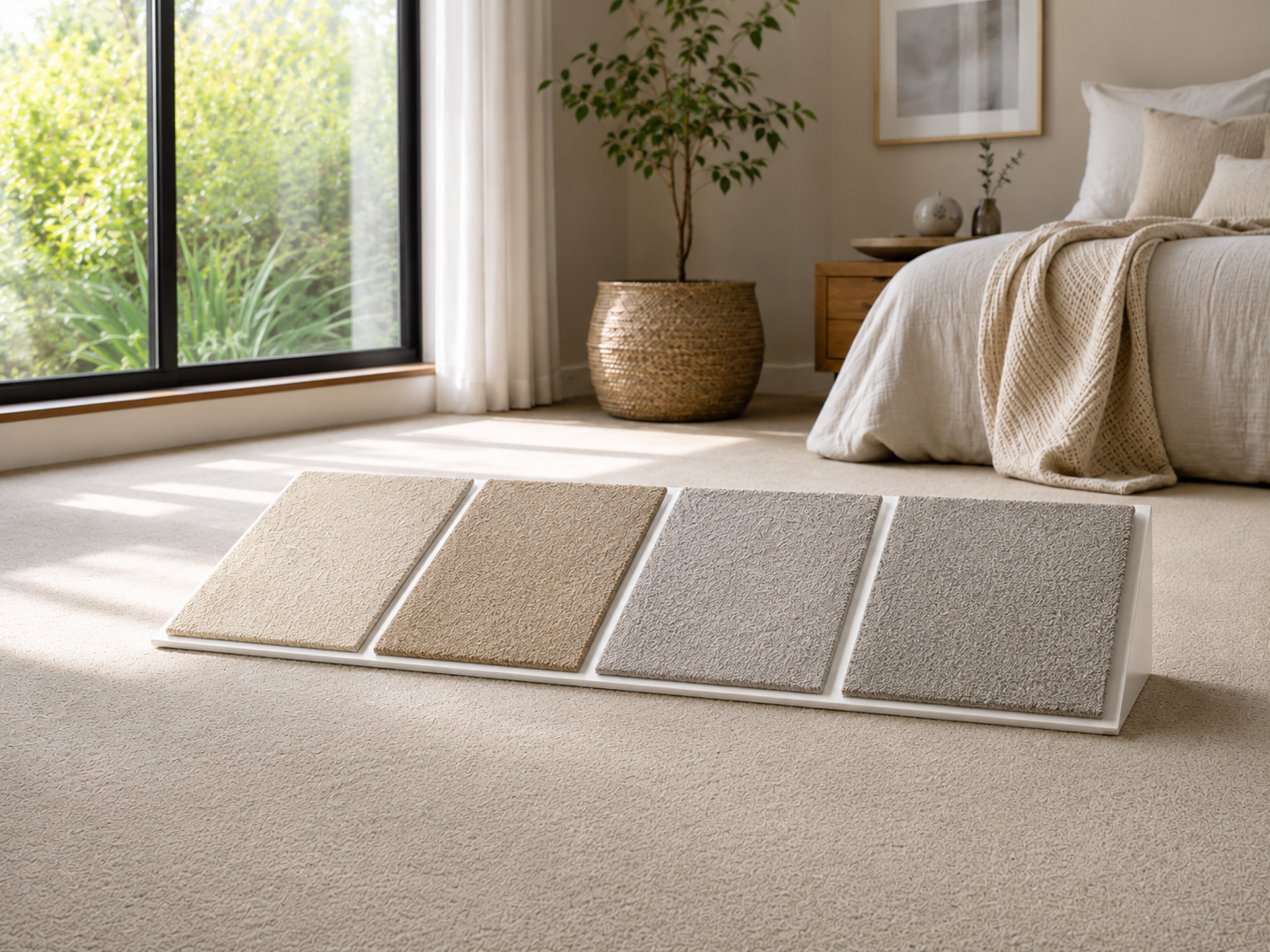
This is why we always recommend looking at samples properly before making a final decision. A colour that feels warm and soft in-store may look lighter in a bright north-facing room, darker in a hallway, cooler next to grey walls, or warmer next to timber furniture.
When choosing carpet colour, think about:
- Natural light: Bright rooms can make carpet appear lighter, while darker rooms can make the same colour feel deeper or heavier.
- Artificial light: Warm globes, cool LEDs and downlights can all change how carpet colour reads at night.
- Room size: A small sample can look subtle, but the same colour may feel much stronger when it covers a full room.
- Wall colour and furniture: Carpet sits beside everything else in the room, so it needs to work with paint, curtains, timber, tiles and furniture.
- Traffic and cleaning: Very light carpets can show marks more easily, while very dark carpets can show lint, dust or pet hair.
- Texture: A textured carpet can break up the colour and make it feel more forgiving than a smooth, flat-looking carpet.
Carpet Samples and Dyelot Variation
Carpet samples are the best way to judge colour, texture and softness, but they are still a guide. Because carpet is produced in batches, slight dyelot variation can occur between the sample and the carpet supplied. The same carpet can also look lighter, darker, warmer or cooler once installed across a full room, especially under different natural or artificial light.
This is one of the reasons it helps to visit a showroom rather than choosing only from a screen. Online images can be useful for getting a general feel, but they cannot show exactly how the colour will behave in your home, in your light, beside your furniture.
If you are unsure between two colours, it is usually worth choosing the one that works best with the actual room rather than the one that looks best in isolation. A carpet colour does not live on its own. It lives with the walls, furniture, light, traffic and the way the room is used every day.
Carpet Ratings and Room Suitability
Carpet ratings are easy to skip over when you are looking at colour and feel, but they matter. A carpet should not just look right for the room. It should also be suitable for the way that room is used.
This is especially important for stairs, hallways, family rooms, rentals and other high-traffic areas. These spaces put more pressure on carpet than a quiet bedroom. People walk the same paths again and again, stairs take extra impact on the edge of each tread, and busy rooms deal with more marks, movement and cleaning.
Quick showroom check: Ask whether the carpet is suitable for the room you are using it in, especially for stairs, hallways and heavy traffic areas. Do not assume every carpet sample on display is right for every part of the home.
When comparing carpets, check whether the carpet is rated or recommended for the area you have in mind. A carpet that is fine for bedrooms may not be the right choice for stairs. A soft plush carpet may feel beautiful underfoot, but it may show tracking or wear more noticeably in a hallway. A practical twist, loop or textured carpet may be a better fit in areas that get used every day.
Room suitability can depend on several things working together:
- Fibre: Wool, nylon, solution dyed nylon and other fibres all perform differently under regular use.
- Pile style: Plush, twist, loop and textured carpets handle traffic, marks and shading in different ways.
- Density and construction: A carpet that feels dense and well made will usually be better suited to regular wear than one that feels loose or thin.
- Stair suitability: Stairs are their own test. Always check that the carpet is suitable for stair installation before choosing it for that area.
- Household use: Kids, pets, shoes, rental use and heavy daily traffic can all change what makes sense.
This is where carpet advice needs to be specific. Instead of asking only whether a carpet is good, ask whether it is good for your room. The right answer for a bedroom may not be the right answer for a hallway, stairs or a family room.
If you are carpeting multiple rooms, you may also need to decide whether one carpet can sensibly run through the whole home, or whether some areas need a more durable option. Keeping the same carpet throughout can look clean and consistent, but only if that carpet is suitable for the hardest-working areas as well as the quieter ones.
Underlay: The Part People Should Not Ignore
Underlay is one of the easiest parts of a carpet quote to overlook, but it has a bigger impact than many people realise. It helps determine how the carpet feels underfoot, how supported it feels across the floor, and how well it performs over time.
A good carpet can feel much better with the right underlay underneath it. On the other hand, even a good carpet can feel flat, tired or less comfortable than it should if the underlay is poor or worn out. That is why underlay should be treated as part of the carpet choice, not just an optional extra tacked onto the quote.
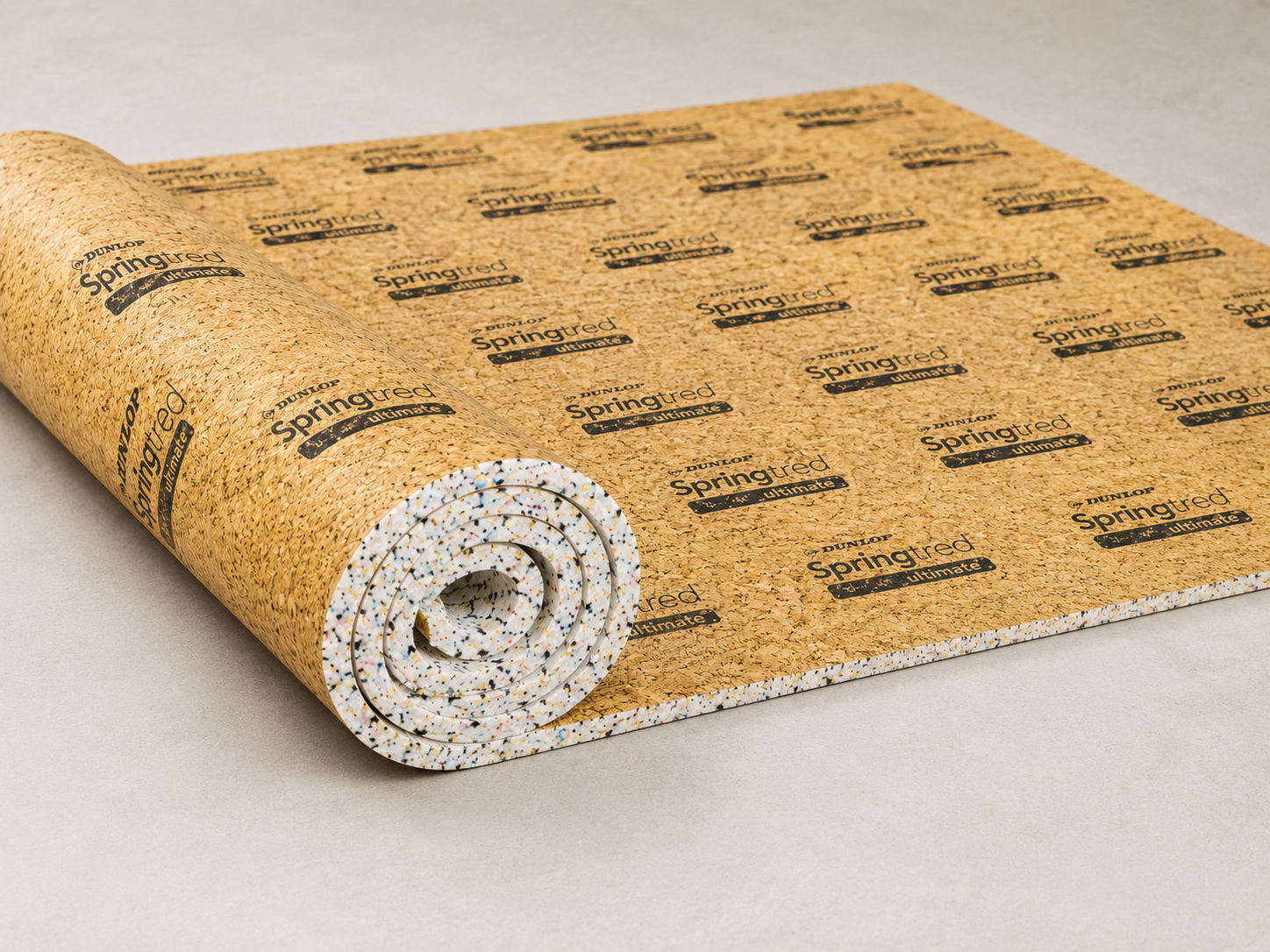
Good underlay can help with:
- Comfort: It adds softness and support underfoot, which can make a noticeable difference in bedrooms, living areas and family rooms.
- Support: Underlay helps the carpet sit and perform properly rather than feeling flat or uneven.
- Insulation: It can help the room feel warmer and more comfortable, particularly in cooler months.
- Noise reduction: Underlay can help soften footfall and reduce sound, which is especially useful in apartments and upstairs rooms.
- Overall performance: The right underlay helps the carpet feel and perform more like it should over time.
One of the most common questions is whether old underlay can be reused. In some cases people ask this to save money, but it is often a false economy. If the underlay is already tired, compressed or uneven, putting new carpet over the top can leave the new floor feeling worse than expected from day one.
A simple way to think about it is this: good carpet on tired underlay is a bit like putting a new mattress on a worn-out base. The top layer may be new, but it will still be affected by what is underneath.
That does not mean the most expensive underlay is always necessary. It just means the underlay should suit the carpet and the room. A bedroom, family room, apartment and staircase may not all need the exact same approach, and this is where good advice matters.
When comparing carpet quotes, it is worth checking what underlay is included, whether it is new, and whether it makes sense for the way the room will be used. It is not the flashiest part of the job, but it can make a real difference to comfort and long-term satisfaction.
Cost, Budget and What Should Be Included in a Quote
Carpet pricing can be confusing because the carpet itself is only one part of the finished job. A cheaper carpet price per square metre may look good at first, but the final cost can change once underlay, installation, stairs, removal, trims and room layout are included.
This is why it helps to think in terms of the full installed job, not just the carpet sample price. A clear quote should explain what is included, what is optional, and where extra costs may apply.
Carpet Quote Checklist
| Quote Item | Why It Matters |
|---|---|
| Carpet | This is the main product cost. Fibre, pile style, quality, rating and range all affect the price. |
| Underlay | Underlay changes comfort, support and the way the carpet feels underfoot. It should be suitable for the carpet and the room. |
| Installation | This covers the labour required to install the carpet properly. Installation can vary depending on the room, access and complexity of the job. |
| Removal | Old carpet and underlay may need to be lifted and disposed of. This should be allowed for if the existing flooring is being replaced. |
| Stairs | Stairs are more complex than flat rooms. They take more time, more detail and need a carpet that is suitable for stair use. |
| Trims | Trims help finish edges where carpet meets other flooring, doorways or transitions between rooms. |
| Wastage and joins | Room shape, roll width, joins and cutting can affect how much carpet is needed. The measured area is not always the same as the amount of carpet required. |
When setting a budget, it is worth being clear about what matters most. Some people want the softest bedroom carpet they can comfortably afford. Others need a hardwearing option for stairs, a rental property or a busy family room. The right budget depends on the room, the household and how long you expect the carpet to perform.
It also helps to compare quotes carefully. One quote may look cheaper because it leaves something out, uses a different underlay, or does not allow for removal or finishing details. Another quote may be higher because it includes more of the actual job from the start.
A good carpet quote should make the decision easier, not more confusing. If you are unsure, ask what carpet is included, what underlay is included, whether installation and removal are allowed for, and whether stairs, trims, joins or other details may change the final price.
Measure and Installation: What to Expect
Once you have narrowed down the carpet, the next step is working out exactly what the job involves. This is where a proper measure matters. It helps confirm how much carpet is needed, where joins may go, whether stairs or trims are involved, and what needs to happen before installation day.
A good measure is not just about the size of the room. It also looks at the shape of the space, doorways, cupboards, transitions to other flooring, access, existing carpet, underlay and any details that could affect the final quote.
Typical Carpet Measure and Installation Steps
- Choose the carpetStart by narrowing down the fibre, pile style, colour, underlay and room suitability.
- Measure the roomsThe rooms are measured so the quote can allow for room size, layout, joins, roll width and any stairs or tricky areas.
- Confirm the quoteThe quote should make clear what is included, such as carpet, underlay, installation, removal, trims and any extra details.
- Book installationOnce the carpet and quote are confirmed, the installation can be booked for a suitable time.
- Remove old carpetIf required, the old carpet and underlay are lifted and removed before the new flooring goes down.
- Install underlay and carpetNew underlay is installed first, then the carpet is fitted, stretched and finished into the room.
- Final trims and cleanupEdges, trims, doorways and transitions are finished so the carpet sits neatly against the rest of the home.
Before installation, it is worth checking what needs to be moved, whether the rooms need to be cleared, and whether any old flooring or underlay is being removed as part of the job. These details can affect timing and cost, so it is better to have them clear before installation day.
Stairs, hallways and irregular rooms can also need more planning than a simple square bedroom. Joins, trims and carpet direction may all need to be considered, especially if you want the finished result to look clean across connected spaces.
The main thing is that the measure and quote should remove guesswork. By the time the installation is booked, you should know what carpet is being used, what underlay is going underneath it, what is included in the job, and what needs to happen on the day.
Cleaning, Maintenance and Living with Carpet
Carpet is something you live on every day, so it is worth thinking about maintenance before you choose it. The right carpet should suit the room, the household and the amount of cleaning you are realistically willing to do.
A soft pale carpet might be beautiful in a quiet bedroom, but it may not be the easiest option for a family room, rental, hallway or pet-friendly home. A textured or more forgiving colour may be a better choice where marks, crumbs, shoes, pet hair or everyday mess are part of the picture.
Showroom reminder: Maintenance starts before you buy. Choose a carpet that suits how the room is actually used, not just how it looks on the sample rack.
To keep carpet looking and feeling better for longer, think about:
- Regular vacuuming: This helps remove dirt before it settles deeper into the pile. Busy rooms, hallways and pet areas usually need more frequent vacuuming than quiet bedrooms.
- Spill response: The quicker a spill is dealt with, the better. Always follow the carpet manufacturer’s care advice rather than scrubbing aggressively or using the wrong cleaner.
- Entry mats: Mats at external doors can help reduce the amount of dirt, grit and moisture walked onto the carpet.
- Pet hair and claws: If you have pets, consider colour, texture and pile style before buying. Some carpets will hide hair and everyday pet mess better than others.
- Traffic paths: Hallways, stairs and favourite walking routes can show wear sooner. This is why room suitability matters before the carpet is installed.
- Professional cleaning: Periodic professional cleaning may be recommended depending on the carpet type, household use and warranty requirements.
- Manufacturer care instructions: Different fibres and carpet styles can have different cleaning requirements, so always check the care guide for the carpet you choose.
The goal is not to choose a carpet that never needs care. All carpet needs some maintenance. The goal is to choose one that fits your lifestyle, then look after it in a way that suits the fibre, pile and room.
If the carpet is going into a busy family space, pet home, rental or high-traffic area, think about how the room will be used day to day. A practical carpet in the right colour and texture will usually be easier to live with than a delicate option chosen only because it looked good in a small sample.
Common Carpet Buying Mistakes to Avoid
Most carpet mistakes are not dramatic. They usually come from choosing too quickly, focusing on the wrong detail, or not thinking enough about how the room is used. A carpet can look good on a sample rack and still be the wrong fit for stairs, pets, kids, heavy traffic or the light in your home.
These are the kinds of things we see all the time when people are comparing carpet.
Mistakes We See All the Time
- Choosing by colour onlyColour matters, but fibre, pile style, underlay and room suitability matter just as much.
- Ignoring the roomA quiet bedroom, busy hallway, staircase and rental property should not always be treated the same way.
- Assuming the softest carpet is the best carpetSoftness is important, but the thickest or softest sample is not automatically the most practical choice.
- Forgetting about underlayUnderlay changes how the carpet feels and performs. Reusing tired underlay can make new carpet feel worse than it should.
- Not checking stair suitabilityStairs put extra pressure on carpet, so the carpet needs to be suitable for stair installation.
- Judging colour only in the showroomCarpet can look different at home because of light, wall colour, furniture and room size.
- Not allowing for the full installed costCarpet, underlay, installation, removal, trims, stairs, joins and wastage can all affect the final quote.
- Choosing a delicate carpet for a hard-working roomA beautiful carpet still needs to suit pets, kids, shoes, traffic and cleaning.
The safest approach is to choose carpet in the right order. Start with the room, then think about traffic, fibre, pile style, underlay, colour and budget. Once those pieces make sense, the final decision is usually much clearer.
A good carpet choice should not just look right on the day it is installed. It should make sense for the way the room will be lived in over the next few years.
Why Visit a Carpet Showroom Before Choosing?
John, Swan Street Sales carpet department
"The sample gets you close, but the room makes the final decision. Bring the colours, think about the light, and we’ll help you work out what actually makes sense underfoot."
Carpet is one of the hardest flooring products to judge properly from a screen. A website can show the general look, but it cannot tell you how soft a carpet feels underfoot, how dense it feels in the hand, how the texture catches the light, or how the colour compares across different samples.
That is where visiting a carpet showroom still makes a real difference. Seeing carpet in person gives you the chance to compare colours properly, feel the pile, look at texture up close, and rule out options that may have looked fine online but do not suit the room once you see them properly.
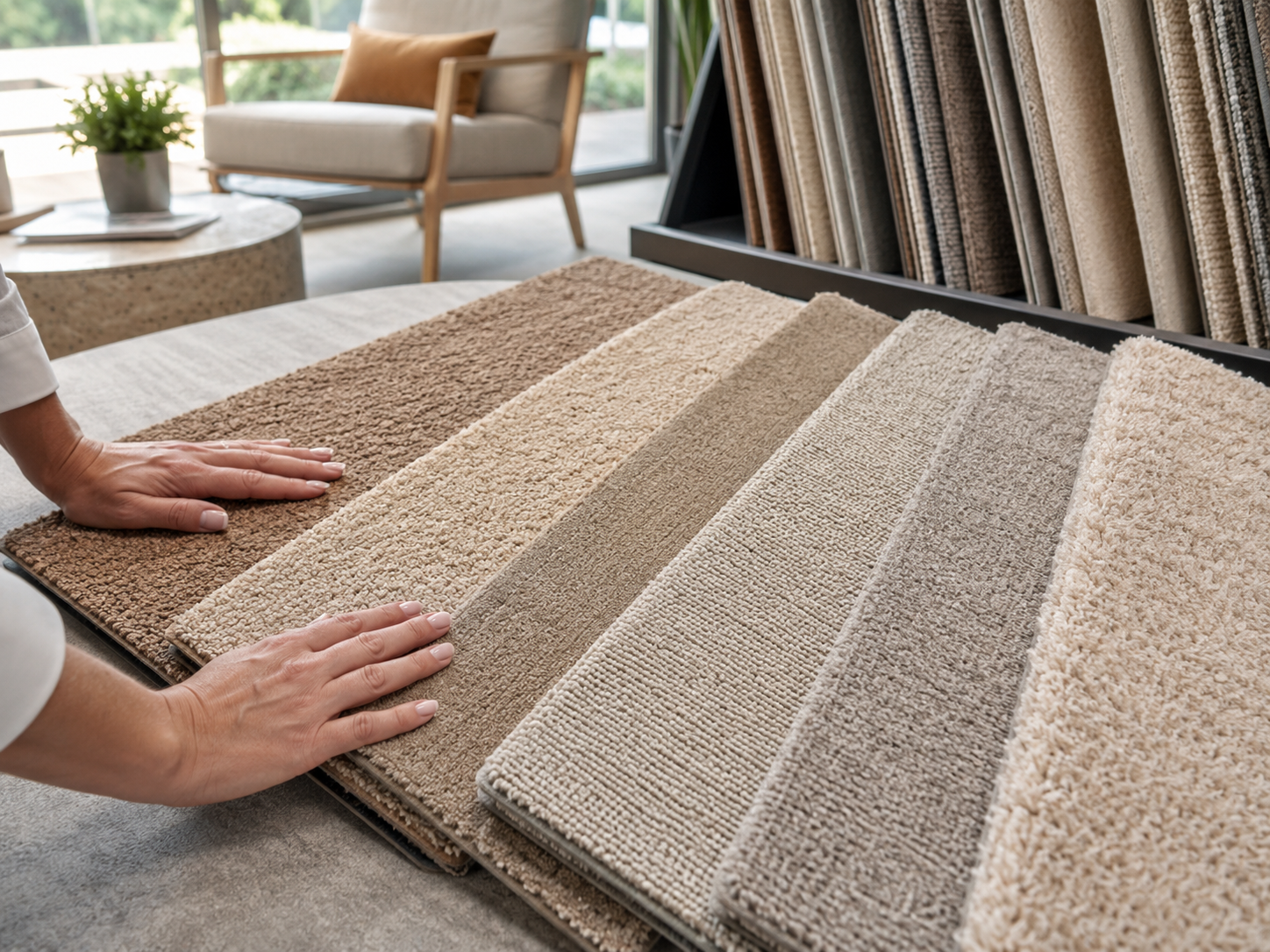
Visiting in person also makes it easier to ask practical questions. You can talk through which rooms are being carpeted, whether there are pets or kids in the home, how much traffic the carpet will get, whether stairs are involved, and what level of softness or durability you are really after.
It is also a better way to compare subtle differences that do not always come across well online. Two carpets might look similar on a screen, but in person one may feel denser, one may look warmer, and one may simply make more sense for the room once you see the samples side by side.
If you are trying to choose between a few options, a showroom visit can save a lot of second-guessing. It turns the decision from “which picture do I like most?” into “which carpet actually suits the room, the light and the way we live?”
Frequently Asked Questions
Is wool carpet better than nylon carpet?
Not always. Wool is often chosen for its natural feel, warmth and premium look, especially in bedrooms and quieter living areas. Nylon, particularly solution dyed nylon, is often chosen for durability, stain resistance and everyday practicality in busy homes. The better choice depends on the room, the budget and how the carpet will be used.
What carpet is best for bedrooms?
Bedrooms usually give you more room to prioritise softness, warmth and comfort. Plush, twist, wool, wool blend and soft synthetic carpets can all work well, depending on the look and feel you want. Underlay also matters in bedrooms because it changes how comfortable the carpet feels underfoot.
What carpet should I use for stairs and hallways?
Stairs and hallways need carpet that can handle repeated foot traffic. Dense twist, textured, loop or hardwearing synthetic carpets are often worth considering, but the most important thing is checking that the carpet is suitable for the area. Stairs put extra pressure on carpet, so do not assume every carpet is stair-suitable.
What carpet is best for kids, pets and busy homes?
For kids, pets and busy rooms, look for a practical fibre, a forgiving colour and a texture that helps hide everyday marks. Solution dyed nylon is popular for family homes because it is durable and easy to live with, but colour, pile style and room suitability still matter. Pet hair colour, spills, claws and cleaning should all be considered before choosing.
Do I really need new underlay?
In many cases, yes. Underlay affects how the carpet feels, how supported it feels, and how comfortable the finished floor is. Reusing tired, compressed or uneven underlay can make new carpet feel worse than it should. It is worth checking what underlay is included in the quote and whether it suits the carpet and room.
Will my carpet look exactly like the sample?
A carpet sample is the best way to judge colour, texture and softness, but it is still a guide. Slight dyelot variation can occur between the sample and the carpet supplied. The same carpet can also look lighter, darker, warmer or cooler once installed across a full room, especially under different natural or artificial light.
Come See Carpet in Person
At Swan Street Sales in Richmond, you can compare carpet samples, feel the difference between fibres and pile styles, and talk through the rooms you are carpeting. Whether you are choosing carpet for bedrooms, stairs, hallways, rentals, family rooms, kids rooms or pet-friendly spaces, seeing the options in person can make the decision much clearer.
We can help you think through carpet, underlay, colour, room suitability, installation and quote details before you commit.
Free Melbourne Metro carpet quotes are available.
Visit our Richmond showroom No appointment needed.
More from the Carpet Guide
Still narrowing down the right carpet? These guides break the decision down by room, lifestyle and fibre type.
Need to choose by room?
Best Carpet for Bedrooms in Melbourne
Softness, comfort, pile style and what matters most when choosing carpet for bedrooms.
Choosing for stairs or hallways?
Best Carpet for Stairs and Hallways in Melbourne
High-traffic areas need a different approach. Learn how to choose carpet for durability, wear and everyday traffic.
Have kids, pets or a busy home?
Best Carpet for Kids, Pets and Busy Homes in Melbourne
A practical look at carpet for spills, claws, pet hair, traffic, family mess and real household use.
Stuck on carpet fibre?
Wool vs Solution Dyed Nylon Carpet
Compare two common carpet fibre directions and see which one may suit your home better.
.png)