12 min read · Written by the team at Swan Street Sales, Richmond
The best carpet for stairs and hallways is not always the softest or thickest sample. These are high-traffic areas, so the carpet needs to suit repeated wear, stair use, colour marks, pile style and the way your home is actually lived in.
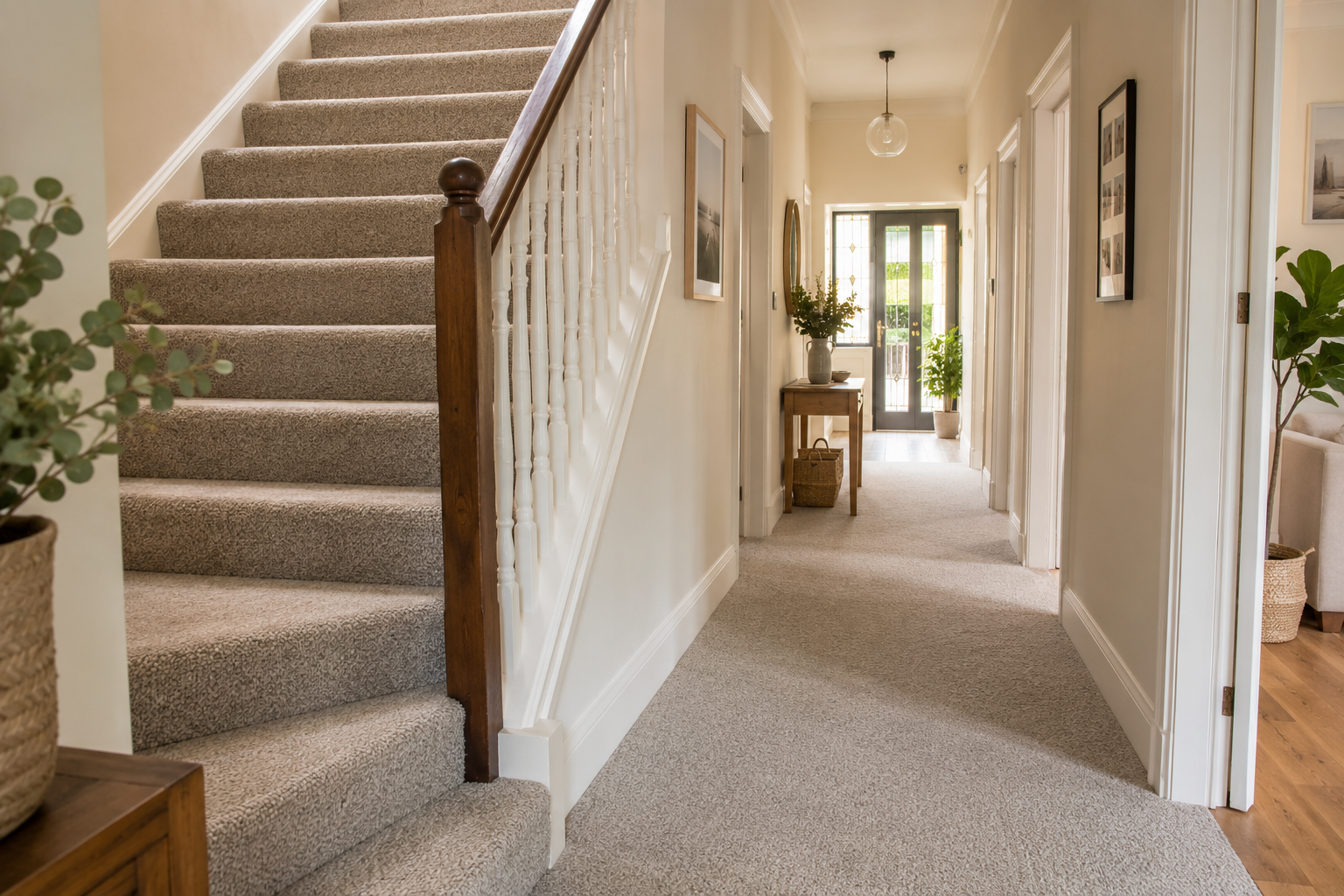
Stairs and hallways are usually some of the hardest-working carpet areas in a Melbourne home. A bedroom might be walked on lightly. A hallway often gets the same traffic path every day. Stairs take concentrated pressure on the edge of each tread, which is why they need a bit more care when choosing carpet.
If you are still working through the basics, start with our complete guide to choosing carpet in Melbourne. This stairs and hallway guide goes deeper into the areas where durability, traffic rating, pile style and stair suitability matter more than bedroom softness.
The simple rule is this: choose for the traffic first, then choose the feel and colour. A carpet can look beautiful on the rack and still be the wrong choice for a busy staircase or narrow hallway.
There is no single fibre or pile style that suits every stair and hallway. Solution dyed nylon carpet is often a practical starting point for busy homes, while wool and wool blend carpets can also work when the exact product suits the area. If you want the fibre comparison first, we have a separate guide to wool vs solution dyed nylon carpet.
Why Stairs and Hallways Need Different Carpet
Stairs and hallways are not the same as bedrooms. They are not usually chosen for bare-foot softness first. They need to handle traffic, pressure, tracking, dirt, pets, kids, shoes and the same daily walking path.
A hallway often gets walked through many times a day. It might connect bedrooms, living areas, the front door, the bathroom, the laundry or the stairs. That means the carpet is not being used evenly across the whole area. The traffic tends to follow one path.
Stairs are even more specific. Carpet bends over each tread and stair nosing, and the front edge of the step gets concentrated wear. That is why not every carpet that looks good in a bedroom should automatically be used on stairs.
This does not mean stair and hallway carpet has to feel rough or commercial. It just means the decision needs to start with suitability. Once the carpet can do the job, then you can think about colour, softness and the style of the home.
John, Swan Street Sales carpet department
"For stairs and hallways, do not start with the softest one. Start with the one that can actually do the job."
The trap is choosing stairs and hallways like they are bedrooms. A soft plush carpet might be lovely beside the bed, but a busy staircase or main hallway may need a more forgiving pile, stronger rating, better colour choice and firmer support underneath.
So the starting question is not “which one feels nicest in your hand?” It is “what does this area need to survive every day?”
Start with Traffic, Not the Softest Sample
This is where many carpet choices go wrong. A customer picks up a soft sample, likes the colour, and starts imagining it running through the home. That can work in some rooms, but stairs and hallways need a tougher first question.
Ask where the carpet is going. Is it on a main staircase? A narrow apartment hallway? A front entry? A hallway between kids bedrooms? A rental property? A quiet upstairs landing that only gets light use?
All of those areas can need a different answer. A hallway in a quiet two-person home is not the same as a hallway in a family home with kids, pets, school bags and shoes. A straight staircase is not the same as a landing, turn or narrow older-home stair run.
Stairs and Hallways by Home Situation
| Area / Situation | Visual Cue | What Happens There | Carpet Direction | Watch Out For |
|---|---|---|---|---|
| Main Stairs | 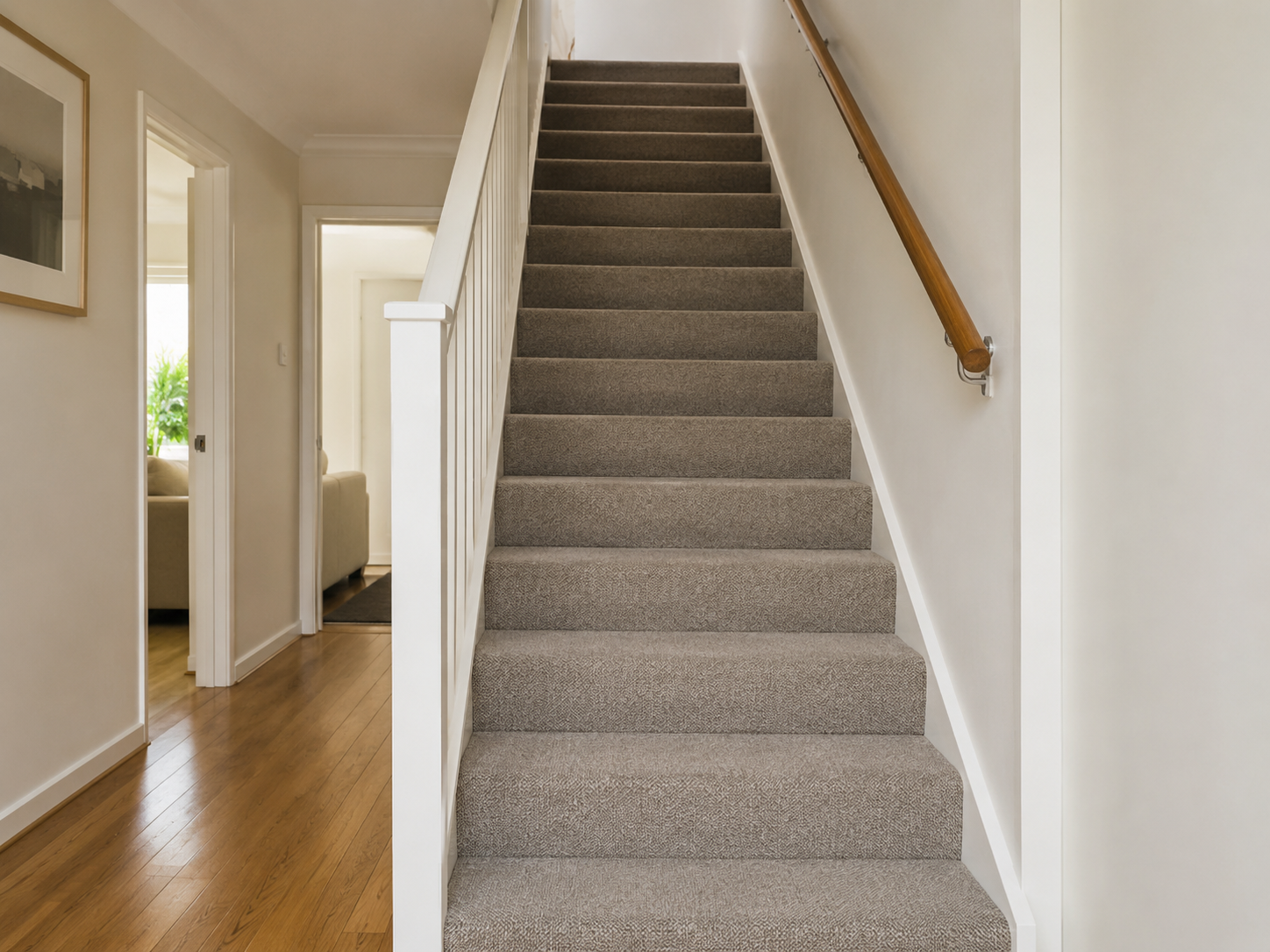 |
Repeated pressure on the same treads, especially near the front edge of each step. | Check stair suitability first, then compare dense twist, textured or suitable loop styles. | Do not assume thick or soft means suitable for stairs. |
| Main Hallway | 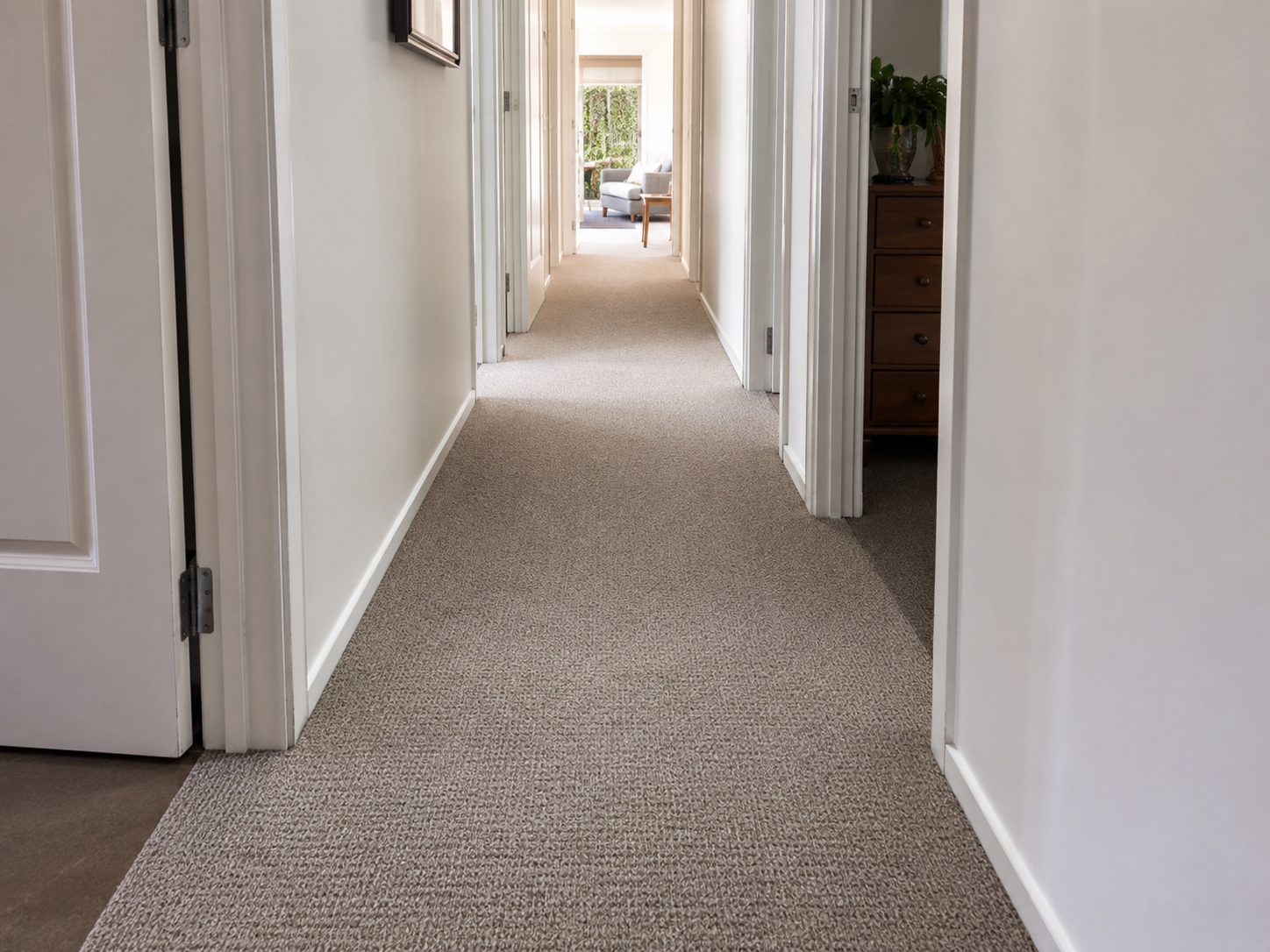 |
Traffic usually follows the same path every day, which can show flattening and tracking. | A practical high-traffic carpet with a forgiving colour and pile style. | Very smooth plush carpet can show traffic lanes, footprints and vacuum marks more clearly. |
| Entry Hallway | 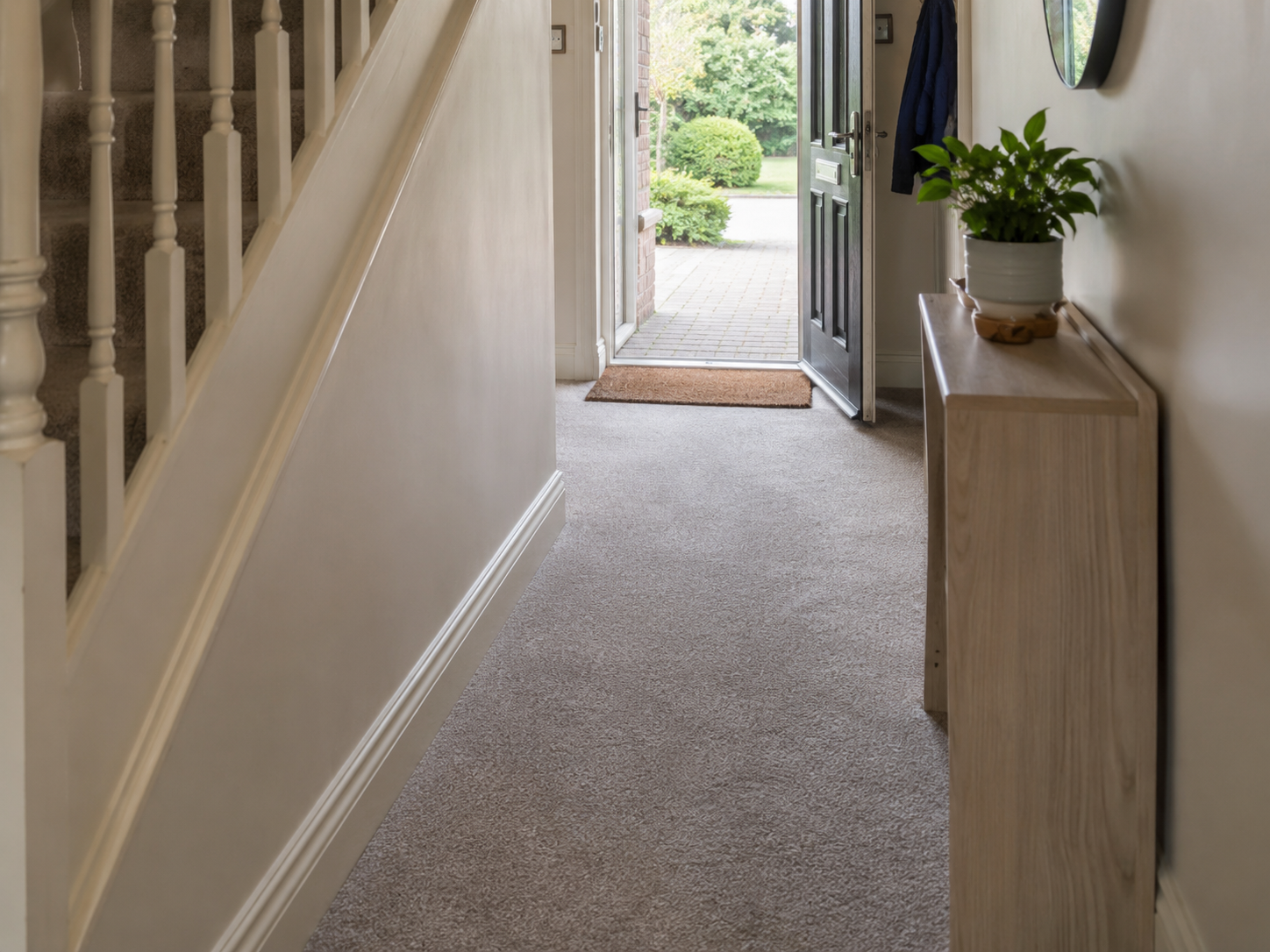 |
Shoes, dirt, school bags, pets, prams and daily coming and going. | Solution dyed nylon or another practical carpet in a mid-tone or textured colour is often worth comparing. | Very pale carpet can become hard work if the hallway is used as a main entry. |
| Apartment Hallway | 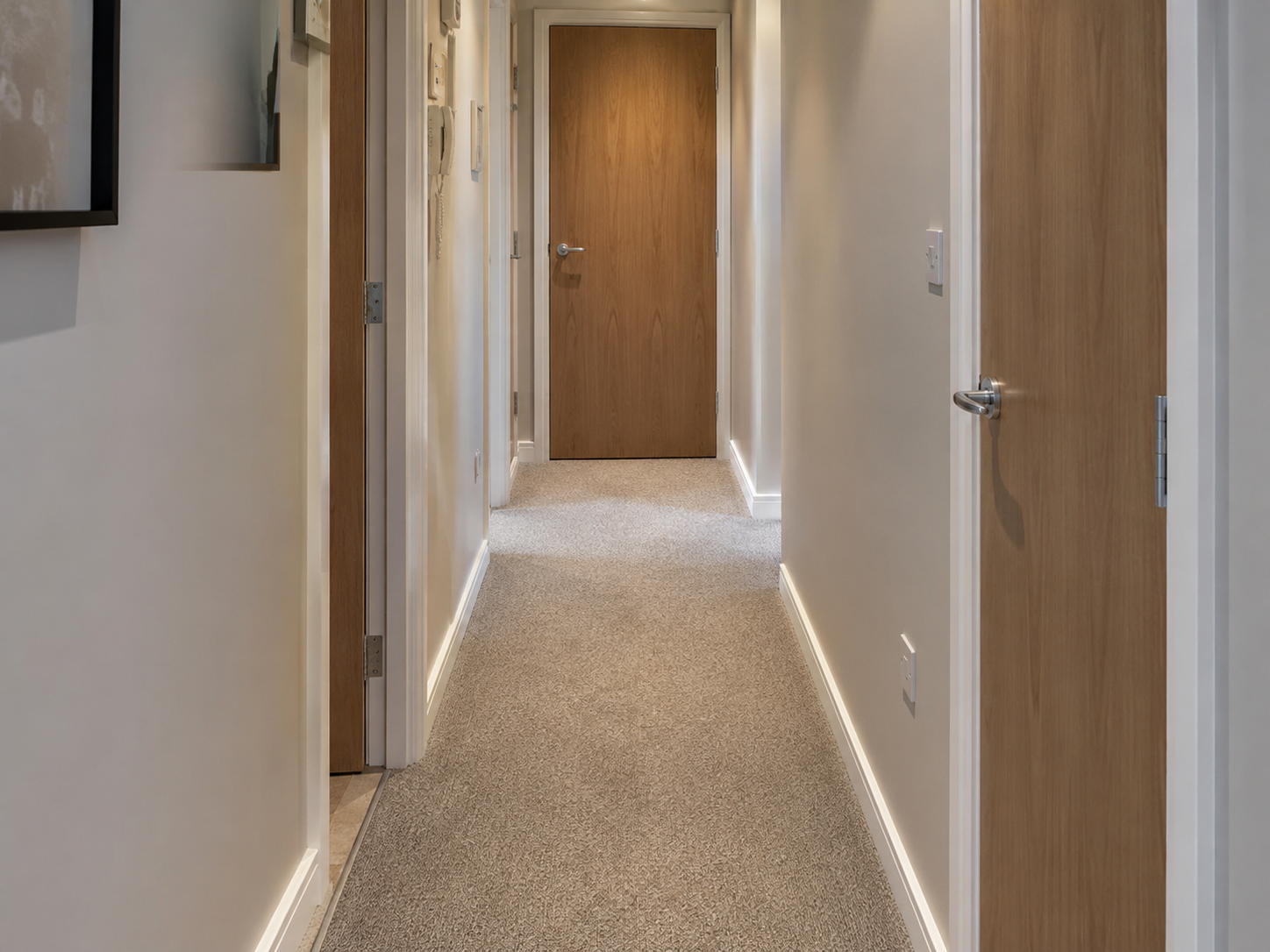 |
Narrow space, concentrated traffic and sometimes lower natural light. | A practical textured carpet that does not make the space feel too dark or tight. | Very dark carpet can show lint, dust and lighter pet hair, and may make a small hallway feel narrower. |
| Family Home Hallway | 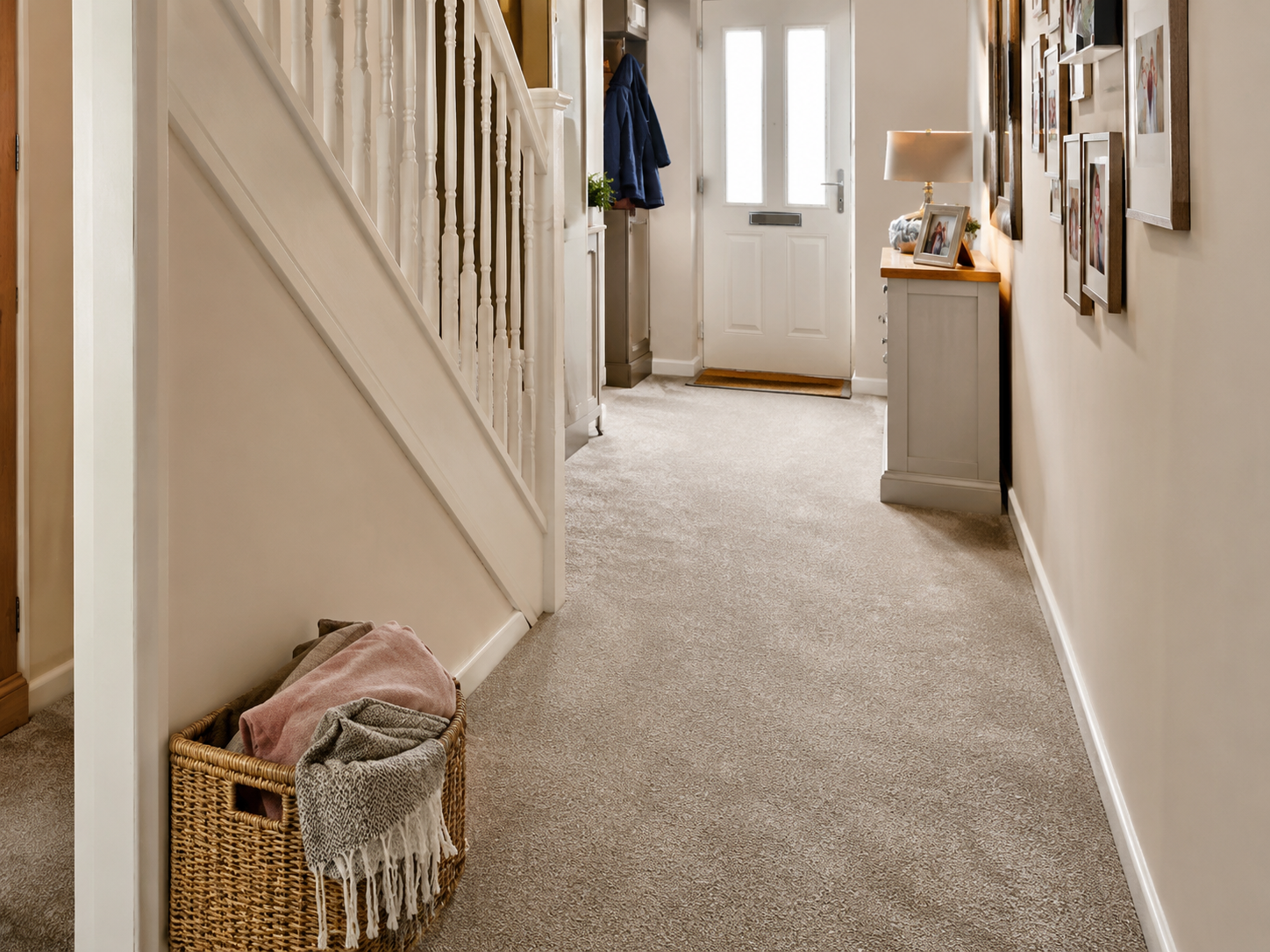 |
Kids, pets, shoes, bedrooms, bathroom traffic and daily wear. | Choose for durability and maintenance first, then colour and comfort. | Do not choose a delicate carpet because it looks nice in one bedroom sample. |
| Bedroom Hallway | 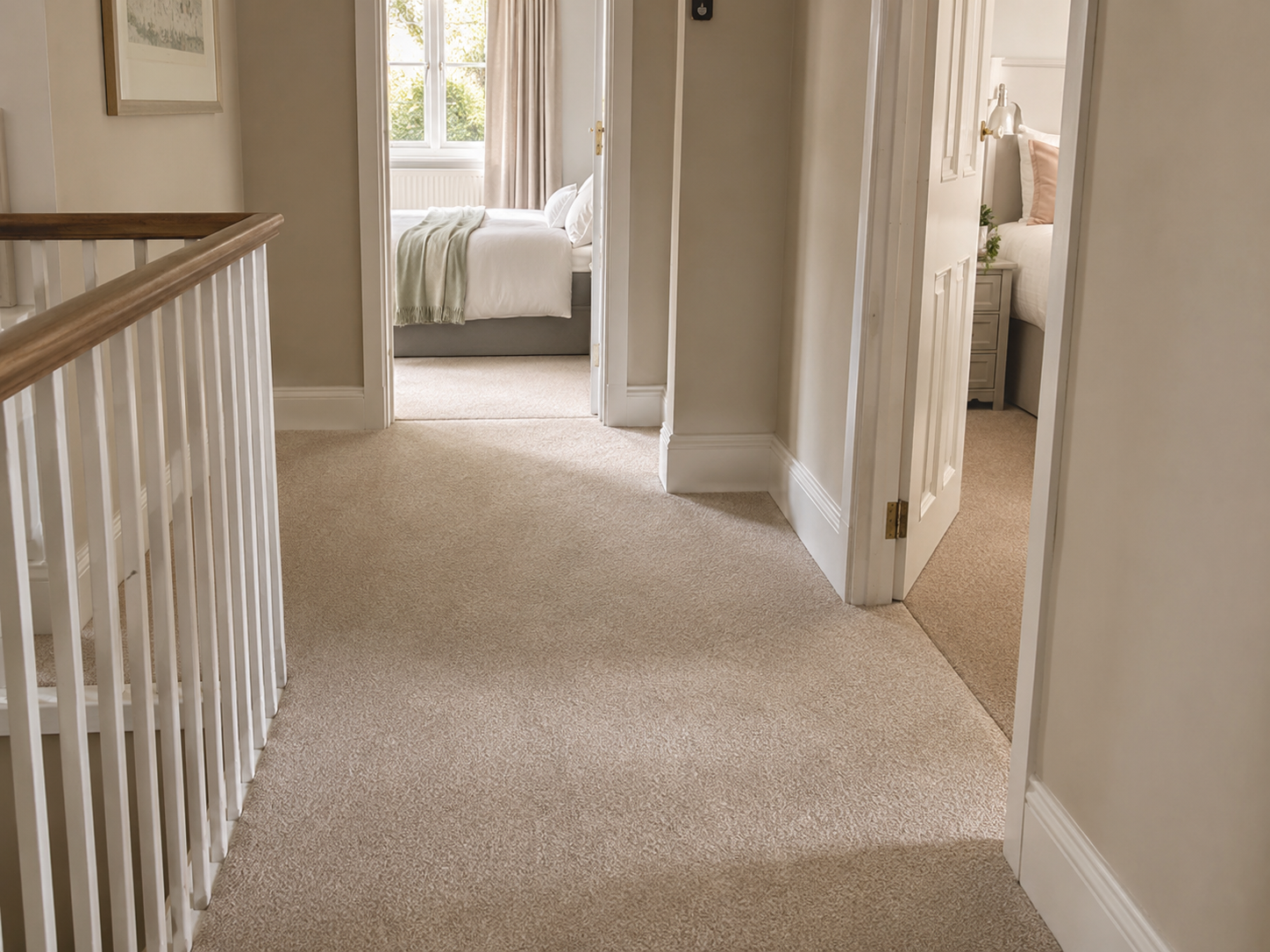 |
Carpet may run from hallway into bedrooms, so the hallway often works harder than the rooms. | If using one carpet throughout, choose based on the hallway first. | Do not choose purely for bedroom comfort if the hallway will take most of the wear. |
This is the same thinking we use in the showroom. The right carpet depends on the job. One home might need a practical solution dyed nylon twist for a busy hallway and stairs. Another might suit a wool or wool blend carpet if the exact product is suitable and the home is lower traffic.
Once the area is clear, the sample rack becomes easier to read. You are no longer just comparing colour and softness. You are comparing whether the carpet belongs in that part of the home.
Carpet Ratings and Stair Suitability
For stairs and hallways, the carpet rating matters. This is one of the main differences between choosing carpet for a quiet bedroom and choosing carpet for a hard-working part of the home.
In Australia, many carpets use classification labels that help show where the carpet is suitable. You may see terms like Residential Heavy Duty, Residential Extra Heavy Duty or a stair suitability symbol on certain carpet samples or supplier information.
The exact label can vary by brand and range, but the idea is simple: do not choose stairs by looks alone. A carpet going on stairs should be checked for stair suitability before the decision is locked in.
Important: A carpet can feel thick, soft or expensive and still be the wrong choice for stairs. If the carpet is going on stairs, check that the product is suitable for stair use.
What to Check Before Choosing Stair Carpet
| What to Check | Why It Matters | Swan Street Advice | Watch Out For |
|---|---|---|---|
| Residential traffic rating | Stairs and hallways normally get more concentrated wear than bedrooms. | For busy areas, compare carpets with a rating that suits high-traffic residential use. | Do not choose by softness alone if the area gets walked through all day. |
| Stair suitability | Stairs create concentrated wear on the tread and edge of each step. | Ask whether the carpet is suitable for stairs before locking it in. | Not every carpet that suits a flat room is right for stairs. |
| Pile construction | Pile style affects tracking, flattening, footprints and how the carpet handles traffic. | Twist, textured and suitable loop styles are worth comparing for high-traffic areas. | Very smooth plush styles can show marks and traffic more clearly. |
| Household use | Kids, pets, shoes, renters and busy family routines all change the carpet decision. | Choose for the busiest area first, especially if the same carpet runs into bedrooms. | A sample that suits a quiet home might not suit a busy family hallway. |
| Underlay suitability | Underlay affects comfort, support and how the carpet feels underfoot. | For stairs, support matters. Do not assume the softest underlay is always best. | Very soft underlay can be the wrong direction if it does not suit the carpet or stairs. |
This is where showroom advice helps. You do not need to become a carpet expert, but you do need to know whether the carpet is suited to the area. A sample can look right and still be a poor match for a staircase or busy hall.
If you are comparing options in-store, ask plainly: “Is this carpet suitable for stairs?” and “Would you use this in a busy hallway?” Those two questions will cut through a lot of guesswork.
Best Carpet Fibres for Stairs and Hallways
Fibre is a big part of the stairs and hallway decision, but it is not the only part. The exact carpet construction, pile style, rating and household use all matter.
That is why it is too simple to say one fibre is always best. Solution dyed nylon is often a very practical starting point for busy homes. Wool can work beautifully in the right carpet and the right home. Wool blend can make sense where you want a balance. Other synthetic fibres may suit some value-focused jobs, but need to be checked carefully for the area.
Swan Street Sales tip
"For stairs and hallways, fibre matters, but the exact carpet matters more. Check the rating, pile style and where it is going before you fall in love with the colour."
Solution Dyed Nylon Carpet for Stairs and Hallways
Browse solution dyed nylon carpet options if you are looking for a practical carpet direction for stairs, hallways, family homes, rentals or pet homes.
Solution dyed nylon is often a sensible starting point for stairs and hallways because it is usually chosen for durability, everyday maintenance and busy household use. It can be a good direction when the carpet needs to handle kids, pets, shoes, school bags, apartment entries or rental use.
That does not mean every solution dyed nylon carpet is automatically right for stairs. The actual product still needs to be checked for stair suitability, rating, pile style and the way the home will use it.
If you are choosing carpet for a busy home and want something practical before pretty, solution dyed nylon is usually worth comparing in-store.
Wool Carpet for Stairs and Hallways
Browse wool carpet options if you like a natural fibre and want to compare whether a wool carpet suits your stairs or hallway.
Wool can be a beautiful carpet option, but it should not be chosen for stairs and hallways just because it sounds premium. The exact wool carpet, pile style, density, rating and household use all matter.
In the right home, a suitable wool carpet can feel warm, natural and comfortable. But for very busy stairs, family hallways, pets or rental use, it is worth comparing wool against more practical synthetic options before deciding.
The safest way to think about wool is this: wool can work, but do not assume it is automatically the best choice for every staircase or hallway.
Wool Blend Carpet for Stairs and Hallways
Browse wool blend carpet options if you want to compare carpets that may offer a different balance of natural feel and practicality.
Wool blend carpet can be a useful middle ground in some homes. It may suit customers who like the idea of wool but want to compare other constructions and performance directions.
Because wool blends vary, it is important to check the actual carpet. Do not assume every blend behaves the same way. The fibre mix, pile style, rating and stair suitability all need to line up with the area.
Polyester and Other Synthetic Carpet for Stairs and Hallways
Other synthetic carpets can make sense in some homes, especially for value-focused jobs, lower-use hallways or areas where budget is a major factor.
But for stairs and main hallways, the exact product matters. Some softer synthetic carpets may feel nice in a bedroom but may not be the first option for a hard-working staircase or main traffic lane.
If you are considering polyester or another synthetic carpet for stairs or hallways, check the rating, pile style and whether the product is suitable for the area before choosing it.
Carpet Fibre Comparison for Stairs and Hallways
| Carpet Fibre | Why It Can Work | Good Fit For | Watch Out For |
|---|---|---|---|
| Solution Dyed Nylon | Often practical, durable and easier to live with in busy homes. | Stairs, hallways, family homes, pets, kids, rentals and apartment entries. | Still check the exact carpet rating, pile style and stair suitability. |
| Wool | Natural feel, warmth and a more premium carpet finish. | Homes where the exact wool carpet is suitable and maintenance expectations are clear. | Not automatically the best choice for every staircase or busy hallway. |
| Wool Blend | Can offer a different balance of feel and practicality, depending on the range. | Customers who want to compare wool feel with other performance options. | Blends vary. Check fibre mix, rating, pile style and suitability. |
| Polyester | Can be soft and value-focused in some ranges. | Some lower-use areas or budget-focused projects where the product is suitable. | May not be the safest first choice for very hard-working stairs unless properly rated and suitable. |
| Other Synthetic Options | Can be useful where value or broad practicality is the main goal. | Selected homes, rentals or lighter-use spaces depending on the product. | Performance varies, so do not choose without checking the exact carpet details. |
If you want the simplest starting point, begin with the use of the area. If the stairs or hallway are busy every day, practicality comes first. If the home is quieter and you want a natural feel, wool or wool blend may be worth comparing. The best answer depends on the carpet, not just the fibre name.
For a deeper fibre breakdown, read our guide to wool vs solution dyed nylon carpet.
Best Carpet Pile Styles for Stairs and Hallways
Pile style is one of the biggest decisions for stairs and hallways. It changes how the carpet feels, how it catches the light, how it hides footprints, and how forgiving it looks once people start walking on it every day.
Two carpets can be made from the same fibre and still behave differently because the pile style is different. One might show footprints and vacuum lines clearly. Another might have enough texture to hide everyday marks better.
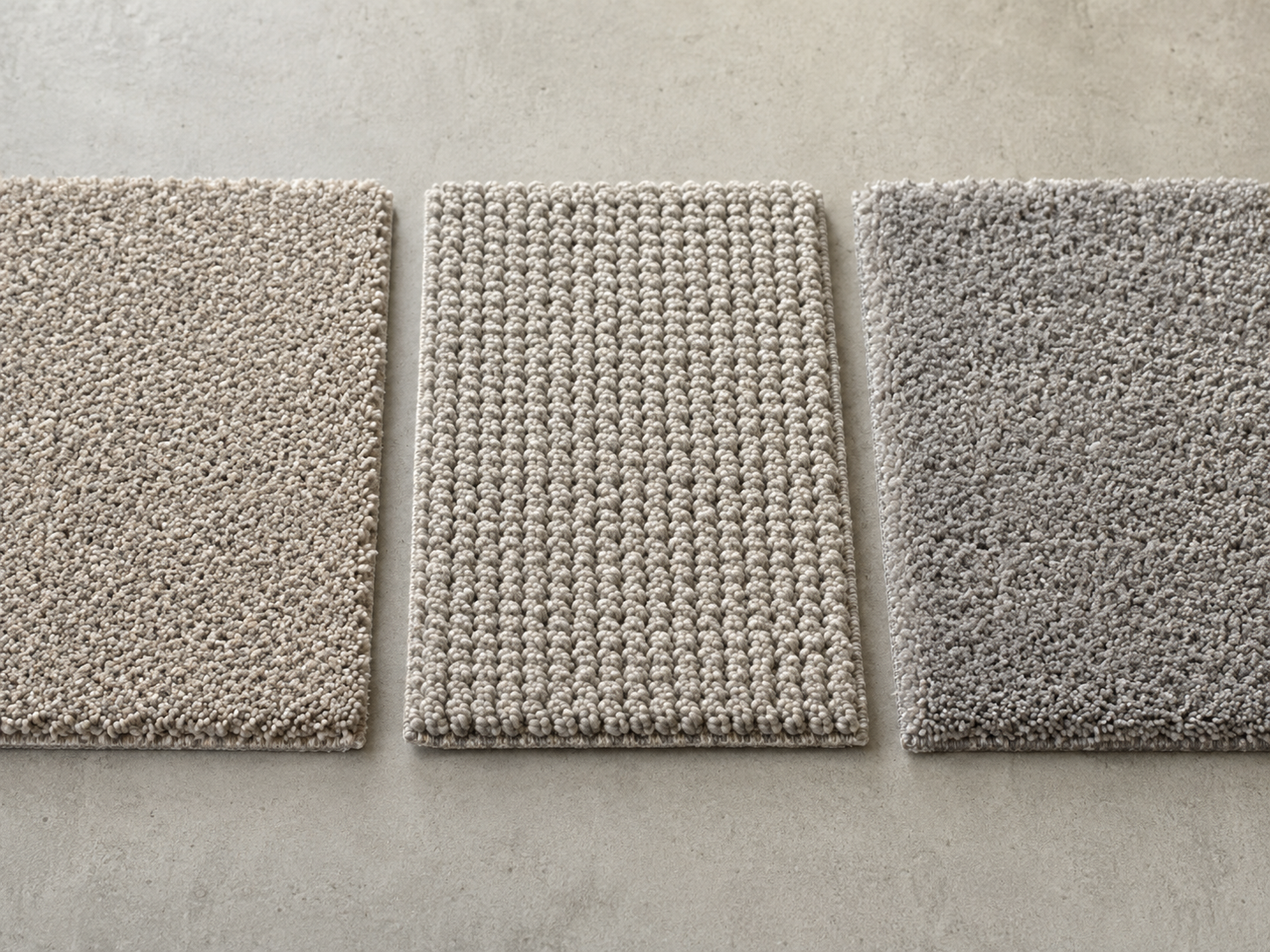
For stairs and hallways, twist pile, textured cut pile and suitable loop pile are usually worth comparing. Plush and very soft carpet may still have a place in the home, but they need more care in busy traffic areas.
Twist Pile Carpet for Stairs and Hallways
Twist pile is often a strong all-rounder for stairs and hallways. The twisted yarn gives the carpet more surface movement than a smooth plush, which can help it look more forgiving in daily use.
For many Melbourne homes, a good twist pile carpet can balance comfort and practicality. It can still feel pleasant underfoot, but it usually does not have the same smooth, mark-showing surface as plush carpet.
The quality still matters. A twist pile should still be checked for density, rating, fibre and stair suitability before using it in a busy hallway or on stairs.
Textured Cut Pile Carpet for Stairs and Hallways
Textured cut pile carpet can be useful when you want a softer carpet feel but do not want the floor to show every footprint and vacuum line.
The extra texture gives the carpet more visual movement. That can help disguise small marks, dust, tracking and normal day-to-day variation better than a very smooth finish.
This can be a good direction for family hallways, apartments, bedroom corridors and homes where the hallway is not just a show area but part of everyday life.
Loop Pile Carpet for Stairs and Hallways
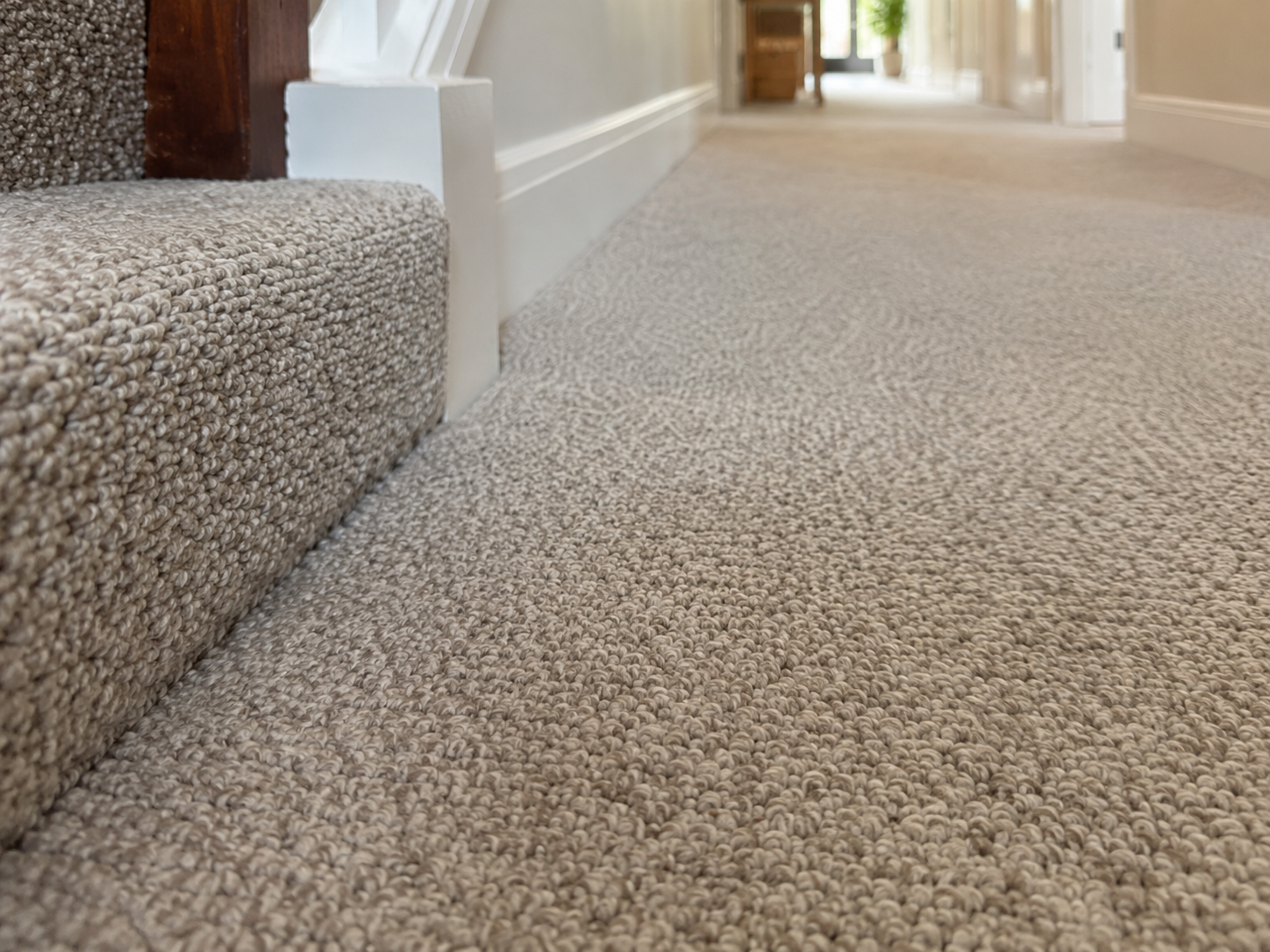
Loop pile carpet can be durable and practical in high-traffic areas when the exact product is suitable. It often has a more structured look and can hide some footprints better than smooth cut pile carpets.
But loop pile needs a proper conversation if pets are involved. Some pets can catch claws in loops, depending on the carpet and the animal. That does not mean loop pile is always wrong for pet homes, but it should be considered before choosing.
Loop pile should also be checked for stair suitability if it is going on stairs. Do not assume that every loop pile belongs on every staircase.
Plush Carpet for Stairs and Hallways
Plush carpet can look soft, smooth and luxurious. In bedrooms, it can be a beautiful choice. In stairs and hallways, it needs more caution.
The smoother the surface, the more likely it is to show footprints, vacuum marks, pile direction, shading and traffic lanes. Some people like that soft brushed look. Others find it frustrating in a hallway that gets walked through all day.
If you love a plush carpet, it is worth asking whether it suits the hallway or stairs you are planning. It may be better kept for bedrooms, or used only if the product and traffic level make sense.
Pile Style Comparison for High-Traffic Areas
| Pile Style | Good for Stairs? | Good for Hallways? | Watch Out For |
|---|---|---|---|
| Twist Pile | Often a strong option if the carpet is stair-suitable. | Often a strong option for busy home hallways. | Still check density, fibre, rating and stair suitability. |
| Textured Cut Pile | Can work well if the exact carpet is suitable. | Good for hiding some everyday marks and movement. | Avoid loose or flimsy constructions in busy areas. |
| Loop Pile | Can be durable if the product is suitable for stairs. | Often practical for traffic and a more structured look. | Pet claws, pulled loops and stair suitability need checking. |
| Plush / Velvet | Usually less forgiving for hard-working stairs. | Can show tracking, shading and traffic lanes. | Footprints, vacuum marks and pile direction can show clearly. |
| Long or Very Soft Pile | Depends heavily on the exact product. | Usually not the safest first choice for busy hallways. | Softness does not equal durability or suitability. |
Simple rule: For stairs and hallways, pile style can matter just as much as fibre. A good carpet choice needs the fibre, pile, rating, colour and underlay to work together.
For most customers, the safer showroom direction is to compare twist, textured and suitable loop styles first. If you love plush or very soft carpet, check whether it belongs in the hallway or whether it is better suited to the bedrooms.
Carpet Colour for Stairs and Hallways
Colour matters in every room, but in stairs and hallways it is not just a style decision. It is part of the maintenance decision.
Very light carpet can brighten a narrow hallway, but it can show dirt, shoe marks, pet mess and everyday traffic faster. Very dark carpet can look rich and grounded, but it can show lint, dust and light pet hair more than people expect.
Mid-tone colours are often easier to live with. Warm greys, taupes, soft browns, textured beiges, flecked colours and heathered yarns can help hide everyday marks better than a flat, very pale or very dark carpet.
Swan Street Sales tip
"On stairs and hallways, colour is not just about what looks nice. It is about what you are happy to look after every week."
Light Carpet for Stairs and Hallways
Light carpet can make a dark hallway feel brighter and a narrow space feel more open. It can work in the right home, especially if the hallway is not used as a main entry and the household is careful with shoes, pets and spills.
The downside is that pale carpet can show marks quickly in busy traffic areas. If the hallway connects to the front door, kids bedrooms, the bathroom or a staircase, a very light carpet may need more maintenance than expected.
Dark Carpet for Stairs and Hallways
Dark carpet can look strong, smart and practical at first glance. It may hide some darker marks better than a pale carpet, but it is not automatically low-maintenance.
Dark carpet can show lint, dust, fluff and lighter pet hair. In a narrow hallway or apartment corridor, it can also make the space feel smaller or heavier if the area does not get much natural light.
Mid-Tone and Textured Carpet Colours
Mid-tone and textured colours are often the easiest direction for stairs and hallways. They do not show every small mark like very pale carpet, and they do not show lint as harshly as some very dark carpets.
Flecked, heathered or mixed-tone carpets can be especially useful in busy areas because they give the floor a bit of visual movement. That can help disguise normal traffic and day-to-day dust better than a flat single-colour finish.
Colour Guide for Stairs and Hallways
| Colour Direction | Good Points | Good Fit For | Watch Out For |
|---|---|---|---|
| Very Light Carpet | Can brighten a dark hallway and make narrow areas feel more open. | Quieter homes, upstairs hallways or areas without heavy entry traffic. | Can show dirt, shoe marks, pet mess and traffic faster. |
| Very Dark Carpet | Can feel rich, grounded and smart. | Larger hallways, homes with good light or customers wanting a darker look. | Can show lint, dust and light pet hair. Can make small hallways feel tighter. |
| Mid-Tone Neutral | Usually easier to live with than very pale or very dark carpet. | Most stairs, hallways, family homes and apartment corridors. | Choose the tone carefully so it works with nearby rooms and flooring. |
| Flecked / Heathered Colour | Helps disguise everyday marks and small traffic variation. | Busy hallways, stairs, kids areas, pet homes and rentals. | Can look busier across a full hallway than it does on a small sample. |
| Warm Grey / Taupe | Practical, modern and usually easy to style. | Melbourne homes with mixed furniture, timber tones, white walls or neutral schemes. | Some greys can feel cold if the home already lacks warmth. |
If you are unsure, a textured mid-tone is usually a safe place to start. It may not look as dramatic as a very light or very dark sample, but it can be much easier to live with in a hallway that gets used every day.
That is the difference between choosing for a photo and choosing for a real home.
Carpet Underlay for Stairs and Hallways
Carpet underlay is easy to forget because you do not see it once the carpet is installed. But you will feel it every day, especially on stairs and in hallways.
Underlay affects comfort, support, noise and the finished feel of the carpet. In a bedroom, people often think mostly about softness. On stairs and hallways, support becomes just as important.
This is especially true on stairs. The underlay needs to work with the carpet and the installation. The softest underlay is not automatically the best underlay for a staircase.
Underlay tip: For stairs and hallways, do not choose underlay only by how soft it feels. It needs to support the carpet properly and suit the area.
Why Underlay Matters on Stairs
Stairs put pressure on the carpet in a very concentrated way. Every step lands in a similar spot, and the carpet bends over the stair edge. The underlay underneath has to support the carpet, not just make it feel cushioned.
If the underlay is tired, compressed or not suited to the job, the finished carpet may not feel or perform the way it should. A good carpet over poor underlay can still feel disappointing.
Why Underlay Matters in Hallways
Hallways also benefit from good underlay because they get repeated traffic in the same walking path. A supportive underlay can help the carpet feel better underfoot and make the hallway feel more settled.
In apartments, upstairs areas and shared homes, underlay can also help soften footstep noise. The right underlay choice depends on the carpet, the home and the way the area is used.
Underlay Priorities for Stairs and Hallways
| Area | What Underlay Should Help With | Good Direction | Watch Out For |
|---|---|---|---|
| Stairs | Support, comfort and a suitable feel under repeated steps. | Choose underlay that works with the carpet and stair installation. | Do not assume the softest option is best for stairs. |
| Main Hallway | Support under repeated traffic and a more comfortable finished feel. | A good supportive underlay can help the hallway feel better underfoot. | Old underlay may be tired, uneven or compressed. |
| Apartment Hallway | Footstep softness, comfort and noise reduction. | Discuss underlay if noise and comfort are important. | Apartment requirements may also need checking before choosing. |
| Bedroom Hallway | Comfort where the carpet continues into bedrooms. | Choose an underlay that balances comfort with hallway support. | Do not choose purely for bedroom softness if the hallway takes heavy wear. |
The main point is not that every home needs the thickest or most expensive underlay. It is that underlay should be chosen with the carpet and area in mind.
If you are comparing carpet in-store, talk about underlay at the same time. The sample in your hand is only part of the finished floor.
Measure and Installation for Stairs
Stairs and hallways need proper measuring. They are not the same as a simple square bedroom.
A staircase has treads, risers, turns, landings, nosing, direction and installation detail. A hallway may involve joins, room transitions, doorways, cupboards, stairs, bedrooms and existing flooring. These details can affect how much carpet is needed and how the finished job should be planned.
This is why it is best to narrow the carpet range first, then arrange a proper Melbourne Metro measure with the relevant sample folder or book if needed.
- Start with the areaDecide whether the carpet is for stairs, hallway, landing, entry, bedrooms, or a combination of areas.
- Compare suitable carpet optionsLook at fibres, pile styles, colours, ratings and stair suitability before choosing purely by feel.
- Talk through the homeKids, pets, shoes, renters, apartments and hallway traffic all change the recommendation.
- Narrow the carpet rangeOnce you have a likely range or shortlist, the measure can be arranged with the right sample folder or book.
- Measure the actual jobStairs and hallways need proper measuring because details like treads, landings, turns and transitions matter.
Why Stairs Need Extra Care
Stairs are one of the places where carpet suitability matters most. The carpet is not just sitting flat across a room. It is wrapped and fitted over a series of steps, and those steps get repeated pressure every day.
That does not mean you need to know every installation detail yourself. It just means the carpet choice should be checked before the job is measured and booked.
Why Hallways Need Careful Planning
Hallways can look simple, but they often connect several parts of the home. A hallway may run into bedrooms, stairs, a living area or different flooring. It may be narrow, dark, angled or broken up by doorways.
Those details can affect colour choice, pile direction, joins, traffic lanes and how the finished carpet looks once installed.
This is why choosing carpet online from a small screen can be difficult for stairs and hallways. The sample needs to be judged as part of the home, not as a colour square by itself.
Common Stair and Hallway Carpet Mistakes to Avoid
Most mistakes with stair and hallway carpet happen because people choose too quickly from the sample rack. The carpet feels soft, the colour looks right, and the price seems fine, but the area still has to live with that decision every day.
Stairs and hallways are less forgiving than bedrooms. They show repeated wear faster, they usually get dirtier, and they can make the wrong carpet choice obvious sooner.
Mistakes We See with Stair and Hallway Carpet
- Choosing it like bedroom carpetBedrooms can lean more toward softness. Stairs and hallways need traffic, rating and suitability checked first.
- Picking the softest sampleA soft sample can feel beautiful in your hand, but softness does not mean the carpet suits stairs or busy hallways.
- Ignoring stair suitabilityNot every carpet that suits a flat room should be used on stairs.
- Choosing very pale carpet for a busy entryLight carpet can look fresh, but shoes, pets and daily traffic can make it hard work in a main hallway.
- Assuming wool is automatically betterWool can be a beautiful option, but the exact wool carpet still needs to suit the stairs, hallway and household.
- Assuming nylon means cheapSolution dyed nylon can be a smart, practical choice for busy areas when the product suits the job.
- Choosing loop pile without thinking about petsLoop pile can be durable, but pet claws and pulled loops should be discussed before choosing.
- Forgetting underlayUnderlay changes comfort, support and the finished feel of the carpet, especially on stairs.
- Judging colour from a screen onlyCarpet colour can change once it is seen in the actual hallway, with real light and nearby flooring.
- Leaving stairs until the endIf the same carpet is going through bedrooms, hallway and stairs, choose based on the hardest-working area first.
The easiest way to avoid these mistakes is to slow the choice down. Start with where the carpet is going, then think about traffic, fibre, pile style, colour, underlay and stair suitability.
Once that is clear, you can still choose something that looks good and feels comfortable, but you are choosing it for the right area, not just because it looked nice as a small sample.
Visit Swan Street Sales for Stair and Hallway Carpet
Stairs and hallways are worth getting right because they usually take more wear than bedrooms. At Swan Street Sales in Richmond, you can compare carpet samples in person, feel the difference between pile styles, and talk through what will suit your home.
Free Melbourne Metro carpet quotes are available. The best starting point is to visit the showroom or contact us first so we can help you choose or narrow down the carpet range. If you are interested in a specific range, we can arrange a Melbourne Metro measure with the relevant carpet sample folder or book.
Contact Swan Street Sales Or call us on (03) 9428-1746.
Frequently Asked Questions
What is the best carpet for stairs?
The best carpet for stairs is usually one that is suitable for stair use, rated for the level of traffic, and made in a pile style that can handle concentrated wear. Twist pile, textured cut pile and suitable loop pile carpets are often worth comparing, but the exact carpet should always be checked before choosing.
What is the best carpet for hallways?
The best carpet for hallways is usually a practical, durable carpet that can handle repeated traffic in the same walking path. A forgiving pile style, suitable fibre, mid-tone or textured colour, and good underlay can all make a big difference.
Is solution dyed nylon good for stairs and hallways?
Yes, solution dyed nylon is often a practical option for stairs and hallways, especially in busy homes, pet homes, rentals and family areas. The exact carpet still needs to be checked for rating, pile style and stair suitability.
Is wool carpet good for stairs?
Wool carpet can be suitable for stairs in the right product and the right home, but it should not be chosen just because it sounds premium. The exact wool carpet, pile style, density, rating and stair suitability all matter.
Is loop pile carpet good for stairs?
Loop pile carpet can be durable and practical, but it needs to be checked for stair suitability before being used on stairs. Pet claws and pulled loops should also be considered if there are cats or dogs in the home.
What carpet hides hallway traffic marks best?
Textured carpets, twist pile carpets, flecked colours, heathered yarns and mid-tone neutrals are often more forgiving in hallways than very smooth plush carpets or very pale single-colour carpets.
Should stairs and bedrooms use the same carpet?
They can, but if the same carpet is running through bedrooms, hallways and stairs, it is usually safer to choose based on the hardest-working area first. A carpet chosen only for bedroom softness may not be suitable for stairs or busy hallways.
Does underlay matter on stairs?
Yes. Underlay affects comfort, support and the finished feel of the carpet. On stairs, support is important, so the softest underlay is not automatically the best choice.
Do stairs need a proper carpet measure?
Yes. Stairs and hallways need proper measuring because they can involve treads, risers, landings, turns, joins, doorways and transitions. Free Melbourne Metro carpet quotes are available once you have chosen or narrowed down the carpet range.
Can Swan Street Sales help with stair and hallway carpet in Melbourne?
Yes. Swan Street Sales in Richmond can help you compare stair and hallway carpet options, narrow down fibre and pile style choices, and talk through colour, underlay and room suitability. Free Melbourne Metro carpet quotes are available once you have chosen or narrowed down the carpet range.