

Dirty, faded and damaged plastic outdoor chairs do not all need the same treatment. Surface grime may wash away, while sun-related fading can be permanent. Cracked or brittle parts are more serious and may mean the chair should no longer be used.
Before reaching for a plastic restorer, work out which problem you are dealing with. This guide explains how to clean outdoor plastic chairs, what can realistically be restored, what to avoid and when replacement makes more sense.
Quick answer: Start with mild dishwashing detergent, lukewarm water and a soft cloth or brush. Rinse thoroughly and allow the chair to dry. If the colour remains faded or the surface is chalky after cleaning, the plastic itself may have changed. Cleaning cannot undo structural deterioration or make a cracked chair safe.
In this guide
2.How to clean plastic outdoor chairs
3.Removing stains, mould and yellowing
4.Can faded or chalky plastic be restored?
5.Painting and DIY restoration methods
6.When a plastic chair needs replacing
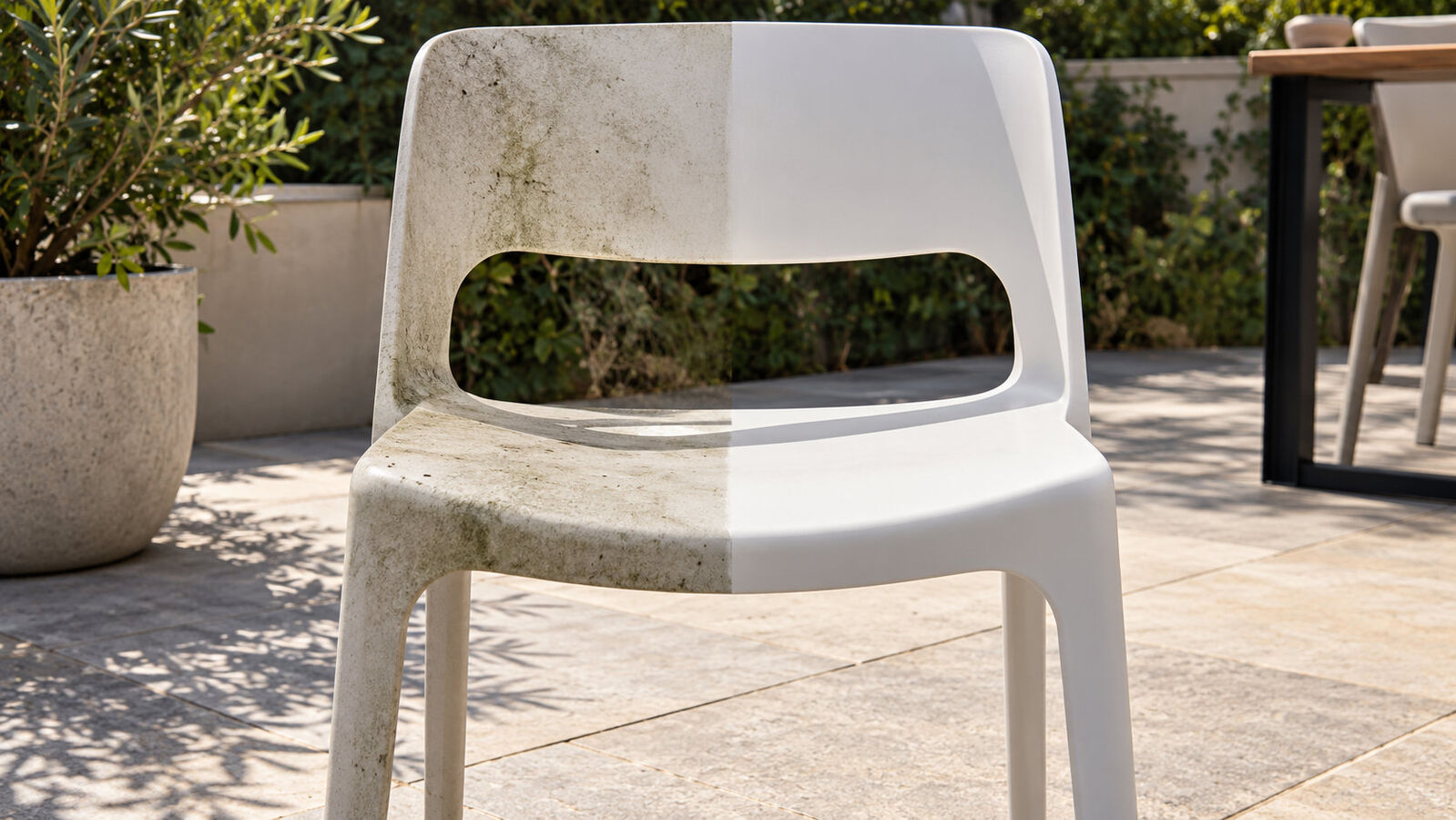
Regular cleaning can remove surface dirt and grime. It cannot reverse permanent UV-related damage or weakened plastic.
First, Identify What's Wrong With the Chair
Two chairs can look equally worn while needing completely different treatment. Look closely at the surface after brushing off loose dirt, and inspect the legs, seat and backrest before putting weight on the chair.
| What you notice | Possible cause | What to try |
|---|---|---|
| Grey film, dust or general grime | Surface dirt and airborne deposits | Wash with mild soap and water. |
| Black or green spots | Mould or algae growing on deposited dirt and moisture | Clean gently; use only a cleaner approved for the chair material if marks remain. |
| Greasy or dark patches | Food, barbecue grease or ingrained stains | Repeat a gentle detergent wash and spot-test any specialist cleaner. |
| Yellowing or uneven discolouration | Staining, deposits or changes in the plastic | Clean first. Permanent material discolouration may not wash away. |
| Faded colour or powdery, chalky surface | Possible surface weathering or UV-related ageing | Clean to rule out residue. Cosmetic products have limits and may be unsuitable for seating surfaces. |
| Cracks, brittle sections or damaged legs | Structural wear or deterioration | Stop using the chair until its safety can be assessed; replace it if structural integrity is compromised. |
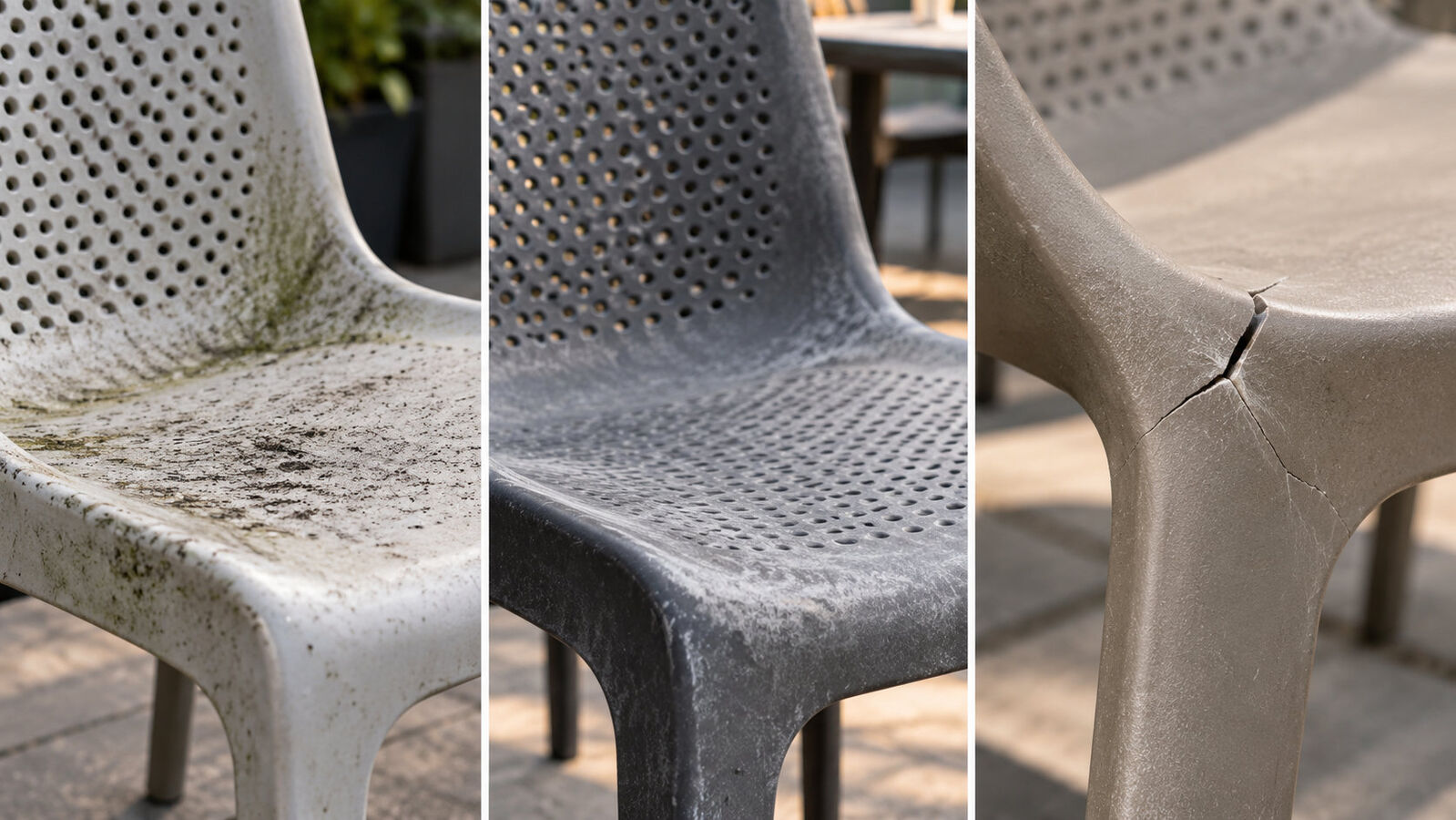
From left to right: surface grime, chalky weathering and structural cracking. Each calls for a different response.
If you are unsure what the chair is made from, check its product information or care instructions before trying a specialist cleaner.
How to Clean Plastic Outdoor Chairs Safely
For most moulded-plastic outdoor chairs, mild detergent and a soft sponge are sensible starting points. Check the care instructions first if the chair has a special coating or finish.
- Inspect the chair. Check the legs, backrest, underside of the seat and any joints. Do not attempt to clean and reuse a chair with suspected load-bearing damage.
- Remove loose dirt. Use a dry soft brush or cloth to clear dust, leaves, sand and cobwebs so you do not rub grit into the surface.
- Make a gentle cleaning solution. Add a small amount of mild dishwashing liquid to lukewarm water. Avoid boiling water or highly concentrated chemicals.
- Wash without scouring. Wipe with a soft sponge or microfibre cloth. Use a soft-bristled brush around textured areas, ventilation holes and the underside of the seat.
- Rinse thoroughly. Use clean water or a gentle hose spray to remove detergent and loosened grime. Avoid directing a pressure washer at the plastic.
- Dry completely. Wipe away excess water and allow the chair to dry in a shaded, ventilated spot before stacking, covering or using it.
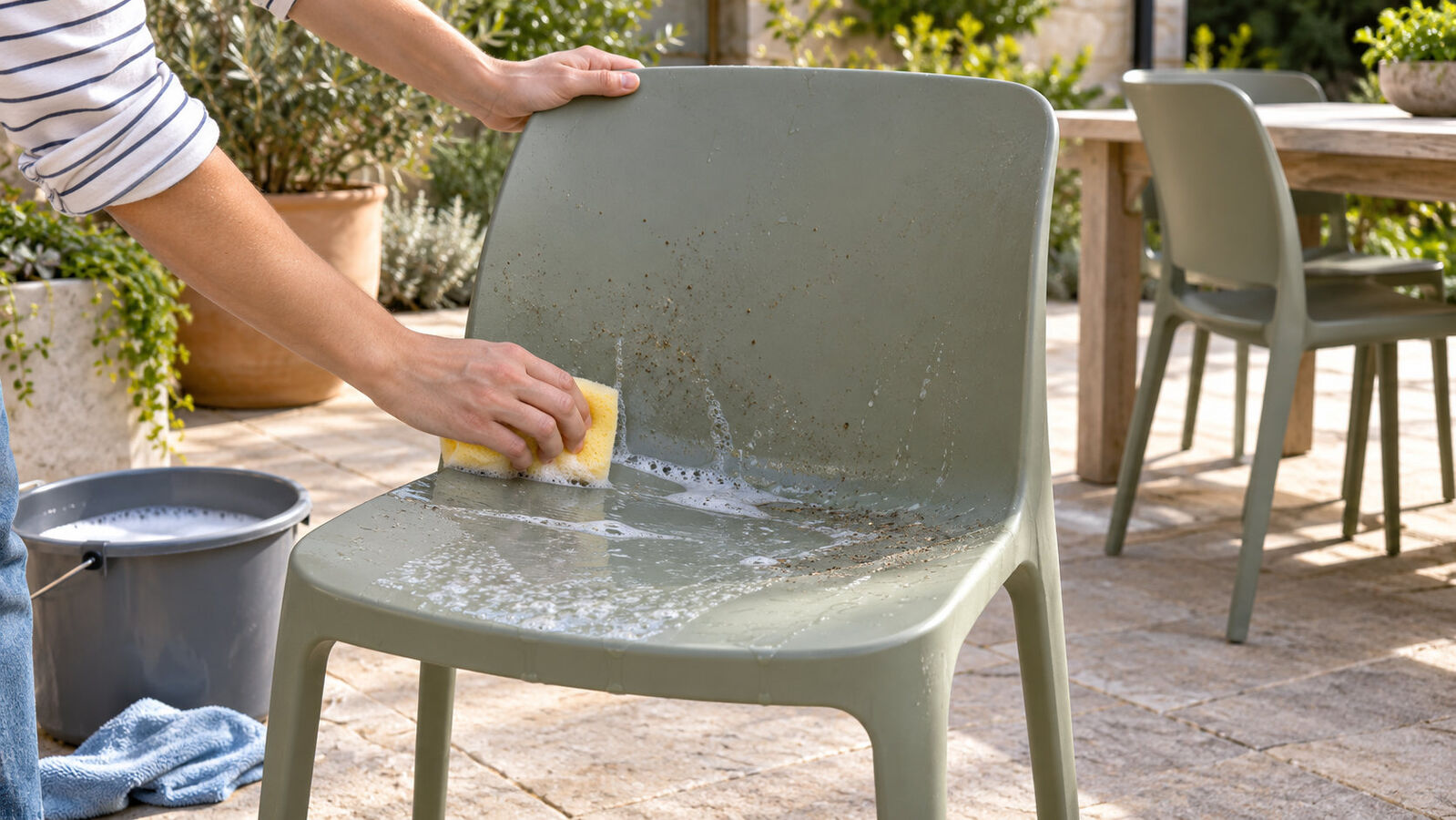
A soft sponge and soapy water can lift everyday grime without scraping the plastic surface.
Why avoid abrasive pads and pressure washing? Abrasive pads can scratch or roughen plastic, making it harder to keep clean. High-pressure water can damage some finishes. If marks remain, repeat the wash rather than scrubbing harder.
How Do You Remove Stains, Mould and Yellowing?
Grease, food stains and bird droppings
Soften dried marks with a damp cloth and mild detergent. Leave the soapy water briefly to loosen the dirt, then wipe gently and rinse. For barbecue grease, repeat the wash rather than reaching for solvents.
Black or green marks
Mould and algae can develop where moisture and organic dirt collect, particularly in textured surfaces or chairs stored close together while damp. Wash the affected area with mild soapy water and a soft brush, then rinse and dry thoroughly. If staining persists, consult the chair's care instructions before using a specialist cleaner intended for plastic furniture.
Do not mix household cleaning chemicals, particularly bleach with acids or ammonia. Strong bleach solutions and harsh cleaners can also discolour certain plastics or finishes.
Yellow or grey discolouration
Some yellowing is removable staining; some reflects changes in the material itself. Wash a small inconspicuous area first. If the clean patch is still yellow or dull, repeated scrubbing is unlikely to be the answer and may make the finish worse.
Can Faded or Chalky Plastic Outdoor Chairs Be Restored?
Sometimes the appearance can be improved, but the original colour and finish may not return. Sunlight and weathering can change plastic over time. What looks like fading may be removable dirt, a weathered surface or a permanent colour change.
If a white or dusty film wipes onto a cloth, first rule out dirt, cleaning-product residue or nearby building dust. If a dull, powdery appearance remains after a careful wash, surface weathering may be involved.
Some products sold as plastic restorers can temporarily deepen colour or improve the appearance of compatible plastics. They do not reverse brittleness, repair cracks or restore the original strength of aged material. Results also depend on the particular plastic and product used.
Important for chairs: A restorer made for vehicle trim may not be suitable for a seat or backrest. Check that it is compatible with the chair material and will not leave a slippery finish or residue that transfers onto clothing. Test a hidden area first.
Even UV-stabilised, weather-resistant chairs can fade over time. Regular care and shade when practical can help reduce weathering.
Should You Paint Plastic Outdoor Chairs?
Painting can change the appearance of a sound chair, but it is not a straightforward restoration method for every plastic. Some moulded plastics are difficult to coat reliably, and paint that looks good at first may wear or peel from a frequently used seat.
If you are considering it, identify the material and choose a coating system whose manufacturer explicitly lists that plastic and intended use. Follow all cleaning, preparation, curing and safety instructions. Avoid treating paint as a solution to cracking or brittleness.
Avoid online restoration tricks involving heat guns, flames, oils or WD-40. Heat can warp plastic, and oily products can transfer onto clothing or leave seats slippery. A dramatic before-and-after result does not mean the chair has been properly repaired.
When Is a Plastic Outdoor Chair Beyond Repair?
A clean-looking chair is not necessarily a safe one. Pay particular attention to the parts that support a person’s weight.
Stop using a chair if you notice cracks where the legs join the seat, a split backrest support, broken feet, unusual movement at the joints or plastic that is crumbling. Paint, glue and plastic restorers cannot be relied on to restore the strength of damaged supports.
For cafés and restaurants, inspect chairs regularly and remove damaged seating from use promptly.
How to Help Plastic Outdoor Chairs Last Longer
- Clean regularly: remove dirt, bird droppings, spills and food residue before they become difficult to lift.
- Use shade when practical: avoid unnecessary prolonged exposure to strong sunlight when seating is not in use.
- Store clean and dry: stack only chairs designed for stacking and allow moisture to escape during storage.
- Keep away from heat: avoid placing plastic seating close to barbecues, heaters or other high-temperature sources.
- Be gentle with the surface: lift rather than drag chairs where possible, and avoid abrasive cleaning methods.
- Check them routinely: particularly legs, fixing points, feet and backrest supports in high-use settings.
Looking for Replacement Plastic Outdoor Chairs?
If an outdoor chair is no longer safe to use, choosing a replacement comes down to comfort, design and how the seating will be used. Stackability can also be useful when floor space is limited.
Swan Street Sales offers outdoor plastic chairs for different settings, including:
 Louise II — Sage
A stackable, weather-resistant chair with a distinctive linear design.
 Grace — Blue
A lightweight, stackable option for café courtyards and outdoor dining.
 Viento — Wasabi
A stackable design intended for both indoor and outdoor dining.
 Bailey — Charcoal
A stackable moulded-plastic chair in a versatile charcoal finish, suited to outdoor dining at home.
For more designs, colours and seating options, browse Swan Street's outdoor chairs. Check individual product details to find a suitable option for your space.
Choosing furniture for an entire patio or café space? Our Outdoor Furniture Buying Guide for Melbourne covers the wider decisions around materials, layouts and selecting outdoor pieces.
Frequently Asked Questions
How do you clean white plastic outdoor chairs?
Start with lukewarm water, mild dishwashing liquid and a soft sponge. Rinse and dry thoroughly. If yellowing remains after washing, the issue may be material discolouration rather than surface dirt.
Can you restore sun-faded plastic chairs?
You may be able to improve the appearance of a structurally sound chair with a cleaner or compatible plastic restorer. However, products cannot reliably reverse permanent colour changes, UV-related ageing or loss of strength.
Why do plastic garden chairs turn chalky?
A chalky appearance can come from dirt, residue or weathering at the plastic surface. Wash a small area first; persistent powderiness may indicate deterioration of the outer material rather than a removable stain.
Can I use a pressure washer on plastic outdoor furniture?
Avoid it unless the chair manufacturer specifically allows it. High-pressure jets and hard brushes can roughen or damage some plastics. A soft brush, mild detergent and gentle rinse are safer starting points.
Does vinegar restore faded plastic chairs?
No. Vinegar may remove certain deposits when it is appropriate for the finish, but it does not restore pigment or reverse UV-related deterioration. Start with mild detergent and check the chair's care instructions before using other cleaning solutions.
Is a cracked plastic chair safe to use?
Do not use a chair with cracks or damage affecting its legs, seat supports, backrest connections or other load-bearing areas. Replace it if the structure is compromised; cosmetic repairs are not a substitute for a sound chair.
Explore Outdoor Seating at Swan Street
Replacing a damaged chair? Compare our outdoor seating options by style, size and intended use to find a suitable fit for your home or venue.