

The best kitchen mixer tap is not just the one that looks good in a product photo. It is the one that suits your sink shape, bowl size, clearance, and the way you actually use the kitchen every day. This guide breaks down what works best for single bowl sinks, double bowls, butler sinks, granite composite and stainless steel setups, plus smaller kitchens and laundries.
A tap that feels perfect over a large single bowl can be annoying over a compact double bowl. A tall mixer can be useful, but not when a window or cupboard gets in the way. A pull-out can be brilliant too, but only if you will actually use the extra flexibility rather than paying for a feature that mostly sits there.
If you want to browse while you read, start with our range of kitchen mixer taps.
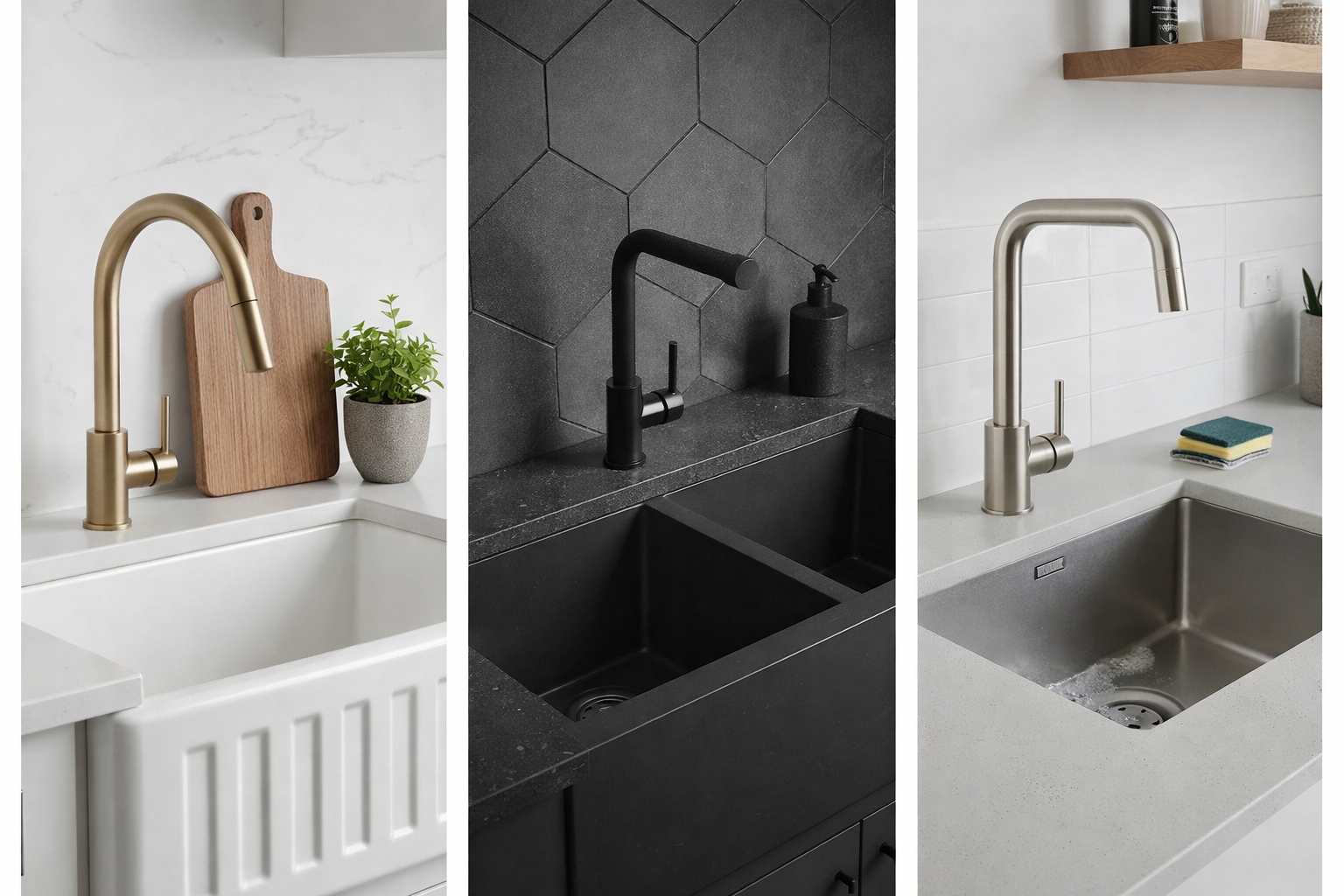
What Actually Matters When Choosing a Kitchen Mixer
Before getting caught up in finishes and shapes, start with what the tap needs to do. That matters more than whether the spout is square, curved, slim or chunky.
- Reach: the water stream should land in a practical part of the bowl, not on the back wall or too close to the front edge.
- Height and clearance: enough room underneath makes washing easier, but too much height over a shallow bowl can increase splashback.
- Swivel movement: especially important for double bowls, larger single bowls and laundry troughs.
- Function: decide whether a standard swivel spout is enough or whether a pull-out will genuinely make the space more useful.
For a lot of kitchens, the right answer is not the flashiest tap. It is the one that quietly makes the sink area easier to use every single day.
Single Bowl vs Double Bowl Sinks
Single bowl sinks usually give you the most flexibility. They work well with a standard swivel mixer, and they are also a strong match for pull-out taps if you regularly wash bulky cookware, oven trays or produce across the whole bowl.
Double bowl sinks need a mixer with enough reach and swivel movement to service both sides comfortably. If one bowl is used for prep and the other for washing up, the tap needs to work across that full zone without feeling cramped or awkward.
| Sink setup | Usually suits | Why it works | What to watch |
|---|---|---|---|
| Large single bowl | Standard swivel or pull-out mixer | Plenty of bowl space makes reach and rinse flexibility useful | Make sure the spout is not too short for the bowl size |
| Compact single bowl | Well-scaled standard mixer | Keeps the sink zone practical without overcrowding it | Overly tall or bulky taps can dominate the space |
| Double bowl | Mixer with good swivel, sometimes pull-out | Better access across both bowls | Limited reach can leave one side less useful |
| Laundry trough | High-arc practical mixer | More room for buckets and utility jobs | Low-profile styles can feel restrictive fast |
What Suits Different Sink Materials and Styles?
Fireclay sinks, including butler styles, usually suit a mixer with enough height and reach to clear the deeper bowl and stronger apron-front look. In more classic kitchens, softer curves often feel right. In cleaner, more modern spaces, a sharper-lined mixer can still work well as long as the proportions stay balanced.
Granite composite sinks, including Arqstone, tend to pair best with mixers that feel deliberate rather than random. Because these sinks often have a more design-led matte finish, the tap should work with the sink colour and benchtop palette instead of fighting it.
Stainless steel sinks are the most flexible. They suit everything from slimmer everyday mixers to more practical pull-out styles depending on the bowl layout and how hard the sink zone gets worked.
If you are still weighing up sink materials as well as the tap, see our guide to stainless steel, fireclay or granite sinks.
Pull-Out or Standard Spout?
A pull-out kitchen mixer is worth considering if you wash large pots often, rinse produce regularly, or want extra flexibility for cleaning the bowl itself. It is one of those features that can be genuinely useful when the kitchen is worked hard.
A standard spout mixer is often the better choice if you want a simpler everyday setup, have a compact sink zone, or do not really need the added hose function.
Neither option is automatically better. The real question is whether you will use the extra flexibility enough to make it worthwhile.
Compact Kitchens, Apartments and Clearance Issues
Tall mixers can be useful, but only when the space actually allows for them. Before buying, check overhead cupboards, shelves, splashback windows and anything else around the sink run.
In smaller kitchens and apartment layouts, a correctly scaled mixer usually works better than an oversized statement tap. You still want enough room under the spout and enough reach into the bowl, but the whole setup should stay practical rather than pushy.
This matters just as much in butler's pantries and secondary prep zones. A slightly smaller, better-proportioned mixer often feels nicer to use than something chosen purely for showroom impact.
What Works Best in Laundries, Utility Sinks and Trough Setups?
Laundry mixers usually need to be more utility-focused than kitchen mixers. A good setup should make room for buckets, handwashing, soaking and quick cleanup jobs without turning the sink area into a wrestling match.
For many laundries, the most useful feature is a gooseneck or high-arc spout. That extra vertical room makes it much easier to fit a bucket underneath, which is exactly where a low-profile kitchen-style mixer can fall short.
In a hardworking laundry or trough zone, durability matters too. Look for a practical mixer with solid swivel movement, enough clearance and everyday construction that can handle detergents, mess and repeat use.
Five Checks Before You Buy
- Check your overhead clearance. Make sure the tap will work with cupboards, shelves, window frames or anything above the sink.
- Check bowl depth against spout height. Too tall over a shallow bowl can splash. Too low over a deep bowl can feel cramped.
- Check the reach. The water stream should land in a useful part of the bowl.
- Check the swivel range. Especially important for double bowls, larger sinks and laundry troughs.
- Check whether you actually need pull-out functionality. It is great when useful, but unnecessary when a standard mixer already suits the job.
Final Verdict: What Is the Best Kitchen Mixer Tap?
The best kitchen mixer tap is the one that fits the way your sink zone really works. For some kitchens that means a simple, well-scaled standard mixer. For others it means a pull-out with extra reach and flexibility. In laundries, it often means prioritising clearance and utility over style-first design.
If you start with bowl layout, reach, clearance and day-to-day use, you will usually end up with a tap that still feels right long after the showroom appeal wears off.
Frequently Asked Questions
What type of kitchen mixer tap is best for a single bowl sink?
A single bowl sink usually suits either a standard swivel mixer or a pull-out mixer. If you wash large cookware often, a pull-out can be especially handy.
Is a pull-out kitchen mixer worth it?
Yes, if you will genuinely use the added flexibility. They are especially handy for large bowls, rinsing produce and washing bulky items.
What tap works best with a double bowl sink?
Look for a mixer with enough reach and swivel movement to comfortably service both bowls. If it is too short or too fixed, one bowl can end up less practical to use.
What kind of mixer suits a butler sink?
A butler sink usually suits a mixer with enough height and reach to clear the deeper bowl and stronger apron-front look.
Do granite composite sinks need a special tap?
No, but they usually look best with a clean-lined mixer that suits the sink colour and overall kitchen palette.
What is the best kitchen tap for a small kitchen?
Usually a well-scaled standard mixer with enough practical reach. In smaller kitchens, oversized taps can make the sink zone feel crowded.
What is the best tap for a laundry trough?
Usually a practical mixer with enough height to fit a bucket underneath, solid swivel movement and durable everyday construction. A gooseneck or high-arc spout is often the most useful style.
How do I know if a kitchen mixer is too tall?
Check overhead cupboards, shelves, window reveals and the bowl depth. A mixer can be too tall if it creates splashback or clearance issues around the sink area.
More Kitchen & Laundry Sink Guides
If you are also comparing kitchen sinks, sink sizes and materials, these guides can help.
- Laundry Sink vs Laundry Trough
- How to Choose the Right Kitchen Sink for the Way You Actually Cook
- Single Bowl vs Double Bowl Kitchen Sinks
- Stainless Steel, Fireclay or Granite Sinks
- Best Sinks for Small Kitchens, Butler’s Pantries and Apartment Layouts
- Kitchen Sink Sizes Explained: What Actually Fits Your Cabinet and Bench Space
Need Help Choosing the Right Mixer?
If you are trying to match a tap to a sink, a butler setup, a compact kitchen or a hardworking laundry, come and see us in Richmond or get in touch before ordering. It is much easier to choose the right mixer before it is installed than after it starts splashing, crowding the bench or missing half the bowl.
Visit our Richmond showroom No appointment needed.