Once you have confirmed your trap type and set-out, choosing a toilet style becomes much easier. The real decision is whether you want the simplest replacement path, the cleanest everyday look, or the full renovation finish.
This guide compares the three main toilet styles you will see in Australian bathrooms: close coupled toilets, back-to-wall toilets and wall-hung toilets. We will cover what changes for installation, cleaning, space, maintenance access and small bathroom planning, so you can pick the style that actually suits the job.
The Quick Answer: Which Toilet Style Should You Choose?
If you just want the short version, here it is:
- If you want the simplest replacement path, choose a close coupled toilet. It is the familiar floor-mounted setup with the cistern visible and attached to the pan.
- If you want a cleaner look without committing to major wall work, choose a back-to-wall toilet. The pan sits tight against the wall, so there are fewer awkward gaps around the back.
- If you are doing a full renovation and want the easiest floor cleaning and most premium finish, choose a wall-hung toilet. The pan floats above the floor and the cistern sits inside the wall.
The catch is that style should come after fit. Trap type, set-out, water inlet position, wall line and pan projection can all decide what will work in the room before the visual preference gets a vote. If you are replacing an existing toilet, start with the plumbing. If you are renovating from scratch, you have more freedom.
Pro tip
The more minimal the toilet looks, the less room there is for lazy measuring. Close coupled gives you the most forgiveness. Back-to-wall and wall-hung reward proper planning before anything gets ordered.
Close Coupled vs Back-to-Wall vs Wall-Hung Toilets at a Glance
The three styles solve different problems. One is easiest to replace, one is cleaner and more modern, and one gives you the high-end floating look. Here is the practical comparison:
| Toilet Style | Visual Cue | Best For | Cistern Location | Installation Difficulty | Cleaning Ease |
|---|---|---|---|---|---|
| Close Coupled | .jpg) Close coupled toilets Close coupled toilets |
Straightforward toilet replacement, rental properties, budget-conscious upgrades, easy servicing | Visible cistern attached to the pan | Low, often the simplest swap | Standard |
| Back-to-Wall / Wall-Faced | 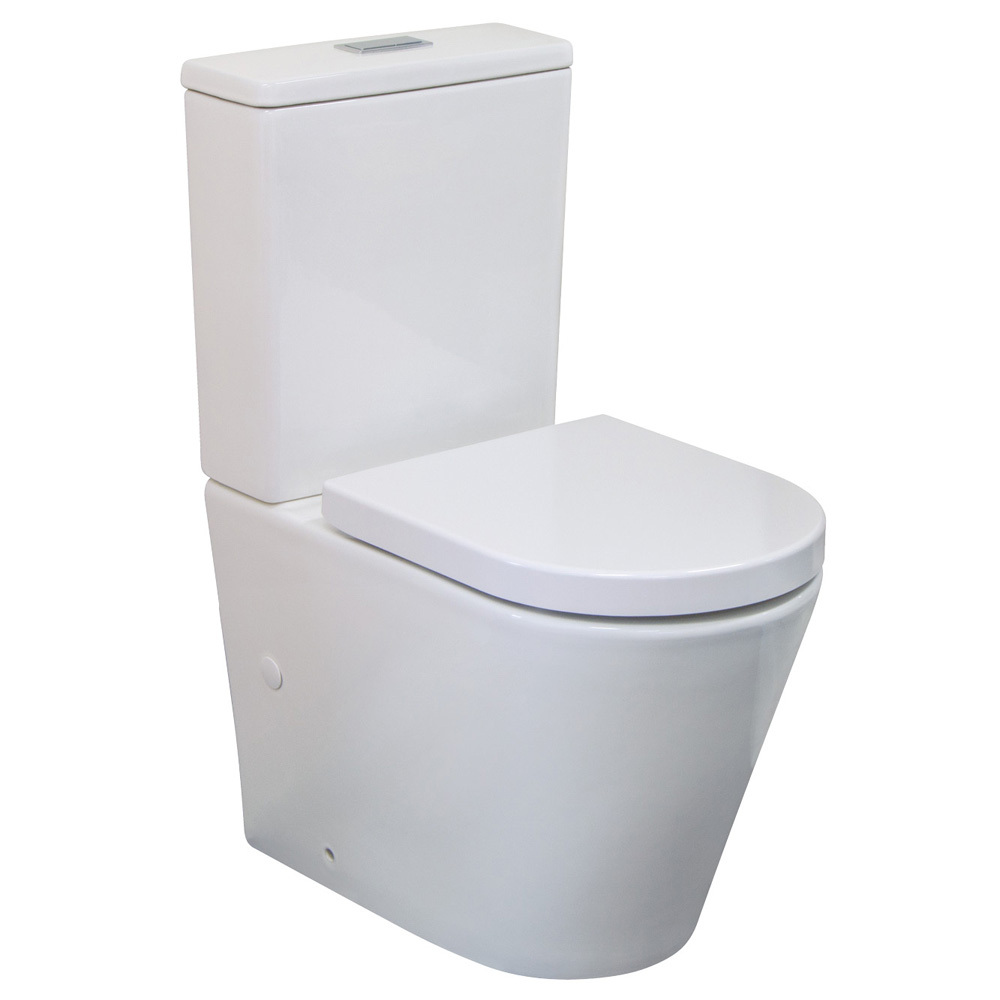 Back-to-wall toilets Back-to-wall toilets |
Modern bathrooms, cleaner lines, easier cleaning around the back of the pan | Visible cistern on many suites, or hidden in-wall cistern on some setups | Medium, measurements matter more | High |
| Wall-Hung | .jpg) Wall-hung toilets Wall-hung toilets |
Full renovations, premium bathrooms, easiest floor cleaning, minimalist design | Hidden in the wall | High, frame and structure required | Ultimate |
The big thing to notice is that back-to-wall and wall-hung are not the same upgrade. A back-to-wall toilet still sits on the floor. A wall-hung toilet is supported by an in-wall frame and floats above the floor. They can both look streamlined, but the renovation work behind them is very different.
Close Coupled Toilets
A close coupled toilet is the classic Australian setup: pan on the floor, cistern visible, and the cistern connected directly to the pan. It is familiar, serviceable and usually the least complicated option when replacing an old toilet.
Best For
Close coupled toilets are best for straightforward replacements, minimal plumbing changes and easy servicing. If you are updating an older bathroom but not moving walls, drains or water points, this is often where the conversation starts.
You can browse this style directly in our close coupled toilets.
What Changes for Installation?
Usually, not as much as the other styles. A close coupled toilet can often be the most forgiving replacement path, especially when you choose a model that suits the existing trap type and set-out. That does not mean every close coupled toilet will fit every bathroom, but it is generally the lowest-friction option.
Close coupled suites commonly use a ceramic cistern for a more solid feel. Some budget, rental or service-heavy situations may use plastic cistern solutions, but for most home bathrooms, the ceramic close coupled suite is the look people expect.
Cleaning Reality
Cleaning is standard. You clean around the pan base, around the cistern edges and sometimes behind the cistern depending on wall clearance. It is not difficult, but there are more contact points and small gaps than you get with the cleaner styles.
Space Feel
Close coupled toilets feel practical and familiar. They do not visually float or hide the way a wall-hung toilet does, but they also avoid the cost and planning that comes with concealed systems. For many bathrooms, that is exactly the right trade-off.
Fit check
If the goal is to replace an old toilet without turning it into a renovation, close coupled is usually the least dramatic place to start. Still measure the set-out properly, because simple does not mean automatic.
Back-to-Wall Toilets
A back-to-wall toilet sits tight against the wall, hiding the trap area and reducing the awkward gaps that collect dust and grime. In Australia, you will also see this style called wall-faced. Same basic idea: the floor-mounted pan pushes back to the wall so the silhouette looks cleaner.
Best For
Back-to-wall toilets are best for modern bathrooms, cleaner lines and easier cleaning around the back of the pan. They are a strong choice when you want the toilet to look more intentional without committing to a wall-hung frame system.
You can browse this style directly in our back-to-wall toilets.
What Changes for Installation?
Planning matters more than it does with a basic close coupled replacement. Because the pan sits tight to the wall, the set-out, wall line and pan shape need to work together. If the numbers are off, you can end up with a visible gap where you expected the toilet to sit flush.
This is where the phrase "back-to-wall" can trip people up. It is not just a design label. The toilet needs to suit the actual space, including how far the waste comes out from the wall, how square the wall is, and how much projection you can allow into the room.
Cleaning Reality
This is the big upgrade. Less gap behind the toilet means less dust, hair and bathroom weirdness collecting where nobody wants to reach. You still clean around the floor base, but the awkward zone behind the pan is much easier to live with.
Space Feel
Back-to-wall toilets feel streamlined. Even in a small bathroom or powder room, the tighter silhouette can make the room feel cleaner because the toilet is not visually broken up by pipes, gaps and shadows.
Wall-Faced Pan with an In-Wall Cistern
You can also pair a floor-mounted wall-faced pan with an in-wall cistern. The pan stays on the floor, but the cistern is hidden in the wall. This gives you the sleek hidden-tank look without needing the same floating pan setup as a wall-hung toilet.
It is a neat middle ground for renovations: more minimal than a visible cistern, but generally less structurally demanding than a wall-hung frame. It still needs proper planning before walls are closed.
Accessibility and Assisted-Living Layouts
In some ambulant or assisted-living style layouts, a floor-mounted back-to-wall pan can be preferred because it feels more stable around the sides for certain support and transfer scenarios. If you are planning grab rails, side clearances or accessible bathroom details, lock that in early with your installer before choosing the toilet.
Pro tip
Back-to-wall only looks neat when the numbers are right. Check the trap type, set-out and projection before falling in love with the shape.
Wall-Hung Toilets
A wall-hung toilet mounts to an in-wall frame with the cistern hidden behind the wall. The pan floats off the floor, which gives you the cleanest visual result and the easiest floor cleaning.
Best For
Wall-hung toilets are best for full renovations, premium bathrooms and the easiest floor cleaning. They make the bathroom feel lighter because you see more floor underneath the pan.
You can browse this style directly in our wall-hung toilets.
What Changes for Installation?
This is not usually a simple swap unless the bathroom is already set up for it. A wall-hung toilet typically requires:
- an in-wall frame system
- a concealed cistern
- suitable wall structure
- proper pan height planning
- careful placement before the wall is finished
Wall-hung toilets are strong once installed correctly, but they are a renovation decision, not a casual change on install day. The frame and cistern need somewhere to live, commonly within a suitable stud wall or structural setup depending on the product and site conditions.
Cleaning Reality
This is where wall-hung wins. You can mop straight underneath the pan with no floor base, no tight edge around the back and no awkward corner where the pan meets the floor. If easy cleaning is one of your biggest priorities, wall-hung is hard to beat.
Space Feel
Wall-hung toilets visually float. Because you can see floor underneath, the room can feel bigger and lighter, especially in compact bathrooms. The hidden cistern also removes bulk from the room, leaving only the pan and flush plate visible.
Maintenance Access: The Common Fear
People often worry that a concealed cistern means smashing tiles if anything needs servicing. In most concealed cistern systems, basic servicing access is through the flush button panel on the wall. That does not remove the need for correct installation, but it does mean the bathroom is not usually ripped apart just to replace a seal.
Renovation note
A wall-hung toilet is the cleanest finish, but only when it is planned properly. The frame, wall depth, flush plate, pan height and access all need to be sorted before the room is finished.
Replacement vs Renovation: The Decision That Matters
Before choosing between close coupled, back-to-wall and wall-hung, ask one blunt question: are you replacing an old toilet, or renovating the room?
If you are not changing walls or plumbing, close coupled and back-to-wall toilets are usually the sensible options. They keep the job grounded in the existing bathroom. Wall-hung toilets and hidden cistern setups are better treated as renovation choices because the wall, frame, cistern and access all need to be planned properly.
The cleaner the toilet looks, the more the room needs to be ready for it. That is why wall-hung toilets often look effortless in finished bathrooms but create more work behind the scenes.
Important fit check
After trap type and set-out, check the toilet's projection. Projection is how far the toilet sticks out from the wall. It matters for doors, shower screens, vanity clearance and walkways.
Measurements That Matter More as You Go Minimal
The more streamlined the toilet is, the less tolerance you have for "close enough". Before ordering, check:
- Trap type: S-trap, P-trap, skew trap or universal setup.
- Set-out: the distance that controls whether the waste outlet lines up.
- Projection: how far the toilet extends into the room.
- Wall line: especially important for back-to-wall toilets that need to sit flush.
- Water inlet position: because some suites are less forgiving than others.
- Wall structure: critical for wall-hung toilets and concealed cistern systems.
If you have not measured yet, do that before choosing the style. The best-looking toilet in the world is the wrong toilet if it does not fit the room.
Installation and Planning Comparison
| Planning Factor | Close Coupled | Back-to-Wall / Wall-Faced | Wall-Hung |
|---|---|---|---|
| Best suited to simple replacement | Yes, usually the easiest path | Often, if set-out and wall line work | Rarely, unless already set up for it |
| Needs accurate set-out check | Yes | Yes, more important | Yes, plus frame planning |
| Needs wall structure planning | No, usually not beyond normal fixing | Only if using an in-wall cistern | Yes |
| Most forgiving option | High | Medium | Low |
| Best cleaning outcome | Standard | Very good | Best |
Which Toilet Style Suits Your Situation?
You Are Swapping an Old Toilet and Want the Least Fuss
Choose a close coupled toilet if you want the simplest replacement path and your existing plumbing setup is doing most of the decision-making for you.
This is usually the most straightforward option because the overall setup is familiar, serviceable and common in Australian bathrooms. It still needs the right trap type and set-out, but it is generally the least dramatic way to replace an older toilet without turning the job into a renovation.
You Want a Cleaner Look and Easier Cleaning Without Going Full Floating
Choose a back-to-wall toilet if you want a cleaner modern look, easier cleaning around the pan, and a more finished silhouette without going all the way to a wall-hung setup.
This is the sweet spot for a lot of bathroom upgrades. The pan sits tight against the wall, so you lose the awkward dusty gap behind the toilet and the room instantly feels neater. Just make sure your set-out, wall line and pan projection all work before ordering, because back-to-wall toilets only look flush when the measurements are right.
You Are Doing a Full Renovation and Want the Premium Look
Choose a wall-hung toilet if you are doing a full renovation and want the floating pan, concealed cistern, open floor and most premium bathroom finish.
This is the cleanest-looking option and the easiest to mop around, but it needs proper planning before the wall is finished. The frame, cistern, flush plate, pan height and wall structure all need to be sorted early, so treat wall-hung as a renovation decision rather than a simple toilet swap.
You Are Working with a Small Bathroom or Powder Room
Back-to-wall is often the safest style upgrade because it tightens the silhouette without requiring the full wall-hung setup. It can make a small bathroom feel cleaner and less cluttered while still keeping the toilet floor-mounted.
Wall-hung can make a compact room feel more open because more floor is visible, but it only makes sense if you are already renovating and can plan the concealed frame properly.
You Are Planning an Accessible or Assisted-Living Bathroom
Do not choose by style alone. Talk to your installer about clearances, grab rails, seat height, transfer space and whether a floor-mounted wall-faced pan is more suitable for the layout.
In these bathrooms, the practical support plan matters more than the visual trend. Lock the functional requirements in first, then choose the toilet style that fits those requirements properly.
Once you know what suits your space, browse the full toilet range here: toilets.
Frequently Asked Questions
What is the difference between close coupled, back-to-wall and wall-hung toilets?
A close coupled toilet has the pan on the floor with the cistern visible and attached to the pan. A back-to-wall toilet sits tight against the wall to hide the trap area and reduce awkward cleaning gaps. A wall-hung toilet mounts to an in-wall frame, has a concealed cistern, and floats above the floor.
Is a back-to-wall toilet easier to clean than a close coupled toilet?
Usually yes. Because a back-to-wall toilet sits flush against the wall, there is less space behind the pan for dust, grime and bathroom debris to collect. Close coupled toilets are still practical, but the gaps around the cistern and base can take more effort to clean.
Is a wall-hung toilet worth it?
A wall-hung toilet can be worth it during a full renovation if you want a premium look and the easiest floor cleaning. It is usually not the simplest option for a like-for-like toilet replacement because it needs an in-wall frame, concealed cistern and suitable wall structure.
Which toilet style is best for a small bathroom?
Back-to-wall toilets are often a good choice for small bathrooms because the pan silhouette is cleaner and more compact-looking. Wall-hung toilets can make the room feel visually lighter because more floor is visible, but they suit renovation projects more than simple replacements.
Can I change from a close coupled toilet to a back-to-wall toilet without moving plumbing?
Sometimes, but it depends on trap type, set-out, pan projection and the existing wall line. If you are trying to avoid plumbing changes, matching your existing trap type and set-out is the safest starting point before choosing a new toilet style.
Do wall-hung toilets need maintenance access through the wall?
Most concealed cistern systems are designed so servicing access is through the flush button plate, not by breaking tiles. The frame and cistern still need to be installed correctly during renovation, but basic servicing is usually handled through the wall plate.
Is back-to-wall the same as wall-faced?
In Australian toilet shopping, back-to-wall and wall-faced usually describe the same basic idea: a floor-mounted pan that sits tight against the wall to hide the trap area and create a cleaner silhouette.
Do I need a special toilet seat for close coupled, back-to-wall or wall-hung toilets?
Seat fit depends on the pan shape and hinge spacing, not just the toilet style name. If you are replacing a seat, check the pan shape, fixing type and measurements before ordering. You can browse toilet seat options here: toilet seats.
More Toilet Buying Guides
If you are still working through the right toilet setup, these guides cover the other decisions that usually come up before ordering.
- Toilet Buying Guide Australia
- S-Trap vs P-Trap vs Skew Trap Toilets
- How to Measure Toilet Set-Out
- Toilet Seat Replacement Guide
- Replacing a Toilet Without Moving Plumbing
Choose the Right Toilet Style Before You Order
The safest way to choose a toilet is to match the style to the job. Close coupled suits simple replacements. Back-to-wall suits cleaner modern upgrades. Wall-hung suits full renovations where the wall, frame and concealed cistern can be planned properly from the start.
If you are not sure what your bathroom can take, bring your set-out measurements, photos of the existing toilet and a rough idea of the room layout into our Richmond showroom. We can help you narrow down the right style before you order the wrong one.
Browse toilets Or visit our Richmond showroom at 365 Swan St, Richmond VIC 3121 for help comparing styles.