
Bathroom

Toilet Buying Guide Australia: S-Trap vs P-Trap, Set-Out & Toilet Styles
Most wrong purchases happen for one reason: people pick the style first and the plumbing second. Flip it.
Do this in order
- Confirm trap type (S-trap, P-trap, skew trap, universal trap)
- Measure set-out (the number that makes or breaks compatibility)
- Choose the style (close coupled, back-to-wall, wall-hung)
- Then choose seats and features (soft close, quick release)
S-trap vs P-trap vs Skew trap toilets in Australia: what it means and how to choose
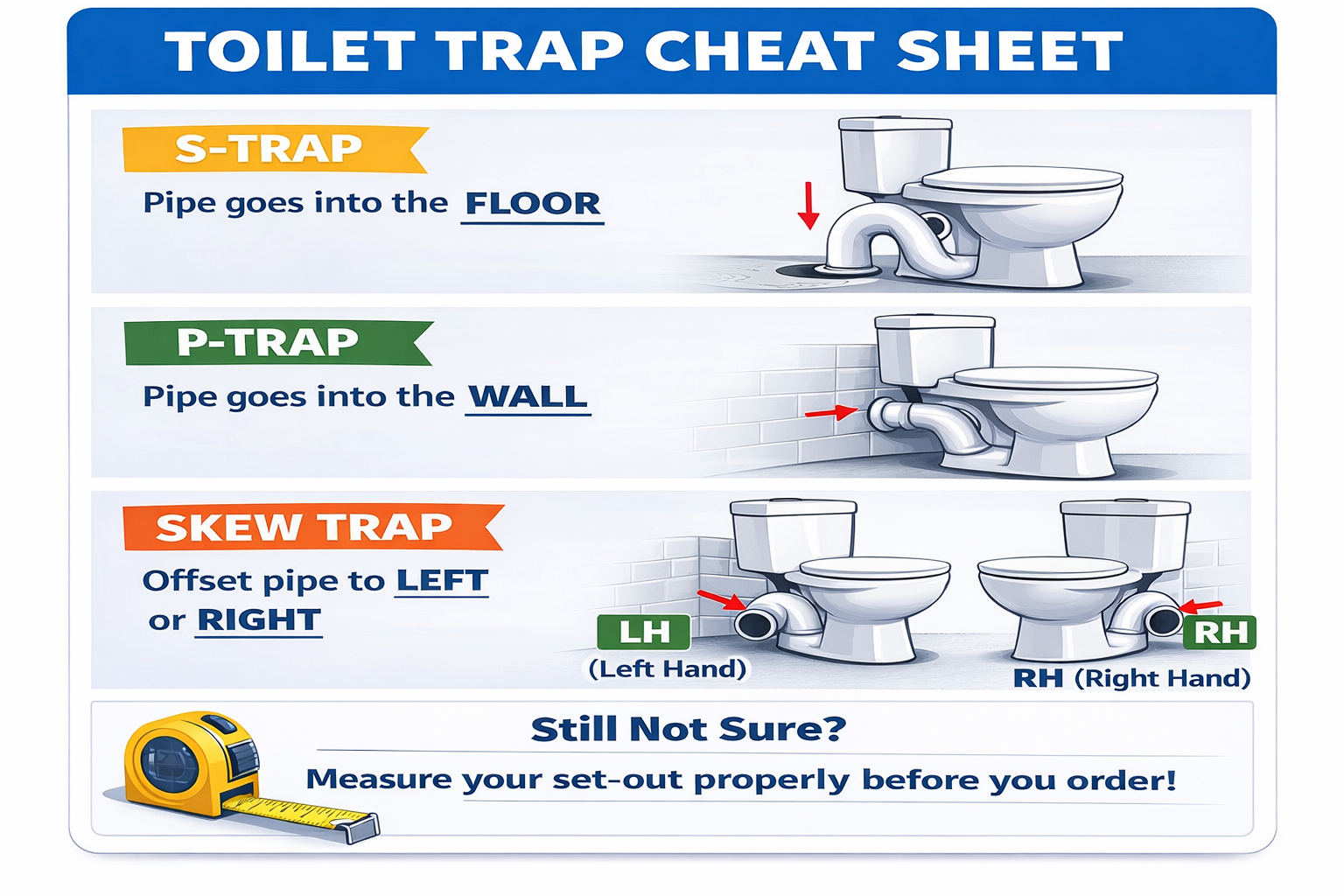
If you’re toilet shopping and you keep seeing S-trap, P-trap, skew trap or universal toilet suites, this is the bit that decides whether your new toilet will actually connect up properly. Style is fun. Plumbing fit is non-negotiable.
When you’re ready to browse, here...
How to measure toilet set-out in Australia (S-trap vs P-trap) and avoid buying the wrong suite
If you get one thing right before ordering a toilet, make it this. Toilet set-out is the measurement that decides whether the pan lines up cleanly with your outlet. Get it wrong and even the nicest toilet becomes a problem.
If you haven’t already, read our trap-type explainer first so you know what you’re measuring for.
When you’re ready to browse after measuring, start with toilets.
What is toilet set-out?
Set-out is the key distance between your finished wall or floor and the centre of the waste outlet connection point.
Simp...
Toilet seat replacement guide: how to choose the right seat and replace it without dramas
Replacing a toilet seat is one of the easiest bathroom upgrades, as long as you buy the right one first time. Most problems come down to three things: shape, hinge centres, and fixing type.
If you already know you’re only replacing the seat, start with our range of toilet seats.
Step 1: Confirm the seat shape (D-shape vs oval)
Seat shape is the first filter, because a near-miss seat can still “kind of” fit but look wrong and slide around.
D-Shape = Flat front | Oval = Rounded front<...
Replacing a toilet without moving plumbing: the easiest upgrade path
If you want a new toilet but you don’t want the reno bill, this is the sweet spot. In a lot of Aussie bathrooms you can replace a toilet cleanly without touching the plumbing, as long as you match a few key things.
If you want to browse while you read, start with toilets.
The rule that decides everything
If you want to avoid moving plumbing, you need to match:
- trap type (S-trap, P-trap, skew trap, or universal configuration)
- set-out measurements
- projection and footprint so it sits and fits like it should
If you skip those,...
Back to wall vs close coupled vs wall-hung toilets: what changes in install, cleaning, and space
Once you’ve confirmed trap type and set-out, choosing a toilet style becomes way easier. This post is the straight talk version of what actually changes between the three main styles: close coupled, back-to-wall, and wall-hung.
The quick answer (if you just want the direction)
- If you want the simplest replacement path, go close coupled.
- If you want a cleaner look without committing to major wall work, go back-to-wall.
- If you’re doing a full renovation and want the easiest floor cleaning and premium finish, go wall-hung.
