
Small bar sinks for caravans, food trucks and cafes: what to buy and why

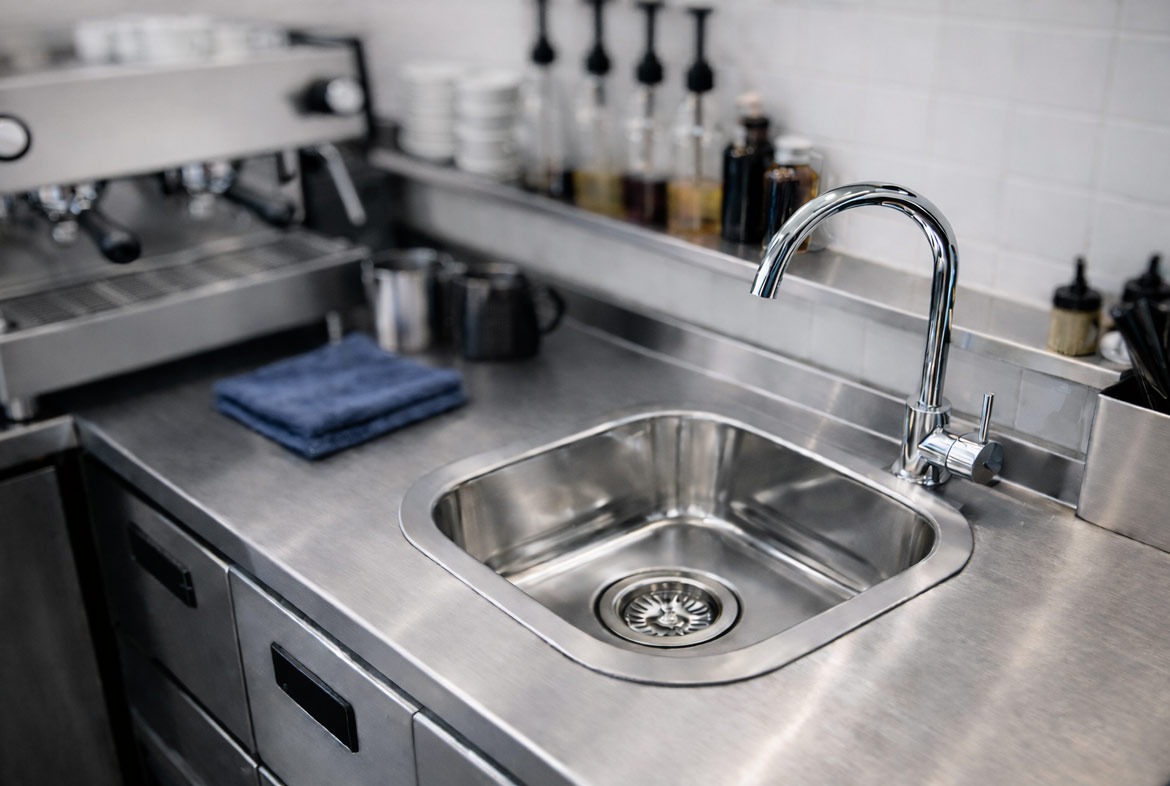
Cafe and bar sinks: how to pick the right size (CM1–CM7 guide)
Choosing a cafe or bar sink is a bit of a dark art. On paper they all look close enough, then you install one and realise you either nailed the footprint or you have bought yourself a daily annoyance.
In Australian hospo, caravans, food vans and commercial fit-outs, the wrong bowl is not just annoying. It becomes a workflow choke point. You feel it during a busy service, you see it in splash and mess, and you notice it when you are trying to keep a tight bench hygienic without sacrificing prep space.
If you want to browse the full category while you read, start with cafe bar sinks.
Where these sinks get used (and why size matters)
- Caravans, campervans, camper trailers and food trucks: tight cabinetry, shallow benches and limited under-bench clearance.
- Cafes and coffee bars: rinse sinks near the machine, milk jug wash points and fast-turnover prep areas.
- Commercial kitchens: compact prep benches, secondary wash-up zones and task separation setups.
- Butler’s pantries and home bars: compact footprint with everyday usability.
The 5 things that decide whether a sink works
- External size (L × W): this is your bench reality. It determines your cut-out and whether it physically fits.
- Bowl depth: depth reduces splash and makes a compact sink feel calmer under commercial water pressure.
- Litre capacity: litres are a rough usability guide. 8L–10L feels very compact. 20L+ starts to feel like a “normal” working sink.
- Cabinet width: as you move into CM6 and CM7, confirm your base cabinet width can accommodate the larger external dimensions. Many cabinets are 500mm or 600mm wide, and the sink must physically fit within that footprint.
- Mount style: undermount for clean wipe-down edges, counter-top for simpler installs and retrofits.
Quick pick guide (CM1 to CM7)
- CM1 (8L): ultra-compact footprint for tight rinse or hand-wash points, with the link here to CM1.
- CM2 (10L): compact and practical for cafes and secondary rinse zones, with the link here to CM2. Note: the shallower 115mm depth can help when drawers or plumbing limit under-bench clearance.
- CM3 (15L): the sweet spot for busy bar areas where staff use it constantly, with the link here to CM3.
- CM4 (20L): compact but properly usable for regular rinsing and small wash-up tasks, with the link here to CM4.
- CM5 (23L): stepping into larger compact territory with a deeper 170mm bowl for more working room, with the link here to CM5.
- CM6 (28L): a serious bar or prep sink that still fits standard commercial benches, with the link here to CM6.
- CM7 (31L): the largest in the CM range, closest to a full kitchen feel while staying bar-focused, with the link here to CM7.
CM1 vs CM2 vs CM3 vs CM4 vs CM5 vs CM6 vs CM7 comparison
Think of the range as: ultra-compact → compact sweet spot → properly usable → near full-size prep sink.
| Model | Capacity | External size (L×W×D) | Mount style | Best for | Notes |
|---|---|---|---|---|---|
| CM1 | 8L | 325 × 225 × 140mm | Undermount / counter-top | Hand wash, ultra-tight benches | Smallest footprint in the CM range |
| CM2 | 10L | 315 × 240 × 115mm | Undermount / counter-top | Compact cafes, rinse zones | Shallower 115mm depth suits tight cabinetry |
| CM3 | 15L | 340 × 290 × 140mm | Undermount / counter-top | Busy cafe bars | Most common commercial sweet spot |
| CM4 | 20L | 405 × 335 × 160mm | Undermount / counter-top | Compact wash-up | Feels closer to a standard working sink |
| CM5 | 23L | 435 × 360 × 170mm | Undermount / counter-top | Regular prep & rinse | Deeper 170mm bowl with added working room |
| CM6 | 28L | 465 × 410 × 170mm | Undermount / counter-top | Serious bar & prep use | Larger footprint, confirm cabinet width |
| CM7 | 31L | 534 × 380 × 180mm | Undermount / counter-top | Closest to full kitchen feel | Largest bowl and deepest in the range |
Undermount vs counter-top for Aussie fit-outs
Both work well. The best one is usually decided by your benchtop material and whether this is a fresh build or a replacement.
- Undermount: the clean wipe-down option. In cafes and food vans it is great because you can wipe bench mess straight into the bowl without crumbs catching on a rim. Make sure the benchtop is suitable and the sink is supported properly.
- Counter-top (drop-in): simplest install and most forgiving. Ideal for quick replacements and practical installs where you want minimal fuss.
The gotchas that catch people out
- Splash zone is real. A high-pressure tap on a compact bowl can turn into a wet shirt festival. Choose sensible spout height and reach so the water hits the centre of the bowl, not the back wall. Browse our kitchen and laundry mixer taps.
- Depth is comfort. If staff are rinsing milk jugs, shakers, cloths and utensils all day, a deeper bowl usually feels calmer and less messy.
- Under-bench clearance matters. Caravans, camper builds and food trucks often have framing and drawers right where the waste and trap want to go. That is where CM2’s shallower depth can save the day.
- Cabinet width planning matters. As you move into CM6 and CM7, confirm your base cabinet width and cut-out allowance can handle the larger footprint.
- Tap hole planning. CM4 has no tap hole. Decide early if your mixer is sink-mounted, bench-mounted or wall-mounted.
Pick the right sink for your setup
Caravans, campervans, camper trailers and food trucks
Cabinetry is tight and under-bench clashes are common. If you are trying to keep it compact but practical, CM2 is a strong starting point, especially when drawers or plumbing limit depth. If you have the space and want a more comfortable bowl for regular use, step up to CM3 or CM4.
Cafes and coffee bars
For a rinse sink near the machine or prep zone, you want the smallest footprint that still behaves during service. CM2 is a neat secondary sink option. If it will be used constantly and you want fewer splashy compromises, CM3 or CM4 is usually the nicer day-to-day experience.
Commercial kitchens (compact prep benches and wash-up areas)
If you are rinsing utensils, jugs, small trays and tools regularly, start at CM4 or CM5. If you want something closer to a full kitchen feel and you have the cabinet width to suit it, go CM6 or CM7.
FAQs
Do litres matter when choosing a bar sink?
They matter as a quick guide, but dimensions and depth matter more. A compact 8L–10L sink can be perfect for a rinse point, but if staff are constantly washing jugs, utensils and cloths, stepping into the 20L+ range usually feels easier day-to-day.
What’s the best compact sink for a caravan or food truck?
If you want compact but practical, CM2 is a strong starting point, and the shallower depth can help when under-bench space is tight. If you have room and want a more comfortable bowl for daily use, CM3 is a common upgrade.
Is undermount worth it on a cafe or bar sink?
If you want the clean wipe-down edge and a more built-in finish, yes. It is especially handy in cafes and prep zones where you want to wipe mess straight into the bowl. If you want the simplest install, counter-top is the easier route.
How do I choose the right tap for a compact bowl?
Aim for sensible height and reach so the water lands near the centre of the bowl instead of smashing the back wall and splashing out. Compact bowls punish oversized high-arc taps, especially with commercial water pressure. Browse our kitchen and laundry mixer taps.
Do I need a tap hole in the sink itself?
Not always. Plenty of setups use a bench-mounted or wall-mounted mixer instead. Just plan it before the install. CM4 has no tap hole, which suits bench or wall-mounted tap setups.
What should I measure before ordering?
Measure the bench space, confirm your cut-out allowance, and check clearance underneath for waste and trap fittings. If you are stepping into CM6 or CM7, confirm your cabinet width can suit the larger footprint before you commit.