Smart toilets are one of those bathroom upgrades people are curious about, but also slightly unsure of. Is it a luxury? Is it practical? Will it fit the plumbing you already have? And which features actually matter once the novelty wears off?
This guide is designed to answer those questions properly. We are not going to pretend every bathroom needs a smart toilet. Some do. Some do not. The key is knowing how they work, what to check before ordering, and which features will genuinely improve daily use rather than just looking impressive on a product page.
What Is a Smart Toilet?
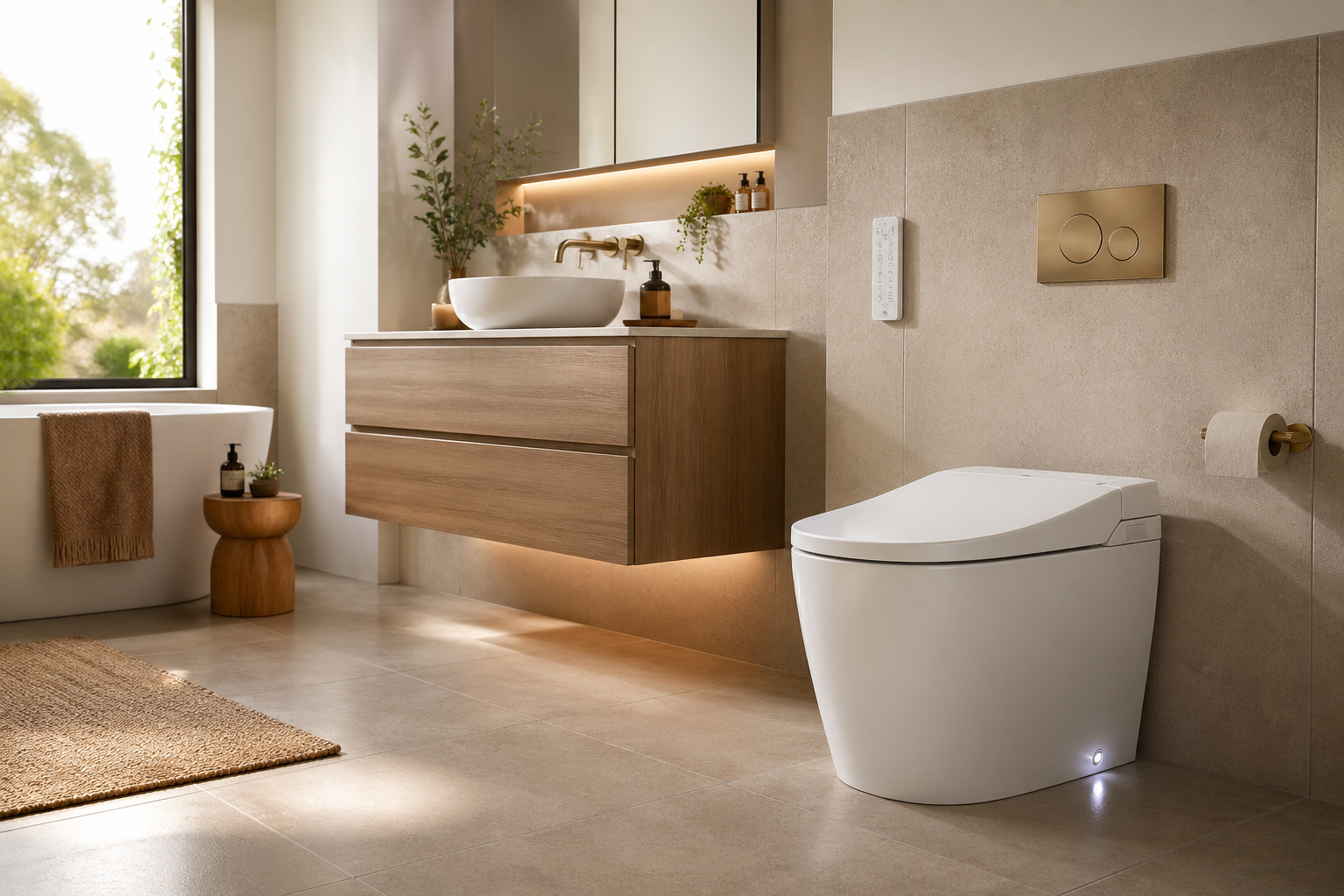
A smart toilet is a toilet suite with electronic comfort, hygiene and automation features built into the unit. Depending on the model, that can include warm water washing, front and rear wash modes, adjustable pressure, nozzle positioning, heated seat, warm air drying, automatic lid movement, automatic flushing, night lighting and remote controls.
The big difference is integration. Instead of adding a separate bidet seat to a standard pan, a smart toilet is designed as a complete system. The pan, seat, washing functions, controls and powered features are made to work together, which usually gives the bathroom a cleaner and more finished look.
That is also why smart toilets need more planning than a standard toilet. You are not just asking, "Do I like the look of it?" You are asking:
- Does the waste pipe exit through the floor or wall?
- What is the exact set-out measurement?
- Is there safe power nearby?
- Will the pan projection suit the room?
- Can the toilet still be serviced later?
Important fit check
"With smart toilets, the features are the fun part. The fit is the part that decides whether the job is easy or painful. Trap type and set-out need to be checked before anyone gets excited about heated seats and auto flush."
Are Smart Toilets Worth It?
Smart toilets are worth it when you value hygiene, comfort, easier night use and a more modern bathroom routine. They make the most sense when you are already replacing a toilet, renovating a bathroom, building new, or upgrading an ensuite that gets daily use.
The most noticeable everyday benefit is not the tech for its own sake. It is comfort. Warm water washing feels cleaner than relying on toilet paper alone. A heated seat matters on cold mornings. A night light helps in the middle of the night. Automatic flushing and lid movement reduce touch points. For some households, especially older users or anyone with mobility considerations, those features are more than novelty.
They are less compelling when the budget is tight, the bathroom has no easy power access, the plumbing does not suit the model you want, or the toilet is in a low-use powder room where a simpler suite would do the job.
A Smart Toilet Makes Sense If...
- You are replacing the toilet anyway. The upgrade is easier to justify when the old toilet is coming out regardless.
- You are doing a full bathroom renovation. Power, plumbing and wall/floor finishes can be planned properly from the start.
- You want a cleaner personal wash routine. Bidet washing is the core function, not the side feature.
- You want comfort features that get used daily. Heated seat, warm water, drying and night light are the features people tend to notice most.
- You want a more seamless look than an add-on bidet seat. Integrated smart toilets usually look neater and more intentional.
A Smart Toilet May Not Be Worth It If...
- The room has no practical way to add a safe power supply.
- Your existing waste set-out is awkward or outside the available model range.
- You are trying to keep a toilet replacement as low-cost as possible.
- You prefer the simplest possible toilet with fewer electronic parts.
- You are upgrading a rental, temporary property or rarely used toilet room.
Think of a smart toilet like a comfort appliance built into the bathroom. If the toilet is used every day, the comfort features can feel worthwhile very quickly. If it is a spare powder room, the value case is much weaker.
Smart Toilet vs Bidet Toilet Seat vs Standard Toilet
Most shoppers are really comparing three options: a standard toilet, an add-on bidet seat, or a fully integrated smart toilet. None of them is automatically right. The best choice depends on budget, plumbing, power access and how finished you want the bathroom to feel.
Toilet Type Comparison
| Option | What It Is | Best For | Main Advantages | Watch Out For |
|---|---|---|---|---|
| Standard toilet | A regular toilet suite without powered washing or comfort features. | Budget replacements, rental properties, powder rooms and simple renovations. | Simple, familiar, lower upfront cost and easy to service. | No bidet washing, no heated seat, no automation and no comfort extras. |
| Bidet toilet seat | An electronic bidet seat fitted onto a compatible existing toilet pan. | People who want bidet features without replacing the whole toilet. | Can be more affordable than a full smart toilet and may suit some retrofit jobs. | Not every toilet pan suits. The seat can look bulkier and less integrated. |
| Integrated smart toilet | A complete toilet suite with bidet washing, heating, drying and smart controls built in. | Renovations, ensuites, main bathrooms and buyers wanting the cleanest final look. | Best integrated appearance, matched seat and pan, stronger comfort feature set. | Needs the correct trap, set-out, power supply and installation planning. |
If the bathroom is already being renovated, an integrated smart toilet is usually the more polished choice. If the toilet is staying and the budget is tighter, a bidet toilet seat might be worth investigating, but only after checking pan compatibility, seat shape, water connection and power access.
Smart Toilet Features That Actually Matter
Smart toilet feature lists can get long very quickly. The trick is separating daily-use features from brochure features. Some functions genuinely change the experience. Others are nice to have, but should not override fit, comfort or serviceability.
Smart Toilet Feature Guide
| Feature | What It Does | Why It Matters | Worth Prioritising? |
|---|---|---|---|
| Front and rear wash | Provides dedicated wash modes for different personal cleansing needs. | This is the core reason most people buy a smart toilet. | Yes |
| Adjustable water pressure | Lets users control how gentle or strong the wash feels. | Different people prefer different pressure levels, so adjustment is important. | Yes |
| Adjustable nozzle position | Moves the wash position forward or back. | Makes the wash function more practical across different users. | Yes |
| Warm water | Heats the wash water instead of using cold water only. | One of the biggest comfort differences, especially in cooler months. | Yes |
| Heated seat | Warms the seat surface. | Simple feature, but one people notice immediately. | Yes |
| Warm air drying | Uses air flow after washing. | Helps reduce reliance on toilet paper, though many users still use some paper. | Yes, if bidet use is the main goal |
| Self-cleaning nozzle | Rinses the nozzle before or after use depending on the model. | Important for hygiene and day-to-day confidence. | Yes |
| Automatic lid opening and closing | Uses sensors to lift or close the lid. | Reduces touch points and feels premium. | Nice to have |
| Automatic flushing | Flushes without pressing a button in normal use. | Useful for hygiene and convenience, especially in busy bathrooms. | Nice to have, but check manual backup |
| Night light | Gives soft visibility at night. | Small feature, big everyday usefulness in ensuites. | Yes for night users |
| Remote control | Controls wash, heat and other settings. | Usually easier than side buttons, especially for guests or older users. | Yes |
| Energy-saving mode | Reduces power use when functions are not needed. | Useful because smart toilets stay connected to power. | Yes |
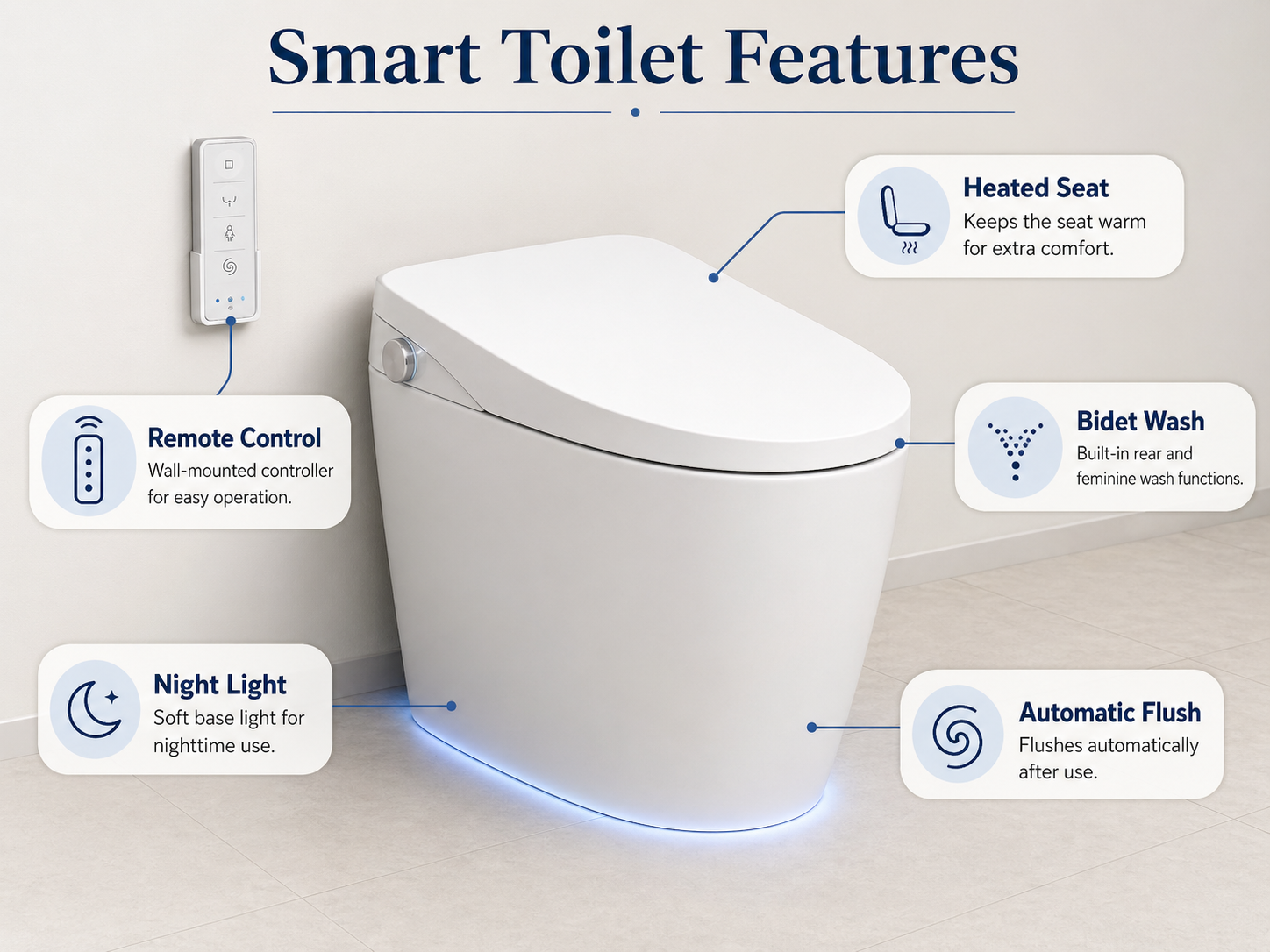 The best smart toilet features are the ones you feel every day: wash control, seat comfort, drying, night visibility and simple operation.
Swan Street Sales team
"Do not buy purely from the longest feature list. A toilet with warm water, good wash adjustment, heated seat, self-cleaning nozzle, manual backup flush and the right plumbing fit will beat a fancier-looking option that is awkward to install or confusing to use."
Installation Checks for Australian Bathrooms
This is the most important section of the guide. Smart toilets are not difficult when the bathroom is ready for them, but they are unforgiving when the wrong version is ordered.
Before buying, get your plumber to confirm the waste outlet, set-out, water connection and available room around the pan. If there is no power point nearby, speak to an electrician before ordering as well. A smart toilet is still a toilet first, so the plumbing fit comes before every comfort feature.
Trap Type and Set-Out
Your trap type tells you where the toilet waste exits. Your set-out tells you the measured distance the toilet needs to suit. These two details decide which smart toilet version will fit.
| Plumbing Term | What It Means | What to Check | Why It Matters |
|---|---|---|---|
| S-trap | The waste exits through the floor. | Measure from the finished wall to the centre of the floor waste. | The smart toilet must suit the measured floor set-out range. |
| P-trap | The waste exits through the wall. | Confirm the wall outlet height and alignment with the plumber. | A floor waste version will not suit a wall waste bathroom. |
| Set-out | The critical waste measurement used to match the toilet to the room. | Get the plumber to measure from finished surfaces, not unfinished framing. | A wrong set-out can mean the toilet will not sit where it should. |
| Projection | How far the toilet comes out into the room. | Check door swing, vanity clearance, shower screen clearance and leg room. | Smart toilets can feel larger than old compact suites in tight bathrooms. |
Example: Matching the Toilet Version to the Plumbing
If you are comparing an integrated smart toilet range, the same toilet may come in different trap and set-out versions. The Fienza Sona range is a good example because the decision is not about colour or style first. It is about the waste outlet.
| Bathroom Waste Setup | Typical Version to Check | Example Product Link | Before Ordering |
|---|---|---|---|
| Wall waste outlet | P-trap smart toilet | Fienza Sona Smart Toilet P-Trap | Have the plumber confirm the wall outlet and installation clearances. |
| Floor waste with shorter set-out | S-trap smart toilet, 90-160mm set-out | Fienza Sona Smart Toilet S-Trap 90-160 | Measure from the finished wall to the centre of the floor waste. |
| Floor waste with longer set-out | S-trap smart toilet, 160-230mm set-out | Fienza Sona Smart Toilet S-Trap 160-230 | Check the set-out range carefully before choosing between versions. |
Power and Water Checks
A smart toilet needs water and power. That sounds obvious, but it is where many retrofit plans slow down. A licensed electrician should confirm the power point location, safety requirements, and whether the supply will be plug-in or concealed depending on the model and bathroom layout.
- Power location: confirm where the outlet can safely go and whether it will be hidden or visible.
- Water supply: confirm the inlet location and whether it lines up cleanly with the new suite.
- Clearances: check doors, vanities, shower screens and side walls.
- Access: make sure the toilet can be serviced later without creating a drama.
- Floor and wall marks: replacing an old toilet may reveal previous fixing holes, silicone lines or tile marks.
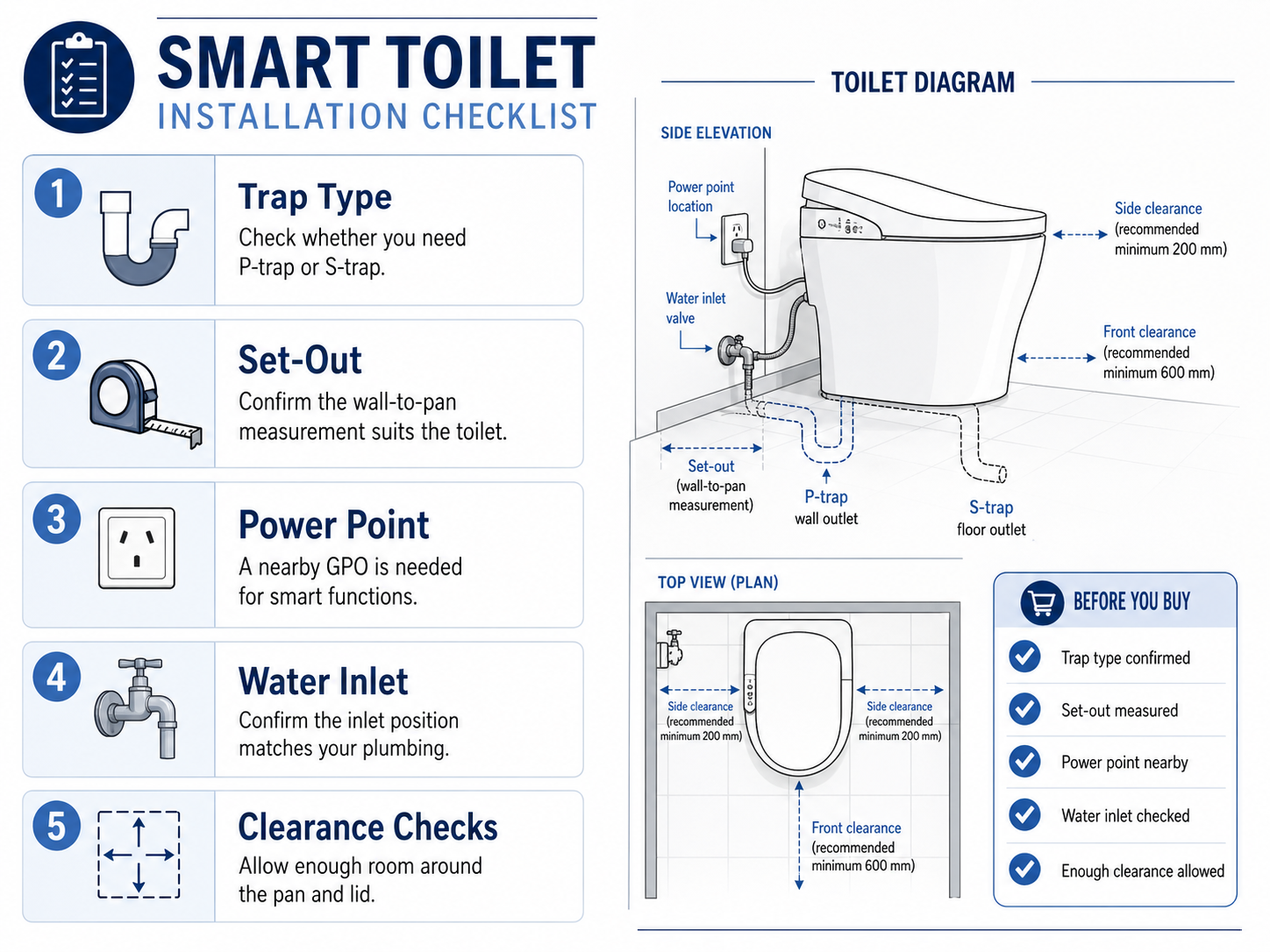 Measure first, choose second. A smart toilet is much easier to buy when your plumber has already confirmed the waste outlet and set-out.
Costs, Cleaning, Maintenance and Running Costs
The purchase price is only one part of a smart toilet decision. You also need to think about installation, electrical work, possible plumbing changes, future servicing and whether the toilet is practical to clean.
What Affects the Total Cost?
- The toilet itself: integrated smart toilets usually cost more than standard suites or add-on seats.
- Plumbing labour: like-for-like replacements are usually simpler than moving waste or water connections.
- Electrical work: a safe power supply needs to be planned and installed correctly.
- Bathroom condition: older bathrooms may reveal floor, wall or tile issues once the old toilet is removed.
- Service access: harder-to-access installations can cost more later if maintenance is needed.
Are Smart Toilets Easy to Clean?
Many are easier to clean than older exposed-trap toilets because the pan shape is smoother and the back-to-wall design hides more pipework. Self-cleaning nozzles are also helpful, but they do not replace regular cleaning. You still need to clean the pan, seat, controls and surrounding floor like any other bathroom fixture.
Avoid harsh abrasive cleaners on seats, controls and sensor areas. Smart toilets have more electronic parts than a standard toilet, so gentle cleaning and following the manufacturer care instructions matters.
Do Smart Toilets Use a Lot of Power?
Smart toilets use power because they run heating, washing, drying, lighting and control functions. The actual running cost depends on the model, settings and household use. Energy-saving modes are worth using because they reduce unnecessary heating when the toilet is not being used.
Practical showroom advice
"The best smart toilet is not the one with the wildest feature list. It is the one that fits the room cleanly, can be installed safely, has the wash and comfort functions you will actually use, and can still be looked after properly in five years."
Common Smart Toilet Mistakes to Avoid
Most smart toilet problems start before installation. The wrong trap, the wrong set-out, a missing power supply or a pan that projects too far into the room can turn a simple upgrade into a frustrating one.
- Ordering before measuring: do not guess the set-out from photos. Measure it properly.
- Assuming all S-traps are the same: floor waste toilets still need the right set-out range.
- Forgetting power: smart functions need electricity. Plan this before the toilet arrives.
- Ignoring projection: a toilet can technically fit the waste outlet but still feel too big in the room.
- Choosing features over serviceability: the toilet still needs to be cleaned, maintained and accessed.
- Forgetting other users: visitors, kids or older family members should be able to understand the basic controls.
- Not checking manual backup: automatic features are great, but basic operation still matters.
The boring checks are the expensive checks. Trap, set-out, power, water inlet and clearances decide whether the smart toilet becomes a smooth upgrade or a headache.
Smart Toilet Buying Checklist
Use this checklist before ordering. It is especially useful if you are sending details to your plumber or comparing models online.
| Check | What to Confirm | Who Should Confirm It? |
|---|---|---|
| Trap type | S-trap floor waste or P-trap wall waste. | Plumber |
| Set-out | Exact measurement from finished wall to waste centre for S-trap installations. | Plumber |
| Power supply | Safe power point or concealed wiring location suitable for a bathroom. | Electrician |
| Water inlet | Position and compatibility with the new toilet. | Plumber |
| Room clearance | Door swing, vanity clearance, shower screen clearance and walking space. | Plumber or renovator |
| Pan projection | How far the toilet sits into the room compared with your current suite. | Buyer and plumber |
| Manual backup | How the toilet flushes if automatic controls are not used. | Buyer |
| Daily-use features | Warm water, pressure control, nozzle position, heated seat, drying and night light. | Buyer |
| Care and servicing | Cleaning instructions, access, warranty support and supplied documents. | Buyer and installer |
Take clear photos of your existing toilet from the front, side, behind the pan and near the water inlet. Add measurements where possible. That gives your plumber and retailer a much better chance of spotting problems before the toilet is ordered.
Frequently Asked Questions
Are smart toilets worth it?
Yes, if the toilet is used daily and you value hygiene, comfort and convenience. The strongest everyday benefits are warm water washing, heated seating, adjustable wash settings, drying, night lighting and reduced hand contact. They are less compelling in rarely used rooms or when the plumbing and power changes would make the upgrade too expensive.
What is the difference between a smart toilet and a bidet toilet seat?
A smart toilet is a complete toilet suite with the bidet, seat, controls and smart features built into the design. A bidet toilet seat is an add-on seat fitted to a compatible existing pan. Smart toilets usually look cleaner and more integrated, while bidet seats can be a lower-cost option when the existing toilet suits.
Do smart toilets need electricity?
Yes. Features such as heated water, heated seats, drying, automatic lid movement, auto flush, night lights and remote controls need power. A licensed electrician should confirm the safest power location before purchase.
Can a smart toilet replace my existing toilet?
Often yes, but it depends on the trap type, set-out, power supply, water inlet, projection and clearances. A like-for-like replacement is much easier than moving plumbing. Always confirm the measurements before ordering.
What is S-trap and P-trap on a smart toilet?
An S-trap toilet connects to a floor waste outlet. A P-trap toilet connects to a wall waste outlet. If your waste exits through the floor, you need the correct S-trap set-out range. If it exits through the wall, you need a P-trap version.
What features should I look for in a smart toilet?
Prioritise front and rear wash, adjustable water pressure, adjustable nozzle position, warm water, heated seat, warm air drying, self-cleaning nozzle, night light, remote control, manual backup flush and energy-saving mode. Automatic lid opening and automatic flushing are useful extras, but fit and installation come first.
Do smart toilets still flush manually?
Many smart toilets include a manual backup flush, but check the exact model before buying. Manual backup is important for guests, simple operation and power interruption scenarios.
Do I need a plumber and electrician for a smart toilet?
Yes. A licensed plumber should handle the water and waste connection, while a licensed electrician should confirm and install the power supply. Bathrooms need extra care because water and electricity are close together.
Are smart toilets hard to clean?
No, not usually. Back-to-wall smart toilets can be easier to clean around than older exposed-trap toilets because there are fewer visible gaps and pipe areas. Look for smooth surfaces and self-cleaning nozzle functions, and follow the manufacturer cleaning instructions for the seat and controls.
What should I check before buying a smart toilet online?
Check trap type, set-out, power location, water inlet, projection, clearance, manual backup, warranty support, supplied installation documents and whether the features match how the bathroom will actually be used. Do not rely on photos alone. Get measurements confirmed first.
Can you put a smart toilet in a small bathroom?
Sometimes, but projection matters. A smart toilet may fit the plumbing but still feel too deep in a compact room. Check the total depth against doors, vanities, shower screens and walking space before ordering.
When should I choose the smart toilet in a renovation?
Choose it before rough-in. Your plumber and electrician need to know the model requirements early so waste, water and power can be planned correctly. Waiting until tiles are finished can limit your options.
Browse Toilets and Smart Toilet Options
If you are comparing options for a renovation or replacement, start with the plumbing. Once your trap type and set-out are confirmed, it becomes much easier to choose the right toilet rather than guessing from photos.
You can browse our wider toilet range here: toilets. If you are specifically comparing integrated smart toilet options, the Fienza Sona range is available in P-trap and two S-trap set-out versions so the choice can be matched to the bathroom waste setup.
Browse toilets Or ask us to help check which version suits your bathroom.