
Back to wall vs close coupled vs wall-hung toilets: what changes in install, cleaning, and space

Once you’ve confirmed trap type and set-out, choosing a toilet style becomes way easier. This post is the straight talk version of what actually changes between the three main styles: close coupled, back-to-wall, and wall-hung.
The quick answer (if you just want the direction)
- If you want the simplest replacement path, go close coupled.
- If you want a cleaner look without committing to major wall work, go back-to-wall.
- If you’re doing a full renovation and want the easiest floor cleaning and premium finish, go wall-hung.
Close coupled toilets
.jpg)
Classic setup: pan on the floor, cistern visible and connected to the pan.
Best for: straightforward replacements, minimal plumbing changes, easy servicing.
If you want to browse this style specifically, head straight to close coupled toilets here.
Quick note on cisterns: Close coupled suites commonly come with a ceramic cistern for a more solid feel, but some budget or rental-focused setups lean toward plastic cistern solutions for quick servicing and lower replacement cost.
What changes for installation
Usually the least complicated option when swapping an old toilet for a new one. Most installers deal with these all day.
Cleaning reality
Standard. You clean around the base and the usual edges. Behind the cistern can be a bit fiddly depending on clearance.
Space feel
Practical and familiar. Not trying to disappear, just trying to work.
Back-to-wall toilets
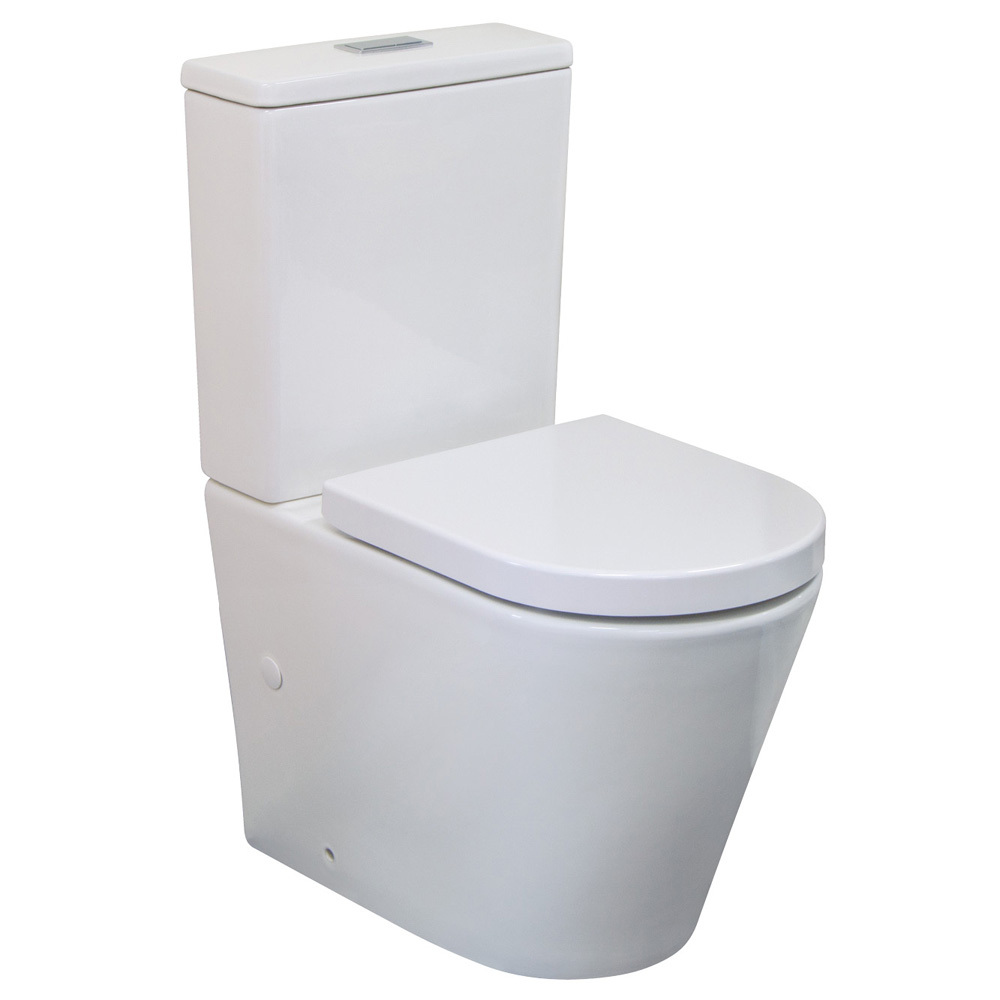
Back-to-wall pans sit flush to the wall, hiding the trap area and reducing the awkward gaps that collect dust and grime.
Also called: you’ll often see this style labelled as wall-faced in Australia. Same idea, the pan sits tight to the wall to hide the trap area and clean up the silhouette.
Best for: modern bathrooms, neater look, easier cleaning around the back of the pan.
If you want to browse this style specifically, head straight to back-to-wall toilets here.
What changes for installation
Planning matters a bit more. Because the pan sits tight to the wall, you want your measurements right so everything lines up neatly.
Cleaning reality
Big upgrade. Less space behind the toilet means less “how did that even get there” cleaning.
Space feel
Streamlined. Even in small bathrooms it can read cleaner because the silhouette is tighter.
Note: You can also get a floor-mounted wall-faced pan paired with an in-wall cistern. The pan stays on the floor, but the tank is hidden in the wall. It gives you the sleek hidden-tank look without needing the same floating-pan structural setup as a wall-hung toilet.
Accessibility (a practical consideration)
In some ambulant or assisted-living style layouts, a floor-mounted wall-faced/back-to-wall pan can be preferred because it feels more stable around the sides for certain support and transfer scenarios. If you’re planning grab rails or clearances, lock that in early with your installer.
Wall-hung toilets
.jpg)
Wall-hung toilets mount to an in-wall frame with the cistern hidden behind the wall. The pan floats off the floor.
Best for: full renovations, premium finish, easiest floor cleaning.
If you want to browse this style specifically, head straight to wall-hung toilets here.
What changes for installation
This is not usually a simple swap unless you’re already set up for it. Wall-hung is typically a renovation choice because:
- an in-wall frame system is required
- the wall needs to house the frame and cistern
- placement and reinforcement matter
Wall-hung toilets are incredibly strong once installed, but they do require a sturdy structural wall to house the frame, commonly a 90mm stud wall or brick depending on the setup.
Cleaning reality
Ultimate. You can mop straight underneath and around it with zero base contact points on the floor.
Space feel
Visually floats. It can make a bathroom feel bigger because you see more floor and the toilet reads lighter.
Maintenance access (the common fear)
People worry that if a hidden cistern leaks you’ll need to smash tiles. In most cases, servicing access is through the flush button panel on the wall, so you’re not ripping the bathroom apart just to replace a seal.
- Wall-faced (back-to-wall) toilets only look “flush” if your wall line, set-out, and pan length are right. If your numbers are off, you can end up with a visible gap.
- Wall-hung toilets usually need a 90mm stud wall (or suitable structure) for the in-wall frame and cistern. Plan it early so you’re not redesigning the wall mid-reno.
- After trap type and set-out, check the toilet’s projection (how far it sticks out from the wall) so doors and walkways still clear.
The stuff people don’t think about until install day
Replacement vs renovation
If you’re not changing walls or plumbing, close coupled and back-to-wall are usually the sensible options. Wall-hung and in-wall cistern setups are best treated as renovation choices.
Measurement matters more as you go more minimal
The more streamlined the toilet is, the less tolerance you have for “close enough”. Back-to-wall and wall-hung styles reward accurate planning early.
If you haven’t measured yet, go back and do the set-out properly before you pick a style.
Comparison table: toilet styles at a glance
| Style | Floor contact | Cistern location | Install difficulty | Cleaning ease |
|---|---|---|---|---|
| Close coupled | Full base | Attached to pan | Low (often simplest swap) | Standard |
| Back-to-wall (wall-faced) | Full base | Attached or hidden | Medium | High |
| Wall-hung | None (floating) | Hidden in wall | High (pro required) | Ultimate |
Which one should you choose (practical scenarios)
You’re swapping an old toilet and want the least fuss
Go close coupled.
You want a cleaner look and easier cleaning without going full floating
Go back-to-wall. If you love the hidden tank look, consider the floor-mounted wall-faced pan with an in-wall cistern option.
You’re doing a full renovation and want the premium look plus easiest floor cleaning
Go wall-hung.
Browse options once you know what suits your space with toilets here.
FAQs
Is back-to-wall easier to clean than close coupled?
Usually yes, because there’s less of a gap behind the pan and fewer awkward edges to collect grime.
Is wall-hung worth it?
If you’re renovating and you want the cleanest floor cleaning experience and a premium look, it can be worth it. If you’re doing a simple replacement, it’s usually more work than necessary.
Which toilet style is best for a small bathroom?
Back-to-wall often feels more streamlined. Wall-hung can make the room feel bigger visually, but it depends on whether you’re renovating.
Can I change from close coupled to back-to-wall without moving plumbing?
Sometimes, but it depends on trap type and set-out. If you’re trying to avoid changes, matching your existing setup is the safest approach.
Do I need a special toilet seat for these styles?
Seat fit depends on pan shape and hinge spacing, not the toilet style name. If you’re replacing a seat, start with toilet seats here.